How to Treat Grill Burn: A Home Cook's Guide
Learn safe, practical steps to treat grill burns at home. From immediate cooling to dressing and when to seek medical care, this guide covers minor injuries and prevention for future grilling sessions.


how to treat grill burn: quick home care
Grill burns happen when radiant heat, flare-ups, or hot surfaces contact the skin. They range from minor irritation to more serious injuries requiring medical attention. According to Grill Cooking, the best outcomes come from prompt, careful first aid and protective care. The key is to act fast, keep the area clean, and avoid common mistakes that can worsen healing or lead to infection. By understanding burn depth, you can decide if you can treat it at home or need professional care. This section lays out clear, actionable steps you can start this minute.
Immediate actions you should take
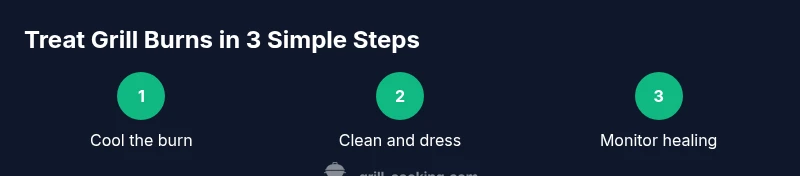
Heat injuries demand swift action. First, move away from the heat source and cool the skin under cool running water for several minutes. Do not apply ice directly, as it can damage tissue. Gently pat dry with a clean towel and assess the burn size. If blisters form, resist the urge to pop them; leave them intact to protect the underlying tissue. Cover with a clean, nonstick dressing to reduce friction and contamination. For any signs of worsening pain, increasing redness, or if the burn covers a large area, seek medical guidance promptly.
Cleaning and dressing minor burns safely
Wash your hands and rinse the surrounding skin with mild soap and lukewarm water. Avoid harsh antiseptics on open skin unless advised by a clinician. If recommended, apply a thin layer of fragrance‑free petrolatum or an appropriate ointment, then seal with a sterile, nonstick dressing. Change dressings daily or when they become wet or dirty. Keep the treated area protected from rubbing clothing or gear while cooking.
Preventing infection and monitoring healing
Keep the burn clean and dry, and avoid tight or abrasive fabrics that rub the area. Watch for signs of infection: increasing redness, swelling, warmth, pus, or fever. If these occur, seek medical care. Protect healing skin from sun exposure, as UV can worsen pigment changes. Gently cleanse once or twice daily and re‑dress to maintain a clean, protected surface.
When to seek professional medical care
You should seek medical care for burns that are large, on the face, hands, feet, joints, or genitals, or if pain is severe or persistent. If the burn follows a chemical exposure, exposure to scorching flames, or if underlying conditions (like diabetes) complicate healing, obtain professional evaluation promptly. In any doubt, a clinician can assess depth and infection risk and provide guidance on dressing choices.
Do and don'ts: quick safety reminders for future grills
Do wear heat‑resistant gloves and use long‑handled tools to keep hands away from flames. Don’t touch hot surfaces with bare skin or abandon children near the grill. Do keep a water source or extinguisher accessible and maintain a safe grilling zone free of flammable materials. Don’t apply home remedies like butter or toothpaste to burns, as these can trap heat or introduce bacteria.
Practical safety tips to prevent burns while grilling
Maintain proper grill temperature and manage flare‑ups to minimize contact with skin. Use a sturdy, non-slip surface and keep a clear path around the grill. Position yourself so you can step back quickly if the flame surges. Regularly inspect gas lines or charcoal setup for leaks or embers. By combining routine maintenance with mindful grilling, you reduce burn risk for yourself and guests.
startIndex":0}],
toolsMaterials