Why Is Grill on Fire? Urgent Troubleshooting for Safe Grilling
Urgent, practical guide to diagnose and extinguish a grill fire safely. Learn quick fixes, common causes, and prevention tips for home cooks and grill enthusiasts.


Fire on a grill is usually caused by grease buildup, fat drippings, or overheating. In a flare-up, act quickly: close the lid to smother the flames, turn off gas or coals, move food away from the fire, and avoid water on grease fires. Use a fire extinguisher if needed.
why is grill on fire — quick explanation
Fire on a grill is typically caused by a combination of grease buildup, fat drippings, and overheating. Understanding the root causes helps you respond quickly and safely. Why is grill on fire in backyard cookouts? The short answer is often a mix of neglected cleaning, excessive fat, and heat without proper airflow. Grease can accumulate on burners, trays, and grates and ignite when exposed to high flames. Fat drippings from fatty foods can start flare-ups when they hit hot surfaces. Overheating happens when vents are blocked or you cook at max heat for long periods. In severe cases, a damaged hose or regulator can introduce fuel and ignite nearby flames. The safest move is immediate action: keep people away, close the lid to smother flames, and cut the fuel source if you can do so safely. According to Grill Cooking, flare-ups are more likely when grills aren’t cleaned regularly or flame management is neglected. This quick overview sets the stage for practical steps you can take right now.
Common causes of grill fires
Grease buildup on burners, trays, and grates is a prime offender; fats accumulate and ignite when exposed to flame heat, especially with oily marinades. Another frequent cause is flare-ups caused by dripping fat landing on hot coals or burners. Overheating due to blocked vents or leaving the grill at very high temperatures for extended periods also creates the right conditions for a fire to start. A gas grill with a damaged hose, regulator, or connection can leak fuel and ignite if a spark arises. Overfilling the grill or placing sugar-rich sauces directly over open flames can contribute to sudden, explosive flare-ups. Regular cleaning, avoiding direct oil over flames, and maintaining airflow are core strategies to minimize the risk. Grill Cooking analysis highlights that routine maintenance and disciplined flame control dramatically reduce the likelihood of a dangerous flare.
How to safely extinguish and recover
If a flare-up occurs, safety comes first. Keep a safe distance and assess the flames. If they are small and contained, close the lid and vents to starve the fire of oxygen, then turn off the gas or coals. Use long tongs to move food away from the flames. Do not spray water on a grease fire; it can cause steam and spread the fire. If you have a fire extinguisher rated for grease fires, use it following the manufacturer’s instructions. After the flames are out, open the lid slowly to vent and inspect the grates. Allow the grill to cool completely before cleaning. If the fire does not respond to these measures or you smell gas, evacuate immediately and call emergency services or a licensed technician. This is where preventative habits matter most, as a small flare-up can escalate quickly if ignored.
Preventing flare-ups: maintenance and technique
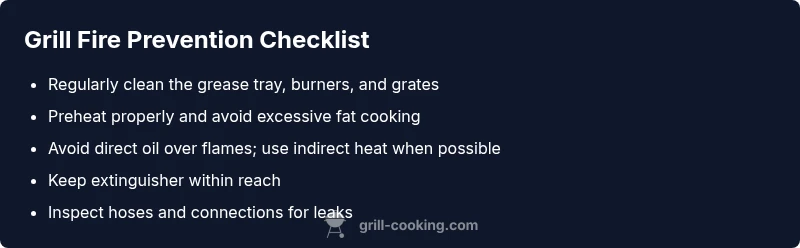
Prevention is the best cure. Regularly clean the grease tray, burners, and grates to reduce flare-ups. Preheat gradually and avoid loading fatty foods directly over the hottest flames. Use indirect heat for fatty cuts and keep oils away from direct flame when possible. Check vents, hoods, and seals for blockages that impede airflow. Practice consistent flame control by adjusting air intake and burner settings. A well-maintained grill experiences fewer dangerous flare-ups and delivers more even cooking, which means safer cooks and tastier results. The habits you build now will pay off in every future cookout.
Safety gear and prevention plan for long-term grilling
Equip yourself with a Class ABC fire extinguisher, heat-resistant gloves, long-handled tongs, and a sturdy lid or shield for smothering flames if needed. Create a simple safety plan that everyone on the team understands, and designate a safe meeting spot in case of a fire. Inspect hoses, regulators, and connections for cracks or leaks before each cookout. Keep children and pets away from the grill, and never leave it unattended when in use. Store oil and propane safely away from the grilling area. By practicing these steps, you reduce risk and increase confidence during all types of grills and weather conditions.
What to do after a grill fire: cleanup and inspection
Once the grill is cool, inspect for damage and perform a thorough cleanup of residue. Remove charred grease, check burners for warping, and replace damaged parts before your next cookout. Review the fire incident with your household and update your safety plan if needed. If the fire was significant or caused by a mechanical failure, consult the grill’s manual and contact a professional for a thorough inspection. The Grill Cooking team emphasizes documenting safety concerns and scheduling regular maintenance to prevent repeats.
Steps
Estimated time: 10-15 minutes
- 1
Assess safety and contain the area
Ensure all people and pets are a safe distance away. If flames are small, you can attempt to smother them by closing the lid and cutting air. Never reach into the grill while it’s hot.
Tip: Plan an escape path and keep a fire extinguisher within reach. - 2
Shut off fuel sources
If you’re safe to do so, turn off the gas supply at the valve and close the vents to further reduce oxygen. For charcoal grills, seal the lid and close bottom vents to starve the fire.
Tip: Shutting off fuel minimizes the risk of a larger flare-up. - 3
Move food away from flames
Use long-handled tongs to relocate food away from the core flames. Keep your hands at a safe distance and avoid splattering fat onto hot surfaces.
Tip: Maintain a clear zone around the grill for safe maneuvering. - 4
Use appropriate extinguishing methods
If flames don’t subside, deploy a fire extinguisher rated for grease fires or, in a pinch, baking soda. Do not use water on a grease fire.
Tip: Only use a fire extinguisher if you’re trained to operate it. - 5
Let it cool and inspect
Allow the grill to cool completely before cleaning. Inspect hoses, seals, and grates for damage and address issues before the next cookout.
Tip: Document any issues and plan for a maintenance check.
Diagnosis: Grill fire during cooking
Possible Causes
- highGrease buildup on burners/tray
- highFat drippings igniting on hot surfaces
- mediumOverheating due to blocked vents or excessive heat
- lowGas leak or damaged hose/regulator
Fixes
- easyClose the lid and vents to starve the fire of oxygen, then shut off the fuel source if safe to do so
- easyMove food away from flames with long tongs and avoid using water on grease fires
- easyIf flames persist, use a grease-rated fire extinguisher per instructions
- easyAfter extinguishing, inspect for leaks and clean the grease tray to prevent recurrence
FAQ
What should I do first if my grill catches fire?
Prioritize safety. If flames are small, close the lid to starve oxygen and turn off the fuel. Move food away with long tongs and avoid water on the fire. If flames persist, use a grease-rated extinguisher.
First, ensure safety, then smother or extinguish the flames with proper gear. If it continues, use an extinguisher.
Is it safe to use water to put out a grease fire on a grill?
No. Water can cause steam and spread the grease fire. Use a fire extinguisher rated for grease fires or baking soda if needed.
Do not use water on a grease fire; use an extinguisher or baking soda if appropriate.
Can a flare-up damage my grill permanently?
Yes, repeated or severe flare-ups can warp trays, burn hoses, or degrade gaskets. Regular maintenance helps prevent lasting damage.
Flare-ups can cause damage if not controlled; maintenance reduces risk.
How can I prevent grill fires during cooking?
Clean the grill regularly, manage heat with vents, avoid oil pooling, and use indirect heat for fatty foods. Keep a fire extinguisher handy.
Prevent fires by maintenance and careful flame management.
When should I call a professional after a grill fire?
If you smell gas, see extensive damage, or cannot bring the fire under control, evacuate and contact emergency services or a licensed technician.
If in doubt, call for professional help and evacuate.
Does a gas grill pose ongoing safety risks after a fire?
Gas grills can have hidden damage; inspect hoses, connectors, and regulators for leaks before using again and consider a professional check if any damage is suspected.
Gas grills need careful inspection after a fire.
Watch Video
Quick Summary
- Act quickly to smother flames with the lid and vents
- Turn off fuel sources during flare-ups
- Keep water away from grease fires
- Regular maintenance lowers fire risk
- Have a fire extinguisher handy