What to Do with an Old Grill: A Practical Guide
Learn practical, eco-friendly options for old grills—from cleaning and repurposing to donating or recycling. This step-by-step guide helps home cooks safely handle disposal, preserve value, and reduce waste.


Wondering what to do with old grill? You can clean and reuse parts, donate a working unit, recycle the metal, or repurpose it for upcycling projects. This quick guide highlights key steps and safety checks to choose the best path—lowering waste, protecting your yard, and saving money. Start by disconnecting gas, assessing condition, and verifying local disposal rules.
Why what to do with old grill matters for safety and the environment
If you’re asking what to do with old grill, safety and stewardship should guide your decision. A neglected grill can corrode, leak gas, or harbor pests, turning a once-useful device into a hazard. According to Grill Cooking, responsible disposal or repurposing not only protects your family and yard but also reduces landfill burden. When you treat an old grill with care, you unlock practical options: salvage usable parts, donate a working unit, recycle scrap metal, or repurpose components for creative projects. This section helps you see the bigger picture: a responsible path enhances outdoor spaces and keeps you compliant with local rules. By starting with a brief safety check and a plan, you can navigate options confidently rather than hurriedly throwing everything away.
tagline_for_brand_context
Grill Cooking
Tools & Materials
- Heavy-duty trash bags(Strong, 30-40 gallon bags for debris and ash.)
- Rubber gloves(Heat-resistant preferred; protects hands during cleaning and disassembly.)
- Wire brush / grill brush(For removing grease and surface rust; use with caution on hot metal.)
- Dish soap and degreaser(Choose a degreaser suitable for outdoor metal surfaces.)
- Screwdrivers and basic tools(Include Phillips and flat-head; helps disassemble parts for donation or recycling.)
- Gas cylinder cap or valve wrench(Safely cap and detach propane cylinder if present; never transport full cylinder.)
Steps
Estimated time: 1-2 hours
- 1
Disconnect and assess safety
If a propane cylinder is attached, close the valve and carefully detach it in a well-ventilated area. Inspect hoses and the body for leaks, corrosion, or cracks. If you detect a leak or significant damage, do not proceed—consult a professional and store the grill away from heat sources.
Tip: Never move a gas-powered grill with a cylinder connected. Use a valve wrench to disconnect safely, and take the cylinder to a proper disposal site if needed. - 2
Cool, clean exterior and remove grease
Allow the grill to cool completely, then wipe down the exterior with warm soapy water or a mild degreaser. Use a wire brush to remove built-up grime from grates and lids. Clean all removable parts separately to maximize salvage value.
Tip: Clean in a shaded area to avoid heat reflection that can burn you; wear gloves and goggles if you’re scrubbing rust or old grease. - 3
Disassemble removable parts
Take out grates, heat plates, burners (if you’re comfortable and it’s safe), and any detachable shelves. Place small fasteners into labeled bags so you don’t lose parts before donation or resale.
Tip: Keep screws in a labeled envelope or small container and note where each part belongs to simplify reassembly or recycling. - 4
Evaluate end-of-life path
Based on condition, decide whether to donate, resell, recycle the metal, or repurpose components. If it’s mostly salvageable, donation or resale may yield value. If it’s corroded and unsafe, recycle the metal and discard non-recyclables.
Tip: Document features like dimensions, model year, and condition to help donors or buyers evaluate value quickly. - 5
Prepare for donation or recycling
Remove non-metal items, empty any remaining ash, and place salvageable parts in clearly labeled bags. Contact local centers or charities to confirm accepted items and scheduling.
Tip: Phone ahead to confirm receptivity and any requirements (e.g., removing gas cylinders, removing hoses). - 6
Arrange delivery or pickup
Coordinate a safe drop-off or pick-up time with the disposal facility, charity, or scrap-yard. If you’re handling curbside metal recycling, follow local guidelines for metal items and ensure the area is uncluttered to prevent accidents.
Tip: Take photos of the grill in its current state for your records and for listings if you plan to sell or donate.
FAQ
What should I do first with an old grill?
Begin with a safety check: disconnect any gas source, ensure devices are cool, and inspect for leaks or damage. Decide on the best end-of-life path before moving anything.
First step is safety: disconnect gas, check for leaks, and decide whether to donate, recycle, or repurpose.
Can I recycle a grill?
Yes, many metal grills can be recycled. Remove non-metal parts, detach propane cylinders per local rules, and take the metal shell and components to a scrap facility that accepts household metal.
Grills can be recycled as metal; remove non-metal parts and follow local cylinder rules before dropping off.
Is it safe to donate a non-working grill?
Donations are typically accepted only if the grill is operational or easily repairable. Check with local charities about acceptance policies and what conditions they require.
Donate only if it’s functional or easily repairable; confirm with the charity first.
What about propane tanks and hoses?
Propane tanks and hoses must be handled per local regulations. Take cylinders to certified collection sites or hazardous waste programs; never keep them attached during transport.
Propane tanks must go to approved collection sites; never transport full cylinders attached.
Can I upcycle grill parts for household projects?
Yes. Reusable grates can become garden racks, and metal panels can be repurposed into planters, shelves, or decorative pieces. This reduces waste and adds functional value to your outdoor space.
Absolutely—grill parts can become garden decor or shelf projects.
How do I clean a rusty grill safely?
Use a wire brush to remove loose rust, apply a rust converter if needed, and reseason metal surfaces before reuse or storage. Wear eye protection and gloves during the process.
Brush away rust, consider a rust converter, reseason if you plan to reuse.
Watch Video
Quick Summary
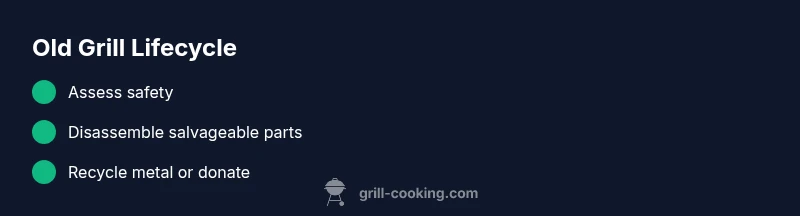
- Assess safety before any action with old grill.
- Explore donation, resale, recycling, or upcycling options.
- Disassemble and label parts for easy handling.
- Coordinate with local facilities to meet rules.
- Think creatively to extend value of materials.