What Is Wrong with My Traeger Grill? Troubleshooting Guide
Urgent guide to diagnose and fix common Traeger pellet grill problems. Learn how to identify what is wrong with your Traeger grill and apply safe, practical solutions fast.


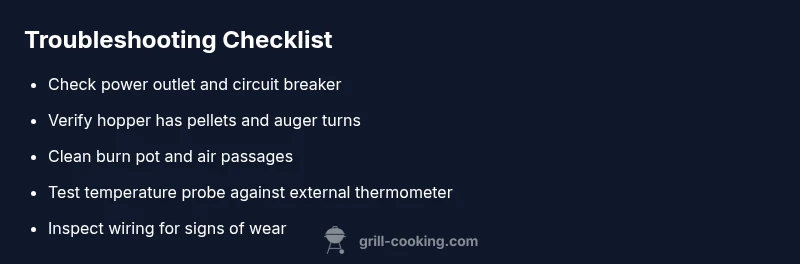
Common Traeger troubles usually come down to power, pellet supply, or a dirty burn pot. If your grill won’t start, check the outlet and circuit breaker first, then verify the hopper has pellets and the auger turns. If the grill heats unevenly, clean the burn pot and ensure your temperature probe reads correctly. For persistent issues, inspect the controller wiring or contact support.
What is wrong with my traeger grill and why it happens
If you're wondering what is wrong with my traeger grill, you're not alone. In practice, most problems boil down to three big categories: power delivery, pellet supply, and airflow through the burn pot. The Grill Cooking Team often finds that a simple, structured check resolves the majority of issues without calling a technician. According to Grill Cooking, many failures stem from something as basic as a tripped outlet or an empty hopper. Similarly, a burned or clogged burn pot can choke airflow and cause temperature swings even when the rest of the system seems healthy. By understanding these failure modes, you can triage quickly, document what you see, and decide whether you can fix it yourself or need professional help. Keep in mind that pellet quality, door seals, and wiring also influence performance. When you learn to separate symptom from cause, troubleshooting becomes a practical, repeatable process rather than a shot in the dark. This section sets the stage for the deeper diagnostics that follow and gives you a framework you can apply to any Traeger model or similar pellet grill.
Common symptoms and quick checks
Symptoms often map to a few predictable causes. If the grill won’t start, verify the outlet is live, the circuit isn’t tripped, and the controller is responding. For uneven cooking, inspect the burn pot for buildup, confirm the temperature reads steady, and ensure the hopper isn’t empty. Regular inspection of gaskets, door seals, and pellet quality can prevent irregular heating. Quick checks save time and prevent temporary misreads from electronics. A dead switch or loose cord is a common, easily fixed issue. If you notice a delay in ignition, reset the controller and test with a fresh bag of pellets to rule out poor fuel. Keeping a small timer handy helps you spot delays and pattern issues before they escalate.
Diagnostics: mapping symptoms to likely causes
When you notice a temperature mismatch or slow startup, link the symptom to a likely cause. A non-start typically points to power or pellet feed issues; a temperature drift often indicates a dirty burn pot or a faulty probe. Listen for auger sounds—if it’s silent, pellet feed may be blocked. A greasy or ash-filled flame path can cause uneven heating and smoke, signaling cleaning is needed. Keep a log of what you observe and test one variable at a time. This methodical approach aligns with Grill Cooking’s recommended troubleshooting flow and reduces risk during service. With consistent documentation, you can compare results over multiple cooks and verify improvements after each fix.
Maintenance tasks to prevent future failures
Preventative maintenance is your best defense against frequent problems. Clean the burn pot and interior surfaces after sessions, reseat the hopper seals, and inspect the auger for jams. Replace weathered gaskets and check wiring connections periodically. Lubricate moving parts where appropriate and ensure the lid seals are intact to maintain consistent airflow. Use fresh, high-quality pellets and store them properly to avoid moisture issues that can affect ignition and burn quality. A simple weekly wipe-down and a monthly deep-clean can dramatically reduce the chance of unexpected outages and temperature fluctuations.
When to call a pro and how to reach support
If simple fixes don’t restore performance, contact official support channels. Have your model, serial number, and a brief symptom log ready. For warranty-eligible issues, follow manufacturer guidance and document the steps you’ve taken. A professional diagnosis can save time and prevent unsafe repairs. If you smell gas, see frequent flare-ups, or notice electrical smells, stop using the grill and seek immediate assistance from a qualified technician or the manufacturer’s service team.
Safety and best practices while troubleshooting
Always unplug the grill before opening any panels or removing parts. Work in a dry area and avoid standing water near electrical components. Use insulated tools if needed and wear heat-resistant gloves when handling hot surfaces. Never spray water directly into the burner or electronics. Keep a fire extinguisher rated for charcoal/gas nearby as a precaution. Finally, follow the manufacturer’s guidelines for service intervals and part replacements to minimize risk and maximize longevity.
Steps
Estimated time: 45-60 minutes
- 1
Power down and prep for inspection
Unplug the grill and allow any hot components to cool completely. Inspect the power cord for signs of wear and unplug devices connected to the same outlet. This prevents electric shock while you troubleshoot.
Tip: Use a grounded outlet and avoid damp areas. - 2
Check power and circuit integrity
Plug back in and test the outlet with a simple lamp or device. If the outlet is dead, reset the breaker and try another circuit to rule out a house issue.
Tip: If the breaker trips, there may be a short or overcurrent – stop and consult a pro. - 3
Inspect pellet system and hopper
Open the hopper, verify pellets are present, and listen for the auger turning when the grill attempts to start. Clear any jams in the auger or feed tube to restore pellet flow.
Tip: Rotate the auger manually (gentle) to feel for resistance before powering up. - 4
Clean burn pot and verify air paths
Remove ash buildup from the burn pot and check the vents for blockages. A dirty pot restricts airflow and causes uneven heat.
Tip: Use a non-metal brush to avoid damaging the grate. - 5
Test temperature probe and calibration
With the grill at a safe, cool state, test the probe’s reading against an external thermometer. Consider recalibration or replacement if readings diverge.
Tip: A slight difference is normal; large discrepancies warrant part testing. - 6
Run a controlled bake to verify performance
Set a modest target temperature and observe whether the grill stabilizes. If issues persist, prepare to contact support or pursue replacement parts.
Tip: Document results and note any error codes.
Diagnosis: Grill won’t start or heats unevenly
Possible Causes
- highPower issue (outlet, cord, or circuit breaker)
- highPellet hopper empty or pellets jammed in auger
- mediumBurn pot clogged with ash or grease
- lowTemperature probe or controller fault
Fixes
- easyTest the outlet, reset breakers, and try a different cord
- easyRefill pellets, manually inspect auger for jams, and reseat hopper
- easyClean burn pot and verify airflow paths are clear
- mediumTest the temperature probe with a known-good unit or recalibrate controller
FAQ
Why won’t my Traeger grill start after being idle?
Common causes include power issues and controller reset needs. Check the outlet, circuit breaker, and ensure the controller is responsive before deeper diagnostics.
If your Traeger won't start, first check power and the controller, then rule out pellet supply.
Why is my Traeger grill not reaching the set temperature?
Likely a dirty burn pot or empty hopper causing poor air flow. Inspect the pot, clean it, and verify the hopper has pellets.
A dirty burn pot or empty hopper often keeps temps from rising.
How often should I clean the burn pot and hopper?
Clean burn pot after several cooks, and inspect the hopper weekly for jammed pellets. Regular cleaning improves performance.
Clean the burn pot regularly and check the hopper for jams weekly.
What should I do if the auger won't turn?
Check power and pellet flow; unplug and reseat the auger and look for jams. If persistent, professional service may be required.
If the auger stalls, check power, pellet flow, and jams.
Is it safe to use the grill while cleaning?
No. Always unplug and let the grill cool before cleaning every component. Avoid water contact with electrical parts.
Never use it while cleaning; unplug and wait for it to cool.
When should I replace parts and where to buy?
Check warranty terms and follow official guidance for replacements. Use authorized parts to maintain performance and safety.
If parts wear out, contact support and replace with genuine parts.
Watch Video
Quick Summary
- Identify power or pellet flow first.
- Clean burn pot to restore airflow.
- Test temperature readings for accuracy.
- Schedule regular maintenance to prevent repeat issues.