Pellet Grill Overheating: Troubleshooting Guide
Discover why your pellet grill overheats and how to diagnose root causes—from airflow and burn pot to pellet moisture and sensor faults. Step-by-step fixes, safety tips, and prevention for reliable temperature control.


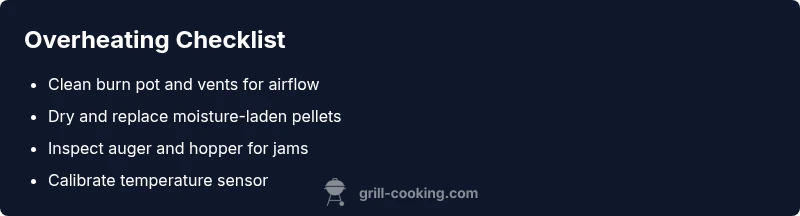
Common pellet grill overheating stems from restricted airflow, a dirty burn pot, or moisture in the pellets. Quick fix: unplug, clean the burn pot and vents, inspect the hopper for jams, replace wet pellets, and restart at a moderate setting. If temps stay high, consult a professional, especially if the controller sensor seems faulty.
Understanding Why a Pellet Grill Overheats
Understanding why a pellet grill overheats starts with recognizing how these grills regulate heat. The Grill Cooking team notes that pellet grills rely on precise airflow, timed pellet feeding, and accurate temperature sensing to maintain steady heat. When airflow is blocked, pellets are fed too quickly, or the sensor misreads, the controller can push temperatures higher than intended. In everyday terms, a clogged burn pot, dirty vents, damp pellets, or a failing temperature probe can cause runaway heat. By thinking of the system as a loop—airflow, fuel feed, exhaust, and sensing—you can begin diagnosing without guesswork. This approach also helps you spot safety concerns before they escalate, reducing the risk of fire or damage to the grill.
Quick Checks You Can Do Before Cooking
- Verify the grill is clean: burn pot, vents, and chimney should be clear. A small blockage makes a big difference in temperature control.
- Inspect pellet quality: store pellets in a dry place and avoid moisture-laden bags; damp pellets burn unevenly and can clog the auger.
- Confirm proper ignition: allow the grill to preheat fully and observe whether it reaches the target temperature gradually or surges.
- Check hopper for jams: ensure pellets feed smoothly into the auger without binding or binding resistance.
- Review ambient conditions: strong winds can affect exhaust and airflow; shield the grill if needed.
- Calibrate the temperature probe: place a separate thermometer in the cooking zone to verify accuracy; don’t rely on a single sensor alone.
How Temperature Control Works on Pellet Grills
Pellet grills use a PID-style controller to modulate the auger feed and fan speed, keeping temperatures within a target range. The process relies on three interacting parts: the burn pot where pellets burn, the auger that feeds new pellets, and the fan that supplies air for combustion. If any part lags—burn pot clogged, auger jammed, or fan blocked—the system can ramp up heat to compensate. Temperature readings come from sensors in the grill body, and a miscalibrated probe will mislead the controller. When you understand these interactions, you’re better prepared to identify which component is causing overheating and apply the correct fix.
Common Culprits: Burn Pot, Vents, and Pellets
The burn pot is the heart of the flame; a clogged or dirty pot restricts airflow and raises temperatures. Vents and chimney openings must be free to vent hot air; any blockage can cause heat to back up. Pellets with high moisture content or inconsistent size can cause uneven ignition and excessive ash, which chokes the burn. Regular maintenance tackles all three issues: clean the burn pot, ensure vents are clear, and dry pellet storage to maintain consistent combustion. In practice, small maintenance bouts across a weekend yield big safety and performance improvements.
Symptoms and Symptom-Based Paths
If you notice rapid temperature spikes, start with the simplest checks: airflow clearance and pellet moisture. For gradual climbs that don’t settle, inspect the auger and hopper for jams; a stuck pellet can equate to too much fuel feeding at once. If the grill overshoots after a timer or setpoint change, recalibrate the probe and test with an independent thermometer. In some cases, a faulty controller is the culprit; if cleaning and recalibration don’t resolve the issue, replacing or repairing the controller is warranted. Always monitor the grill after fixes to confirm stability.
Preventive Maintenance and Best Practices
Develop a regular maintenance routine to prevent overheating. Clean the burn pot and vents weekly during heavy use and monthly otherwise. Dry storage for pellets reduces moisture-related issues; consider using a desiccant or airtight bin. Check seals and gaskets for leaks that could alter airflow; replace worn ones. Use quality pellets with consistent size and low moisture; inconsistent pellets drive the auger harder and can raise temps. Keeping the grill clean, vents clear, and sensors calibrated creates reliable temperature control and longer grill life.
Safety Considerations and When to Call a Pro
Dealing with heat on a pellet grill carries burn risks; always wear heat-resistant gloves and unplug the grill before any disassembly. If overheating persists after thorough cleaning, calibration, and pellet quality checks, consult a certified technician or the grill’s manufacturer support. Do not operate a grill that emits unusual smoke, smells of burning insulation, or shows scorched wiring. Prioritize safety and don’t bypass warranty restrictions by attempting risky repairs.
Steps
Estimated time: 60-90 minutes
- 1
Power down and cool safely
Unplug the grill and wait for it to cool completely before touching internal parts. This prevents burns and protects electronics during inspection.
Tip: Use insulated gloves and a non-slip mat. - 2
Clean burn pot and vents
Remove ash, wipe residues, and clear all airflow passages. A clean burn pot lets air circulate and stabilizes temperature.
Tip: Do not use metal tools that can scratch the burn pot. - 3
Inspect auger and hopper
Check for pellet jams or binding. A blocked auger feeds too many pellets at once, spiking heat.
Tip: Shake the hopper gently to dislodge minor jams. - 4
Assess pellet quality
Test with dry pellets from a fresh bag. Moist pellets burn unevenly and lead to ash buildup and temp swings.
Tip: Never mix new and old pellets in the hopper. - 5
Calibrate temperature sensing
Place a separate thermometer in the cooking grate and compare readings with the grill display. Calibrate or replace sensor if readings diverge.
Tip: Follow the manufacturer’s calibration steps exactly. - 6
Run a test burn and monitor
Set to a steady medium temperature and watch for stability over 15–20 minutes. If it remains high, proceed to professional service.
Tip: Document readings for warranty service if needed.
Diagnosis: Pellet grill overheats during cooking
Possible Causes
- highRestricted airflow due to a dirty burn pot or blocked vents
- mediumMoisture or poor quality pellets causing inconsistent burn and ash buildup
- lowFaulty temperature sensor or controller calibration
Fixes
- easyClean burn pot, remove ash, and clear all vents/chimneys for proper airflow
- easyDry and replace pellets; store in a sealed container to prevent moisture
- mediumRecalibrate or replace the temperature sensor/controller; run a test burn with a separate thermometer
- easyIf issues persist, contact professional service or the manufacturer’s support
FAQ
Why is my pellet grill overheating even after cleaning?
If overheating persists after cleaning, the issue may be a faulty temperature sensor or controller. Recalibrate the sensor and test with a separate thermometer. If unresolved, seek professional service.
If it still overheats after cleaning, recalibrate the sensor and test with a separate thermometer. If it remains an issue, contact professional service.
Can moisture in pellets cause overheating?
Yes. Moist pellets burn unevenly, produce extra ash, and can block airflow. Replace damp pellets with dry stock and store pellets in a sealed container.
Moist pellets burn unevenly and can block airflow, causing overheating. Use dry pellets and store properly.
How often should I clean the burn pot and vents?
Clean burn pot and vents weekly during heavy use and monthly otherwise to maintain consistent airflow and heat control.
Clean the burn pot and vents weekly when you’re cooking a lot, and monthly otherwise.
Is it safe to operate if the grill smells like burning plastic?
A burning plastic smell indicates melted insulation or wiring issues. Stop using the grill immediately and inspect for damaged components or wiring. Do not restart until inspected by a professional.
If you smell burning plastic, stop using the grill and have it inspected before you resume.
When should I replace the temperature sensor or controller?
If calibration doesn’t bring readings in line with a separate thermometer, replace the sensor or controller per manufacturer guidance. This is typically a professional repair.
If calibration doesn’t fix the readings, replacing the sensor or controller is often required.
Where can I get authorized support for my pellet grill?
Refer to the grill’s manufacturer support site or your retailer for warranty guidance and authorized service centers. Keeping records helps with warranty claims.
Check the manufacturer’s site or your retailer for authorized service centers and warranty guidance.
Watch Video
Quick Summary
- Identify airflow issues early to prevent overheating
- Regular burn pot and vent cleaning improves temp control
- Use dry, quality pellets to maintain consistent burn
- Calibrate sensors for accurate readings and safe operation