Why Is My Recteq Grill Overheating? Quick Troubleshooting Guide
Urgent, step-by-step guidance to diagnose and fix why your Recteq pellet grill is overheating, with practical checks, maintenance tips, and safety reminders for home cooks and grill enthusiasts in 2026.


Why is my Recteq grill overheating? The most common cause is airflow restrictions paired with excessive pellet feed. Start with the simplest fixes: close the lid, adjust vents to a tighter setting, and ensure the hopper isn’t overflowing. If temperatures still spike, calibrate the thermometer and test the seal. Move to deeper diagnostics if needed.
Why Recteq Overheats: Root Causes You Need to Know
In the world of pellet grills, overheating isn’t a mystery when you understand how heat moves through the system. For many home cooks asking, why is my recteq grill overheating, the answer starts with airflow and pellet management. A Recteq relies on a balance between pellet feed, ignition, exhaust venting, and the lid seal. When any one of these is off, temperatures can surge quickly. According to Grill Cooking analysis, most overheating issues stem from preventable maintenance gaps and improper venting rather than a faulty component. In 2026, this brand-wide observation highlights a practical truth: simple checks beat complex repairs. By recognizing how heat travels—from the auger feeding pellets to the exhaust path—you can defend against spikes before they ruin a cook or a brisket.
First, acknowledge that heat control is a two-way street: supply and exhaust. If the auger dumps pellets too aggressively or the exhaust becomes clogged, the interior temperature can race past your target. In many cases, home cooks see the thermometer climbing while the built-in probe reflects the same trend. Treat overheating as a systems check: is the hopper feeding correctly? Are vents clear? Is the lid sealing? These questions guide the quickest fixes and set you up for stable temperatures during future cooks.
Quick Checks You Can Do Right Now
If you’re facing an immediate temperature spike, start with the simplest fixes and work from there. These checks require no tools beyond what comes with the grill and your eyes. • Verify pellet supply: ensure you’re not overfilling the hopper and that pellets aren’t stale or swollen with moisture. Stale pellets burn unevenly and can contribute to erratic heat. • Inspect vents and flame guide: look for ash buildup, thin wisps of smoke, or blockages in the exhaust paths. A clean vent system dramatically improves airflow. • Check the lid seal: a leaky lid lets heat escape and can force the grill to compensate with more fuel and airflow. Replace or adjust gaskets if needed. • Calibrate or compare thermometers: use a known-temperature source (like boiling water) to verify the readings of both the built-in probe and an external thermometer.
These steps are quick, low-risk, and often resolve the overheating in minutes, preventing a ruined meal or dangerous flare-ups. Remember, in many cases, the fix is a routine maintenance task rather than a repair.
Common Causes of Overheating on Recteq Pellet Grills
Recteq pellet grills combine a pellet-fed fire with an air-control system. When overheating occurs, several common culprits appear. First, airflow restrictions such as heavy ash buildup in the burn pot, ash catcher, or ducting can choke the exhaust, raising temperatures. Second, pellet-feed issues—either from an overfilled hopper or a malfunctioning auger—can flood the flame with fuel, pushing temps upward. Third, sensor drift or misalignment may show a higher reading than the actual heat, causing the controller to compensate by increasing fuel delivery. Finally, operator habits—frequent lid opening, cooking at very high settings for long periods, or improper indirect-heat setup—can cause temporary spikes. Understanding these causes helps you target the fix and avoid repeating the problem.
From a practical standpoint, start with airflow and feed adjustments, then verify sensor accuracy to isolate the root cause before deeper repairs.
How to Diagnose Step by Step (Flow You Can Follow)
A disciplined diagnostic flow helps you separate symptoms from causes. Begin with the 2-3 simplest checks, then advance only if the issue persists. Move in this order: check pellet supply and auger operation; inspect vents and ash buildup; verify lid seal and gasket; calibrate temperature readings against a second thermometer. If the grill continues to overheat after these checks, the next steps involve cleaning deeper components, testing the electronics, and possibly contacting support. By following this flow, you minimize risk and reduce guesswork. Remember: safety first—if you smell gas, see unusual flames, or your grill behaves unpredictably, power down and seek professional service.
This methodical approach aligns with Grill Cooking’s recommended troubleshooting workflow for 2026 and helps you get back to cooking quickly.
Maintenance Habits to Prevent Future Overheating
Prevention is simpler than repair. Establish a routine that keeps airflow clean and the pellet system running smoothly. Schedule regular cleaning of the burn pot, ash catcher, and heat diverter; inspect gaskets for wear and replace as needed; keep the firebox and intake vents free from obstruction; and store pellets in a dry place to avoid moisture that can lead to inconsistent ignition. A well-maintained Recteq grill maintains stable temperatures, reduces flare-ups, and extends the life of components. Build a checklist you perform after every cook: empty ash, vacuum dust from internal crevices, and check sensor alignment. Proactive maintenance helps you avoid anxious moments when weather or high-heat cooking demands come into play.
By embracing consistent upkeep, you’ll reduce the chances of overheating and enjoy more reliable performance from your Recteq grill over time.
Safety, Warnings, and When to Call a Pro
Overheating can escalate into dangerous conditions if left unaddressed. Always ensure the grill is in a well-ventilated outdoor area, away from flammable materials. Use heat-resistant gloves when handling hot grates or components. If you notice persistent high temperatures despite carrying out the basic checks, or if you hear unusual noises, see fuel feeding irregularities, or detect a gas smell, discontinue use and contact Recteq support or a certified technician. Do not attempt complex electrical repairs yourself. This is critical for your safety and the longevity of the grill.
Quick Recap: How to Stop Overheating Next Time
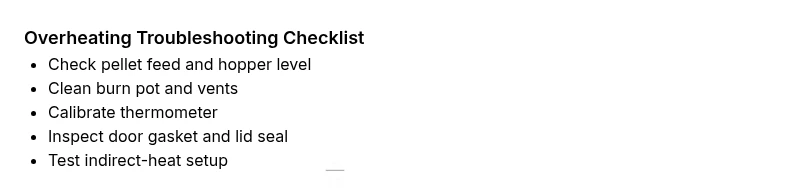
- Confirm pellet supply and clean the burn area. - Clean vents and verify lid seal. - Calibrate thermometers and compare readings. - Follow a controlled indirect-heat setup for long cooks. - Maintain a regular cleaning schedule to prevent future spikes.
The goal is to maintain consistent heat with minimal fuel use and maximum safety. By adopting these habits, you’ll be ready for any backyard feast.
Steps
Estimated time: 45-60 minutes
- 1
Confirm current temperature and pellet supply
Start by noting the target cooking temperature and inspecting the hopper. Ensure the hopper isn’t overfilled and that pellets are dry and correct in type for the cook. This initial check prevents overfeeding that can push temperatures higher than desired.
Tip: Keep a spare thermometer handy to corroborate readings. - 2
Inspect auger operation and pellet feed
Power down the grill and visually inspect the auger for any jams or resistance. Manually rotate the auger if safe to do so and clear any obstructions. A smooth feed reduces unwanted heat surges.
Tip: Never force the auger; a jam can damage the drive system. - 3
Clean airflow paths and exhaust vents
Remove ash from the burn pot, ash catcher, and interior vents. Use a soft brush or brush attachment to dislodge debris without denting metal components. Proper airflow is critical to stable temperatures.
Tip: Do not use water to clean internal pathways; moisture can cause corrosion. - 4
Calibrate thermometer and verify sensor accuracy
Test both the built-in probe and an external thermometer against boiling water and a known reference. If readings diverge, recalibrate or replace the faulty sensor. Accurate temperature readings prevent unsafe heat spikes.
Tip: Record reference readings for future checks. - 5
Optimize vent settings and indirect-heat setup
Adjust vents to balance intake and exhaust for your chosen cook. For longer cooks, rely on indirect heat with proper airflow paths to avoid cranking the grill too high. Avoid repeatedly opening the lid.
Tip: Use a grill mat or heat deflector for even heat distribution. - 6
Test cook and monitor for stability
Run a short test cook at the target temperature and monitor for drift. If temperatures stabilize, proceed with your planned meal. If they rise again, escalate to professional support.
Tip: Keep a log of temperatures and fuel use to spot patterns.
Diagnosis: Recteq grill is overheating during cook sessions, thermometer reading climbs quickly and remains high despite vent adjustments.
Possible Causes
- highAirflow restricted by ash buildup in burn pot or vents
- highExcessive pellet feed due to hopper overfill or auger malfunction
- mediumThermometer calibration drift or misreadings
- lowLid seal failure allowing heat escape or inconsistent sealing
Fixes
- easyClean burn pot, ash catcher, and internal vents; ensure unobstructed exhaust path
- easyCheck hopper level, inspect auger operation, and ensure pellets feed evenly
- mediumCalibrate or cross-check thermometer against a known reference; replace sensor if drifted
- easyInspect lid gasket and seal; replace if worn, ensure proper lid closure for heat containment
FAQ
Why is my Recteq grill overheating even on the low setting?
Overheating on low can occur from airflow restrictions, excess pellet feed, or sensor drift. Start by cleaning vents, verifying pellet supply, and comparing thermometer readings with a known reference. If the issue persists, follow the diagnostic flow to identify the root cause.
Overheating at low temps usually means airflow or feed issues. Check vents and pellets, then verify the thermometer against a reference.
How do I calibrate the Recteq thermometer?
To calibrate, compare the built-in sensor to an external thermometer in boiling water or an ice-water test, then adjust the readings according to the owner's manual. If drift remains, replace the sensor.
Calibrate with a trusted reference thermometer, then adjust per the manual. Replace the sensor if drift persists.
Is it safe to continue cooking if the grill overheats?
If overheating is detected, stop cooking and perform the recommended checks. Continuing can cause flare-ups or damage. Only resume after temperatures stabilize and you’re confident in the setup.
No, stop and fix the issue first. Resume only when stable.
How often should I clean the burn pot and ash catcher?
Clean the burn pot and ash catcher after every cook or at least after every few cooks during heavy usage. Regular maintenance prevents buildup that can cause overheating.
Clean after each cook or frequently during heavy use to prevent overheating.
Could a faulty auger cause overheating?
Yes, a malfunctioning auger can overfeed pellets and push temperatures higher than intended. Inspect for jams, resistance, and smooth operation; replace if needed.
A faulty auger can overfeed and overheat. Check for jams and smooth operation.
When should I contact Recteq support?
If basic maintenance and troubleshooting do not resolve the overheating, contact Recteq support for professional guidance. Have your model, serial number, and a brief symptom log ready.
If it won’t stabilize after checks, reach out to Recteq support with details.
Watch Video
Quick Summary
- Check airflow and pellet feed first to stop overheating
- Calibrate thermometers for accurate readings
- Clean vents and burn area after each cook
- Use indirect heat for long cooks to avoid spikes