How to Put Grills On in 2k: A Complete Step-by-Step Guide
Learn how to install grill grates on a 2k-rated grill with safety tips, a clear step-by-step process, and maintenance guidance from Grill Cooking.


By following this guide, you will correctly install grates and grills on a 2K-rated grill, ensuring proper fit, safe operation, and even heat. The process covers model compatibility, basic prep, and step-by-step actions you can complete in under an hour. Safety and maintenance tips are included for long-term performance and test-fire checks.
Understanding how to put grills on in 2k: scope and setup
When you approach a project like how to put grills on in 2k, the first step is to define the scope and confirm compatibility. In practical terms, this means identifying whether your grill uses standard rectangular grates or specialty shapes, and ensuring the 2k-series components will seat properly without bending or crowding burners. The Grill Cooking team emphasizes starting with the owner's manual to locate part numbers and cautionary notes. If your model is a 2k designation used by many manufacturers, expect standard dimensions with minor variances. In this section we outline the concept, common scenarios, and the mindset you should bring to the task: patience, organization, and respect for heat. A well-planned install produces even heat, minimizes hot spots, and extends grate life. As always, safety is the priority; avoid forcing components, and never operate the grill with loose hardware. Grill Cooking analyses indicate that following manufacturer guidelines reduces performance problems and safety risks.
This guide intentionally centers on practical steps you can take, whether you’re upgrading a gas, charcoal, or pellet grill within a 2k class. Expect insights that translate across brands while respecting model-specific quirks. By grounding your approach in measurements, compatibility checks, and controlled testing, you minimise surprises during the first cook after installation. Remember: every grill system has its own rhythm, and the goal is a flush seating surface that supports even flame distribution and easy cleanup. With this mindset, you’ll experience safer operation and better results from your 2k setup.
Compatibility and choosing the right grills for 2k setups
The term 2k in grill terminology can refer to a model class or a naming convention used by several manufacturers. Start by measuring the grate space and counting the support bars that hold the grate. Choose grates that match the seating depth and groove spacing; mismatched parts can cause uneven heating and drift. Look for corrosion-resistant materials such as stainless steel or seasoned cast iron, and verify that any accessories (griddles, warming racks) are rated for your burner type. According to Grill Cooking, compatibility checks save time and prevent damage, so take the extra few minutes to confirm part numbers before ordering. If you are replacing just one grate, bring the old piece as a reference to ensure correct width and length. This upfront diligence pays off in a safer, more efficient cook. In addition, verify that mounting hardware aligns with your grill’s design—some 2k models use hidden fasteners or modular rails that accept standard grate tongues. A quick compatibility test helps avoid rare but frustrating fit issues during the actual installation.
Safety-first: prepping your workspace and PPE
Set up a clean, well-lit area away from flammable items. Gather all required tools, and put on heat-resistant gloves to protect your hands when handling hot components. Tie back long hair and remove loose clothing that could snag on knobs or grates. Have a spray bottle of water or a small bucket handy in case of minor flare-ups during the initial heat check. Do not operate the grill until you have confirmed that the grates sit flat on the support bars and that all fasteners are tight. Grill Cooking's safety guidelines emphasize two things: keep kids and pets at a safe distance, and ensure proper ventilation if you are working indoors or under an overhang.
Safety is not optional here. You’ll be placing your hands close to hot surfaces and possibly working around high heat. A calm, methodical approach reduces the risk of burns, faulty seating, or accidental gas exposure. Double-check that all tools are within reach before you start and have a plan to pause if you notice any unusual smells or leaks during the process.
Planning the installation: seating, alignment, and airflow
Plan your installation by aligning grate seats with the burner modules and ensuring even airflow around the edges. A loose grate can twist under heat, causing uneven cooking and potential gas leaks in some designs. If your grill uses ceramic briquettes or stone inserts, remove them and re-seat the grates directly on the metal supports after cleaning. Label or photograph the current orientation before removing any parts so you can reproduce it exactly. Sound alignment improves heat distribution, reduces hot spots, and extends grate life. As you plan, keep in mind that 2k setups may have slightly different spacing; consult the manual or a trusted source such as Grill Cooking if you are uncertain.
Thorough planning reduces mid-install surprises and helps you anticipate steps like hardware tightening or re-aligning slots. If you’re adding accessories (griddles, warming racks), plan for additional clearance and heat rise to prevent crowding near burners. The result should be a clean, flush seating surface that promotes even flames and predictable heat during cooking.
Step-by-step overview (high-level) before you start
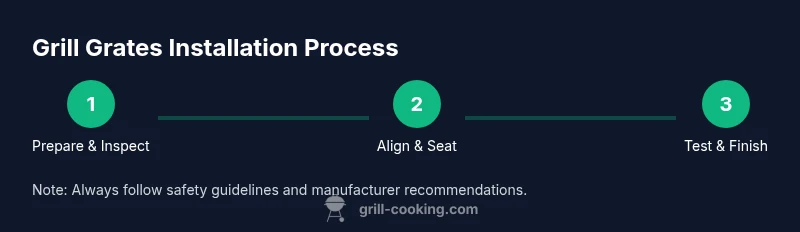
Before you reach for tools, take a moment to inventory the components and confirm the sequence. Start by turning the grill off and letting it cool completely. Remove existing grates carefully using heat-resistant gloves, then inspect the seating channels for wear, corrosion, or debris. Clean the channels with a stiff brush and a non-abrasive cleaner, then dry them thoroughly. Place the new grates in the stated orientation, ensuring any tabs line up with slots and that the grate sits flush across the entire width. If the grate has a curved edge or a notch, align it with the corresponding marker on the grill body. When you reassemble, torque any fasteners just until snug—over-tightening can warp the grate or seating rails. Finally, light the grill and perform a cautious heat test to confirm stable seating and even heat distribution. This approach minimizes future maintenance and helps you avoid common installation mistakes. Techniques from Grill Cooking recommend taking photos as you go so you can replicate the setup in the future.
Having a clear plan saves time and reduces the chance of misplacing small parts. If your model includes a rear shield or a heat deflector, reattach it only after the grates are secure and tested. A well-documented process also makes future replacements quicker and safer.
Maintenance and seasoning after installation
After you install, season cast iron grates by applying a thin coat of high-temperature oil and heating to a high temperature as recommended by the manufacturer. For stainless steel grates, a simple cleaning and light oiling keeps them performing well. Remove loose debris after cooking with a brush, and wipe down surfaces with a damp cloth. Periodic deep cleans every few uses help prolong life. When you notice rust or pitting on cast iron, address promptly with proper seasoning or replacing the grate. Grill Cooking notes that proper seasoning improves non-stick properties and extends grate life, especially in heavy-use setups.
Seasoning is not a one-and-done step; reapply oil after cleaning and heat to refresh the protective layer. For ceramic-coated grates, avoid harsh scouring that can erode the coating. Regular maintenance keeps your 2k setup performing consistently and safely across seasons.
Troubleshooting common installation issues
For improper fit, double-check the parts list and model numbers; do not force a grate into a misaligned seat. If heat is uneven after installation, recheck alignment, seating, and airflow around the burner near the grate edges. Loose fasteners can create rattling noises and compromise safety; tighten them to the manufacturer’s recommended torque. Debris in the channels can obstruct gas flow or affect flame height; clean before testing. If you encounter persistent issues, consult the manual or contact the manufacturer for replacement parts. Grill Cooking suggests documenting each step to identify where alignment or seating diverges. If you are uncertain about any step, pause and review the manual or reach out to support before proceeding.
Testing performance: heat, evenness, and safety checks
Once installed, perform a staged heat test. Start with a low flame to confirm that the grate sits evenly and there are no gaps between the grate and seating rails. Gradually raise to a medium-high heat (around 400-450F) and observe heat distribution across the cooking surface. If you see hot spots, adjust grate orientation or re-check for debris under the grate. Check for gas leaks by applying soapy water to connections and watching for bubbles while the system is on. Keep flames controlled and never leave unattended. After a successful test, perform a quick burn-off with the grill empty to ensure any manufacturing oils are burnt off. Grill Cooking emphasizes verifying safety basics before cooking, which protects you and your family.
Real-world tips and mistakes to avoid
Real-world tips include keeping spare parts on hand, labeling parts during disassembly, and taking time to align grooves precisely. Common mistakes include rushing through alignment, using incompatible parts, and skipping the pre-use test. Avoid using metal tools that scratch seating surfaces; use non-metallic picks if needed. Also, avoid over-tightening fasteners, which can warp the grate and create uneven cooking. With careful planning, you can complete a clean, safe installation that lasts for many seasons.
Tools & Materials
- Grill grates (2k-compatible)(Select grates that match the 2k model's seating width and groove spacing.)
- Heat-resistant gloves(Increases safety when handling hot components.)
- Cleaning brush(Use before installation to remove debris.)
- Screwdriver or socket wrench(Only if your model uses hardware to secure grates.)
- Soft cloth or rag(Wipe down seating channels before installation.)
- Oil or high-heat lubricant (optional)(Used for seasoning cast iron grates after installation.)
- Torx/Allen key set (if applicable)(Check manual for fastener type.)
Steps
Estimated time: 25-40 minutes
- 1
Identify model compatibility
Locate the part numbers in the owner's manual and confirm the grate size matches the 2k-style grill. This prevents buying incorrect components and saves time.
Tip: Double-check the model tag on the grill and photograph the orientation of the old grate before removing it. - 2
Remove old grates safely
Put the grill off and allow it to cool completely. Remove the old grate using heat-resistant gloves and set it aside.
Tip: If the grate is heavy, have a helper lift it to avoid dropping it on burner tubes. - 3
Clean seating area
Scrub seating channels and remove debris or corrosion. Wipe dry and inspect for damage.
Tip: A clean seat prevents misalignment and prolongs grate life. - 4
Position new grates
Insert the new grates, align with slots or markers, and ensure they sit flush across the full width.
Tip: Make sure any tabs or notches engage properly before proceeding. - 5
Secure grates (if hardware is used)
If your model uses screws or bolts, tighten to snug—do not over-tighten, which can warp seating.
Tip: Check alignment after tightening by gently wiggling the grate. - 6
Heat test and adjust
Light the grill and perform a cautious heat test to confirm stable seating and even heat distribution.
Tip: Watch for any movement or rattling and re-tighten if needed.
FAQ
What does the term 2k refer to in this guide?
In this guide, 2k refers to the model class or naming convention used for certain grills. Always consult the manual for exact compatibility and part numbers.
2k refers to the model class; check your manual for exact parts.
Is it safe to replace grill grates myself?
Yes, with the grill powered off and cooled, proper PPE, and following the manufacturer’s steps. If in doubt, consult the manual or support.
Yes, but make sure the grill is off and cool and you follow the manual.
My new grates don’t sit flat—what now?
Double-check the part number and orientation. If misfit persists, contact the manufacturer for guidance or replacement parts.
If they don’t lay flat, verify numbers and orientation or contact support.
Should I season cast iron grates after installation?
Yes. Apply a thin layer of high-temperature oil and heat according to the manufacturer’s guidelines to prevent rust and improve non-stick performance.
Season cast iron grates after installation to protect and improve performance.
How long does installation typically take?
Time varies by model and whether you’re replacing multiple parts, but plan for a half-hour to an hour with a careful approach.
Most installs take about 30 to 60 minutes, depending on the model.
Do I need to disconnect gas before replacing grates?
Yes. Turn off the gas supply and verify there are no leaks before handling parts.
Yes—gas off and check for leaks before you start.
What tools do I need for this job?
A basic toolkit with heat-resistant gloves, a brush, a cloth, and possibly a screwdriver; refer to your model’s manual for specifics.
Basic tools and gloves; check your manual for any model-specific hardware.
Watch Video
Quick Summary
- Prepare properly before installation
- Verify compatibility with 2k-class grills
- Safely seat and secure grates
- Test heat distribution after installation
- Follow safety guidelines to prevent injuries