How to Tell When Grilled Shrimp Is Done
Master shrimp doneness with visual cues, temperature checks, and timing tips for perfect grilled shrimp every time. Learn to tell when grilled shrimp is done with confidence using texture, color, curl, and internal temperature guidance from Grill Cooking.


In this guide you’ll learn how to tell when grilled shrimp is done using clear cues. You’ll rely on color, texture, curl, and internal temperature, plus timing tips for different sizes and grill types. We cover common doneness indicators, safety checks, and quick verification methods so every bite is perfectly tender and flavorful.
Why this matters when learning how to tell when grilled shrimp is done
Understanding how to tell when grilled shrimp is done is essential for safety, texture, and flavor. Shrimp cook incredibly fast, and small changes in time can swing from juicy to rubbery in minutes. By combining simple visual cues with a reliable internal temperature check, home cooks can consistently produce shrimp that are tender, sweet, and safe to eat. According to Grill Cooking, mastering doneness starts with recognizing shrimp size, grill type, and a consistent cooking rhythm. This section sets the foundation for a practical, repeatable workflow you can apply to any grill setup.
A well-executed doneness check isn't about chasing a perfect color alone; it blends appearance, feel, and temperature. The goal is a shrimp that is opaque with a slight sheen, a gentle curl, and a texture that springs back rather than yielding to mush. When done right, you’ll notice the shrimp take on a plump, pink hue with a translucent edge that disappears as you test for firmness. With practice, you can judge doneness in seconds and save money by avoiding waste.
To get started, calibrate your senses by grilling a test shrimp and noting how it looks and feels when it’s perfectly cooked. As you continue, you’ll develop a personal checklist that you can apply whether you’re cooking on gas, charcoal, or a pellet grill. Grill Cooking’s approach emphasizes reliability and consistency over guesswork, so you can replicate great results every time.
Visual Cues: Color, Curl, and Texture
The most immediate signals come from the shrimp’s appearance and feel. Look for a color shift from a grayish raw look to a warm pink with an opaque center. The shell (if kept on) may show a bright pink hue with a firm, glossy surface; peeled shrimp should appear solid pink throughout with a slight translucence at the center that disappears as it finishes cooking. A classic sign of doneness is the characteristic curl: shrimp should curl into a loose “C” shape. If they coil tightly into an “S,” they are likely overcooked and dry. The texture should be firm but still juicy; press lightly with tongs to feel resistance and spring back, not a mushy or rubbery give. For visual reference, you can compare the shrimp to a slightly curved, plump sausage—thick, uniform, and resilient. Remember, doneness indicators can overlap with size and grill heat, so use multiple cues rather than relying on color alone.
Temperature Guidelines: Safe and Accurate Doneness
Temperature is the most objective measure of doneness. When shrimp reach the recommended internal temperature, they become opaque and firm while retaining moisture. A common target range for grilled shrimp is around 120-125°F (49-52°C) at the thickest part. This range helps avoid rubbery texture while ensuring safety. The best practice is to insert the probe into the thickest section away from the shell or skewers. If you’re cooking with shells on, the temperature will rise a touch more slowly than peeled shrimp, so monitor closely and check a second shrimp if you’re unsure. When in doubt, aim for the lower end of the range and finish with a brief rest off the heat so carryover cooking brings the center to the desired temperature without overdoing the exterior.
Tip: Always insert the thermometer perpendicular to the shrimp’s length to reach the center. For visual learners, pair this check with the curl cue to confirm doneness with confidence.
How Size Affects Doneness
Shrimp come in a range of sizes, from small 26/30 to larger 10/15 counts per pound. Smaller shrimp cook faster and may reach doneness in as little as 1-2 minutes per side on a hot grill, while larger shrimp can require 2-3 minutes per side. When sizes vary in the same batch, rely on internal temperature rather than time alone. If you thread shrimp onto skewers, give each piece a bit more space—crowding reduces heat penetration and leads to uneven cooking. If you are cooking shell-on shrimp, the shells can trap moisture and slightly slow down the process, so plan for a longer window and verify with the thermometer. Always start with dry, well-seasoned shrimp to ensure even browning and juiciness across sizes.
This size-aware approach will help you build a reliable timing frame that works for your preferred shrimp sizes and grill setup.
Grill Type and Heat Level: Gas vs Charcoal vs Pellet
Different grill types heat differently, affecting how quickly shrimp cook. On a gas grill, you’ll typically work with medium-high heat (around 400-450°F / 205-230°C) for a fast sear and quick finish. Charcoal grills impart a smoky flavor but can fluctuate in temperature; aim for steady medium-high heat with an even bed of coals. Pellet grills offer consistent indirect heat with a clean flame, which can be ideal for controlled doneness. Regardless of your fuel, preheat well and manage direct heat for shrimp; you want a quick sear on the outside while preserving the interior’s moisture. If you overheat, shrimp will seize texture and become rubbery, so monitor closely and adjust flames as needed. A reliable thermometer becomes especially valuable when your grill’s temperature swings.
Context from Grill Cooking emphasizes practicing with your specific grill to build an internal sense of doneness—the blend of experience and temperature awareness yields the most reliable results.
Timing Cheatsheets by Shrimp Size
To help you plan ahead, here are general timing guidelines based on typical shrimp sizes. Small shrimp (about 26/30 count per pound) often finish in roughly 1-2 minutes per side on medium-high heat. Medium shrimp (16/20 count) typically need about 2-3 minutes per side. Larger shrimp (10/15 count) can require 3-4 minutes per side, often totaling 6-8 minutes of cook time. These ranges assume a hot grill with direct heat and shell or shell-off prep that is even and uniform. Always confirm with a thermometer for precision, especially during demonstrations or when serving guests who expect consistent results. Practice with a single test shrimp to calibrate your timing for future cooks.
Note: Keep the grill steady and avoid constant flipping; one or two flips maximize crust and juiciness. This step helps anchor your doneness routine so you can adjust for different sizes quickly.
Quick Verification Methods: Thermometer, Touch, and Sight
Rely on a combination of quick checks to verify doneness. A trusted instant-read thermometer remains your most reliable tool; insert into the thickest part away from the shell to ensure accuracy. Texture checks—firm to the touch, not mushy—complement temperature readings and give you a tactile sense of doneness. For trained cooks, a light pressure test with tongs should reveal a slight spring-back rather than a lingering indent. In situations where you can’t use a thermometer, rely on the curl and color cues in conjunction with timing as a rough guide, but do not rely on color alone. With practice, you’ll learn to combine these signals into a simple, repeatable test.
Pro tip: Keep a testing shrimp aside and compare it with each batch so your senses sharpen and your results stay consistent.
Common Mistakes to Avoid
Common errors include overcooking due to too-high heat, crowding the grill, or using color alone as the sole indicator. Shrimp can go from juicy to rubbery in moments, so undercooking while aiming for a pink shade is a frequent pitfall. Avoid peeling back shells prematurely to peek at the center; this breaks moisture balance. Also, avoid letting shrimp rest on hot metal too long, which can drive carryover cooking and toughen the texture. Maintain even heat, keep pieces separated, and verify doneness with a thermometer rather than relying on appearance alone. Practicing with different shrimp sizes will help you fine-tune your method.
This section emphasizes discipline and consistency to prevent common misjudgments and ensure a reliable result every time.
Practical Scenarios: Small vs Large Shrimp on Different Grills
When you cook a mixed batch on a gas grill, start by separating the smaller pieces and finishing them first, then add the larger ones. On a charcoal grill, keep the lid closed for a brief period to stabilize temperature before cooking; then remove the lid for the final sear to lock in juices. For shell-on shrimp, plan for a touch longer cook time and verify both shell-off and shell-on pieces; sometimes the shell adds a protective barrier that helps preserve moisture. In all cases, rely on a thermometer and the cues discussed above to judge doneness rather than clinging to rigid timing.
As you gain experience, you will quickly estimate doneness by sight and touch, with the thermometer providing a final assurance. Grill Cooking encourages you to develop a consistent routine so you can apply it across grills and shrimp sizes.
Flavor and Texture: Finishing Touches After Doneness
Once shrimp reach the target internal temperature, remove them promptly to avoid carryover cooking. A brief rest of 1-2 minutes allows juices to redistribute, improving juiciness and mouthfeel. A light glaze or finishing sauce can be applied during the last 30 seconds of cook time to build flavor without overloading the shrimp. Be mindful that any sauce containing sugar can burn quickly on high heat, so apply toward the end and keep a close eye. If you want extra char or a deeper crust, give the shrimp a final quick sear on high heat, then rest again.
A final note: never rely on raw shrimp’s pale gray appearance to judge doneness. The color and texture are your best indicators.
Safety and Handling: Storage, Reheating, and Leftovers
If you have leftovers, cool promptly and refrigerate within two hours in shallow containers to promote rapid cooling. Reheat gently to avoid toughening the shrimp; a quick toss in a hot skillet or a brief reheat on low, covered heat helps preserve moisture. When handling raw shrimp, practice standard kitchen safety: wash hands and surfaces after contact, keep raw shrimp separate from ready-to-eat foods, and discard any shrimp that smells off or has a slimy texture. Proper storage and careful reheating help maintain quality and safety for subsequent meals.
Putting It All Together: A Simple Workflow for Consistent Doneness
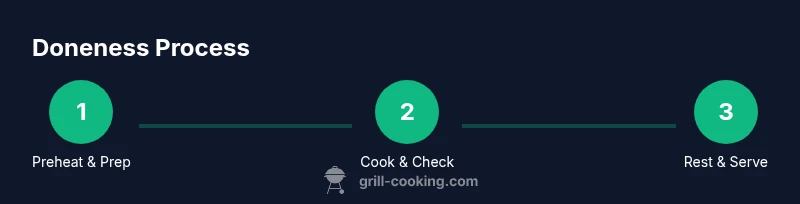
Create a consistent workflow you can repeat: (1) preheat grill and pat shrimp dry; (2) season and oil lightly; (3) place on grill with space between pieces; (4) sear briefly, then flip once; (5) test thickest part with thermometer, aiming for 120-125°F; (6) remove from heat and rest 1-2 minutes; (7) serve with a finishing sauce if desired. This loop emphasizes temperature accuracy alongside visual cues to ensure you never overcook or undercook the shrimp. By following Grill Cooking's guidelines, you can build confidence with every batch and adapt to different grills and shrimp sizes.
Tools & Materials
- Raw shrimp, peeled and deveined (size variations)(Fresh or thawed; pat dry before grilling)
- Instant-read thermometer(Probe into thickest part without touching shell)
- Grill tongs(Long enough to keep hands away from heat)
- Skewers (optional)(Wooden skewers soaked 15 minutes before use)
- Oil spray or brush(Lightly oil to prevent sticking)
- Salt, pepper, or seasoning of choice(To taste)
- Clean, well-oiled grill grates(Preheat before cooking)
- Towels or gloves for handling hot equipment(Keep handy for safety)
Steps
Estimated time: 15-25 minutes
- 1
Preheat grill
Preheat grill to medium-high (about 400-450°F / 205-232°C) and ensure grates are clean. This creates a quick sear that locks in moisture. See the accompanying diagram for grill placement guidance.
Tip: A properly preheated surface prevents sticking and gives even browning. - 2
Pat dry and season
Pat shrimp dry to remove surface moisture, then season with salt, pepper, and any preferred spices. Dry surfaces promote browning and flavor adhesion.
Tip: Patting dry is more important than heavy oil for crisp exterior. - 3
Oil the grates or shrimp
Lightly oil the grates or toss shrimp in a small amount of oil. Oiling helps prevent sticking and improves crust formation.
Tip: Oil on the shrimp reduces sticking more reliably than oil on the grate. - 4
Thread or arrange shrimp
Skewer shrimp or lay them directly on the grill with space between pieces for even heat exposure. If using skewers, space shrimp to avoid crowding and ensure even cooking.
Tip: Soak wooden skewers before use to prevent burning. - 5
Sear and flip
Place shrimp on the grill and sear for 1-2 minutes. Flip once and rotate for even grill marks, cooking another 1-2 minutes.
Tip: Avoid moving shrimp too early to get a good crust. - 6
Check internal temperature
Insert thermometer into the thickest part of the shrimp without touching the shell; target 120-125°F (49-52°C). If shell-on, check a second piece for consistency.
Tip: If you see opaque pink with slight translucence at the center, test with thermometer for confirmation. - 7
Remove and rest
Transfer shrimp to a plate and let rest 1-2 minutes. Resting allows juices to redistribute and can improve juiciness.
Tip: Do not leave on the grill after reaching target temp to avoid carryover cooking. - 8
Finish with flavor
Optionally glaze with a light sauce during the last 30 seconds of cook time. Avoid high-sugar sauces early, which can burn.
Tip: Finish with a quick high-heat kiss to re-seal surface before rest. - 9
Serve and evaluate
Serve immediately and compare outcomes with your memory of doneness cues. Use feedback to fine-tune future batches across shrimp sizes and grills.
Tip: Keep a test shrimp aside for continuous calibration.
FAQ
What is the best internal temperature for grilled shrimp?
Aim for about 120-125°F (49-52°C) at the thickest part. Temperature is the most reliable doneness indicator, especially across different shrimp sizes. Always verify with a thermometer for safety and consistency.
Aim for around one hundred twenty to one hundred twenty-five degrees Fahrenheit at the thickest part for doneness, and use a thermometer to be precise.
Can you tell by color alone if shrimp is done?
Color is a helpful cue but not foolproof. Shrimp can look pink before it is fully cooked inside. Always pair color with texture and temperature checks to confirm doneness.
Color helps, but don’t rely on it alone—check texture and temperature as well.
Should I grill shrimp with shells on?
Shell-on shrimp cook more slowly and stay juicier, but peeled shrimp finish faster and are easier to check. Choose based on preference and plan timing accordingly.
Shells can help with moisture, but peeled shrimp cook faster. Pick one and time accordingly.
How do I prevent overcooking?
Manage heat carefully, watch the clock, and verify doneness with a thermometer. Remove shrimp the moment they hit the target temperature and mobile carryover cooking will finish the job without drying out.
Keep heat steady and check with a thermometer to avoid overcooking.
How long does it take to grill shrimp on skewers?
Skewered shrimp typically finish in about 3-5 minutes total, depending on size and heat. Use a thermometer and visual cues for accuracy.
Most skewered shrimp take 3-5 minutes total; use a thermometer to be safe.
What are signs of overcooked shrimp?
Overcooked shrimp become tough, rubbery, and start to curl tightly. If they feel firm and spring back slowly, they may be undercooked—recheck with a thermometer.
Rubbery texture and tight curling indicate overcooking; check temperature to be sure.
Watch Video
Quick Summary
- Check doneness with an instant-read thermometer.
- Doneness relies on texture, not color alone.
- Size and grill type influence timing.
- Rest briefly to maximize juiciness.
- Follow a repeatable workflow for consistency.