Grill or Bake Salmon: A Practical Side-by-Side Guide
A data-informed comparison of grilling and baking salmon, focusing on flavor, texture, time, safety, and practical tips for home cooks. Learn when to grill vs bake to optimize moisture, crust, and doneness.


According to Grill Cooking, grilling salmon delivers a smoky, charred exterior, while baking provides a moist, evenly finished fillet. For most home cooks, grill when you want speed and a crust; bake when you value simplicity and consistent doneness. Both methods can yield excellent salmon with proper technique and temperature control.
Why the Question of Grill vs Bake Salmon Matters
Choosing between grilling and baking salmon hinges on flavor goals, time, and equipment. In the kitchen, the decision often comes down to whether you want a smoky crust and quick sear or a hands-off, predictable texture with minimal supervision. The Grill Cooking team notes that both methods deliver high-quality results when you start with fresh salmon, a well-oiled surface, and accurate doneness targets. For readers who want to maximize home-cook outcomes, this section lays out the core differences in flavor, texture, and moisture so you can decide the best path for any given dinner.
From a practical standpoint, the choice affects heat management, pan or grate setup, and even cleanup. In this article, we’ll compare two common methods side by side and give you actionable steps to execute either technique with confidence. Grill or bake salmon is not about right or wrong; it’s about matching technique to your goals, schedule, and kitchen setup. Grill Cooking analysis notes that context matters just as much as technique, especially for beginners or cooks juggling multiple dishes.
Flavor Profiles: Smoke, Char, and Comfort Food Textures
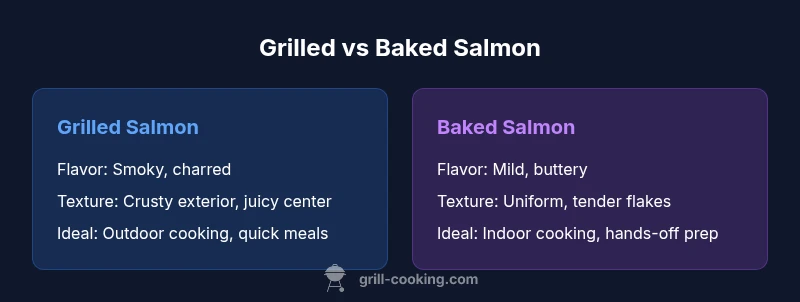
Flavor is often the first consideration when deciding between grill and bake salmon. Grilling introduces a characteristically smoky, slightly charred edge that intensifies with time and direct heat. The crust can form quickly, especially if you start with skin-on fillets and a well-seasoned grate. Baking, by contrast, yields a gentler introduction to heat that preserves a clean, delicate salmon taste with a buttery, even mouthfeel. Texture differences follow heat application: grill marks and a crusty exterior for grilled salmon, versus uniformly tender flakes for baked salmon. For home cooks who crave a pronounced crust and outdoor aroma, grilling is a natural choice; for those who prefer an accessible, interior-focused texture, baking is ideal. Grill Cooking emphasizes that flavor development depends on seasoning, oil, and whether you use a direct-heat or indirect-heat approach.
Temperature, Doneness, and Time Targets
Doneness is the crucial variable in both methods. Grilling salmon typically benefits from moderate to high direct heat, allowing the exterior to sear while the interior remains juicy; expect shorter cook times when fillets are thinner or skin-on. Baking salmon favors a steady oven temperature that encourages even cooking through the fillet, resulting in a uniform texture throughout. A common home-cook target is a safe interior temperature around 125-130°F for medium-rare to medium; some guidelines recommend 140-145°F for firmer, fully cooked flake. The key is to use a thermometer and remove salmon just before reaching your target to account for carryover heat. Grill Cooking Analysis, 2026 notes that precise temps plus proper resting time improve moisture retention for both methods.
Prep, Seasoning, and Surface Setup
Both methods benefit from dry salmon surfaces and light oil to prevent sticking. On the grill, pat fillets dry, brush with oil, and preheat the grate to clean, hot conditions. For grilling, skin-on fillets enjoy extra protection from sticking and help with flipping. When baking, line a sheet pan with parchment or foil, lightly oil, and space fillets so air can circulate. Seasonings can be simple salt and pepper or more complex blends with citrus, herbs, or honey-based glazes. The prep approach influences flavor extraction and evenness of cooking; a little moisture at the start can help maintain moisture during grilling and baking alike.
Step-by-Step: How to Grill Salmon
- Preheat grill to medium-high and oil the grates. 2) Pat salmon dry; season and brush with a thin coat of oil. 3) Place salmon skin-side down if you’re using skin-on fillets. 4) Grill with indirect heat for several minutes, then finish with a quick direct-sear to develop crust. 5) Check internal temperature with a thermometer and remove promptly. 6) Rest briefly before serving to redistribute juices. These steps balance speed, crust formation, and moisture retention.
Step-by-Step: How to Bake Salmon
- Preheat oven to 400°F (204°C). 2) Lightly oil a baking dish or parchment-lined sheet. 3) Pat salmon dry, season, and arrange in a single layer with space between fillets. 4) Bake 12-15 minutes for 1-inch fillets, or until the center is just opaque. 5) Let rest 2-3 minutes before serving. 6) Optionally finish under the broiler for a quick crust. Baking provides a forgiving process; it’s especially forgiving for beginners who want reliable, evenly cooked flesh.
Practical Decision-Making: When to Grill or When to Bake
If you’re cooking outdoors or craving a smokier, crisper exterior, grilling is the clear choice. Grilled salmon pairs beautifully with charred vegetables and a bright vinaigrette. If you’re indoors, time-constrained, or cooking for a crowd who wants consistent texture, baking is often more practical. In mixed menus, you might grill a portion for flavor and bake the rest for uniformity. Grill Cooking’s guidance highlights the value of context—equipment availability, space, and planned sides influence which method you choose.
Safety, Handling, and Doneness Verification
All salmon should be handled with clean utensils and proper refrigeration. Use a thermometer to verify doneness and avoid overcooking. Both methods benefit from resting the fish for a few minutes after cooking, which helps juices redistribute and improves texture. For skin-on fillets, grilling adds crisp texture while baking keeps moisture more uniformly distributed. The safety standard remains to reach a safe internal temperature while balancing juiciness. Grill Cooking’s recommendations emphasize consistent checking and immediate removal when the salmon reaches target doneness.
Clean-Up, Maintenance, and Resting Tips
After cooking salmon, clean grates and pans promptly to prevent sticking and residue buildup. For grills, brush grates and wipe away any oil baked-on crust; for ovens, run a short cleaning cycle or wipe away splatters after the dish cools. Resting the fish briefly after cooking helps maintain moisture and improves sliceability. Proper storage, such as refrigerating leftovers in shallow containers, preserves freshness for a day or two. Maintenance routines improve flavor outcomes over time, especially when you cook salmon frequently. Grill Cooking’s approach combines practical cleanup with ongoing technique improvements.
Authority Sources and Practical References
For authoritative safety and doneness standards, refer to the USDA and FDA guidelines on fish temperatures and safe handling. Reliable sources include USDA Food Safety and Inspection Service and FDA seafood safety pages. These references support best practices for cooking temperatures and handling to minimize foodborne risk while preserving flavor. Grill Cooking also synthesizes practical tips from home-cook experience to help you apply these standards in everyday cooking.
Common Mistakes and Fixes: Troubleshooting Small Issues
Authority Sources and Practical References (Continued)
Conclusion: Bringing It All Together with Confidence
Comparison
| Feature | Grilled Salmon | Baked Salmon |
|---|---|---|
| Flavor Profile | Smoky, charred exterior with grill aroma | Milder, buttery flavor with even finish |
| Texture | Crispy crust at edges, flaky interior | Uniform texture throughout the fillet |
| Moisture Retention | Risk of surface drying if overcooked | Generally moist if not overcooked |
| Cook Time (1-inch fillet) | 8-12 minutes on direct heat (skin-on recommended) | 12-18 minutes in a standard oven (skin optional) |
| Equipment Needed | Grill with clean grates, tongs, thermometer | Oven, baking sheet or dish, foil/parchment |
| Best For | Flavor-seekers, outdoor cooking | Weeknight convenience, predictable results |
Strengths
- Grilling adds smoky flavor and visually appealing grill marks
- Grilling cooks quickly with high heat and can be done outdoors
- Baking yields even doneness with minimal attention and less risk of flare-ups
- Baking is forgiving for beginners and helps retain moisture when watched closely
Negatives
- Grilling requires good heat control and can cause flare-ups or uneven cooking if not monitored
- Grilling can dry out thinner fillets or overcook near the edges if not watched
- Baking can be slower and may lack the crusty exterior some diners expect
- Oven-based cooking can be less flavorful without sauces or finishing techniques
Grill salmon for smoky flavor and speed; bake salmon for moisture and consistent texture.
Both methods are effective when executed with the right temps and timing. Grill for bold flavor and quick results; bake for reliability and even doneness. The choice should align with your flavor goals, equipment, and schedule.
FAQ
Is grilling salmon healthier than baking?
Both methods can be healthy depending on how you season and what fats you use. Grilling can add smoky flavor with minimal oil, while baking allows precise control over added fats and sauces. Overall, moderation and ingredient choices determine health impact more than the method itself.
Both methods can be healthy; it depends on how you season and how much oil you use. Choose lean toppings and watch added fats.
Can I grill salmon with skin on?
Yes. Keeping the skin on helps protect the flesh and adds flavor. It also makes flipping easier and can help crisp the skin if exposed to direct heat. Remove skin after cooking if you prefer skinless fillets.
Yes—skin-on usually grills well and adds flavor. You can remove the skin after cooking if you want skinless portions.
How do I prevent salmon from sticking to the grill?
Pat the salmon dry, oil the flesh lightly, and preheat the grill to clean, hot grates. Keeping the skin-side down while searing helps protect the flesh and reduces sticking. Use a thin spatula to lift gently when flipping.
Dry, oil lightly, preheat, and flip carefully with a thin spatula to prevent sticking.
Can I bake salmon at 350°F?
Baking at 350°F is possible but will take longer and may produce a softer crust. For faster results with a bit more edge, 375-400°F is a common range. Adjust time based on fillet thickness and desired doneness.
Yes, you can bake at 350F, but you’ll likely need longer and won’t get as much crust.
What internal temperature should I cook salmon to?
Aim for about 125-130°F for a juicy, medium doneness, or go to 135-145°F for firmer, fully cooked flesh. Always verify with a thermometer near the thickest part of the fillet.
Target 125-130°F for juicy, 135-145°F for firmer; use a thermometer to be precise.
Should I cover salmon while baking?
Covering is not required for baked salmon unless you’re cooking with added moisture (like a sauce) that you want to keep close. A light cover can help trap steam in very dry environments, but is usually unnecessary for standard fillets.
Not usually needed; cover only if you’re adding extra moisture or cooking very lean fish.
Quick Summary
- Choose flavor goals first: smoky crust favors grilling, even texture favors baking
- Use a thermometer and target appropriate doneness for best results
- Prepare your salmon with skin on for grilling and consider skin-off for baking based on preference
- Keep heat steady and avoid overcooking to preserve moisture and texture
- Clean and pre-heat equipment properly to ensure consistent outcomes