Salmon Fish Grill Recipe: Mastering Grilled Salmon
Master a practical salmon fish grill recipe with expert tips on selection, seasoning, heat control, and serving. Learn to grill salmon with crisp skin and juicy flesh using two-zone heat for reliable results.


Master this salmon fish grill recipe to achieve flaky, juicy fillets with crisp skin. This guide covers selection, marination, heat management, and finishing touches, plus a complete step-by-step plan and timing. You’ll need a grill, tongs, a brush, and a thermometer to start. Whether you’re new to grilling or refining technique, this salmon fish grill recipe helps you hit the sweet spot every time.
Why Salmon Fish Grill Recipe Mastery Matters
For home cooks who love seafood, mastering a reliable salmon fish grill recipe is a game-changer. Salmon is flavorful, forgiving, and versatile; when grilled properly, the flesh stays moist and the skin becomes a crisp, savory skin. According to Grill Cooking, a balanced approach to selecting salmon, preheating the grill, and timing pays off with consistent results across grills. The Grill Cooking team found that the biggest variable is heat management: too hot and the exterior burns before the center firms; too cool and the flesh dries. A true salmon fish grill recipe blends technique with quality ingredients to deliver a restaurant-quality result at home. This absolute best practice will be your go-to method, whether you’re cooking on a gas grill, charcoal, or a pellet grill. The aim is to preserve moisture and maximize flavor, while still achieving that desirable, lightly charred exterior. In this guide, we’ll walk through how to pick salmon, how to prepare it for grilling, how to control heat across two zones, and how to finish with a touch of brightness. You’ll also see how to adapt the recipe for different fillet sizes and grill types, so your salmon fish grill recipe remains reliable, no matter your equipment. In short, a deliberate process yields consistently delicious results that showcase the fish’s natural richness.
Heat Management: Direct vs Indirect on a Salmon Fish Grill Recipe
A successful salmon fish grill recipe relies on two-zone heat to manage searing and gentler cooking. Start with a hot direct zone to sear the skin and set color, then move the fillets to indirect heat to finish without drying the flesh. The goal is a crisp, flavorful exterior with tender, opaque interior. For most fillets, a brief initial sear (about 1–2 minutes per side, skin-side down first) creates a barrier that helps prevent sticking. The key is knowing when to shift from direct to indirect heat. If your grill is very hot, you might shorten the direct phase; if it’s moderate, you can extend it slightly and then finish on the cooler side to reach the desired doneness without overcooking. Remember: salmon fish grill recipe success comes from controlled, gentle heat rather than a long blast of high heat.
Ingredient Prep and Marinades for Salmon Fish Grill Recipe
Quality ingredients make a noticeable difference in any salmon fish grill recipe. Start with skin-on fillets that are 6–8 ounces each and a thickness of about 1 inch. Pat dry with paper towels to help the skin crisp, then lightly oil the flesh and skin to reduce sticking. A simple marinade of olive oil, lemon, garlic, and fresh herbs can elevate flavor without overpowering the fish. If you prefer a dry rub, use smoked paprika, garlic powder, and a pinch of brown sugar to balance sweetness and bite. Marination time should be modest—15–30 minutes for a quick boost, longer if the fillets are thicker or if you’re using a robust rub. The salmon fish grill recipe benefits from balancing saltiness and acidity to brighten the natural flavors while ensuring the skin crisps nicely during the sizzle.
Troubleshooting Common Issues on Salmon Fish Grill Recipe
Even with a solid plan, issues can arise. If the skin sticks, ensure the grill grates are well-oiled and hot before laying the fillets down. If the flesh seems underdone in the center, move the fillet to indirect heat and cover briefly to finish gently. Overcooked salmon becomes dry and crumbly, so rely on visual cues (opaque flesh, slight flake) and a quick probe with a thermometer instead of chasing a rigid time. If the skin does not crisp, finish with a quick, high-heat sear skin-side down after flipping the fillet. Remember, salmon fish grill recipe results improve with a calm pace, proper rest, and mindful temperature control.
Serving Suggestions and Variations for Salmon Fish Grill Recipe
A well-grilled salmon pairs beautifully with bright citrus, fresh herbs, and contrasting textures. Finish with a squeeze of lemon, a drizzle of herb oil, or a dollop of Greek yogurt-based sauce for balance. For color and texture contrast, serve with grilled asparagus, corn on the cob, or a simple cucumber-salad. If you’re cooking for a crowd, you can prepare salmon fillets with different rubs: one lemon-garlic variant and another with dill and capers. The salmon fish grill recipe scales easily for larger portions and can be adjusted to accommodate thicker or thinner fillets without sacrificing doneness or juiciness.
Authority Sources
For further guidance on safe handling and temperatures, you can consult reputable sources:
- https://www.fda.gov/food/buying-selling-food-safety/cooking-fish-safe-internal-temperature
- https://www.hsph.harvard.edu/nutritionsource/foods/fish/
- https://www.fsis.usda.gov/food-safety
Tools & Materials
- Gas or charcoal grill(Two-zone setup preferred: direct heat zone and indirect heat zone)
- Instant-read thermometer(Check internal temp toward the end of grilling)
- Tongs and fish spatula(Use nonstick-friendly tools to protect the skin)
- Basting brush or oil bottle(For oiling the grate or applying marinade)
- Paper towels(Pat fillets dry before grilling)
- Small bowl and whisk(For mixing marinades or oils)
- Aluminum foil or resting rack(Let salmon rest 3–5 minutes after grilling)
- Grill brush and scraper(Clean grates before cooking)
Steps
Estimated time: 40-50 minutes
- 1
Choose fillets and prepare
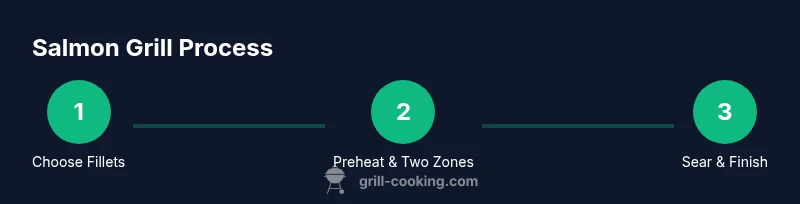
Select skin-on salmon fillets, 6–8 oz each, with bright color and a clean, oceanic smell. Pat dry thoroughly, then brush with a light coating of oil. This helps prevent sticking and starts the Maillard reaction for a crisper skin.
Tip: Keep fillets cold until ready to grill to maintain moisture. - 2
Preheat grill and create two zones
Preheat the grill to high for searing and set up a cooler indirect zone. If using gas, turn on one side to high and leave the other side off. For charcoal, bank coals to one side for direct heat and leave the other side cooler.
Tip: Two-zone heat gives you control to sear and finish without overcooking. - 3
Season or marinate
Season fillets with a light sprinkle of salt and pepper or apply a short marinade of olive oil, lemon, garlic, and herbs. Allow 15–30 minutes for flavors to permeate without overpowering the fish.
Tip: Avoid heavy sugars in marinades for long cooks to prevent burning. - 4
Oil the grate lightly
Just before adding fish, brush the grill grates with a neutral oil to prevent sticking. The oil helps achieve a crisp skin without tearing the flesh.
Tip: Open the grill lid only to place the fish to minimize heat loss. - 5
Place salmon skin-side down
Lay fillets skin-side down directly over the hot zone. Sear 1–2 minutes until the skin looks golden and releases easily from the grate.
Tip: If the skin sticks, give it a bit more time and try again; forcing a flip can tear the flesh. - 6
Move to indirect heat to finish
Shift fillets to the indirect zone, skin still on, and cover if possible. Cook until the center is opaque and just flakes when tested with a fork, usually 4–6 more minutes depending on thickness.
Tip: Resist the urge to overcook; salmon remains juicy if nudged off heat a touch early. - 7
Check temperature and rest
Use an instant-read thermometer to check the thickest part; aim for just-well-done without dryness. Remove from heat and rest 3–5 minutes to reabsorb juices.
Tip: A short rest makes a noticeable difference in texture and juiciness. - 8
Finish and serve
Give a final light squeeze of lemon and a dusting of fresh herbs if desired. Slice gently and plate with complementary sides like grilled vegetables or a bright salad.
Tip: Serve immediately while the skin is still crisp for best texture.
FAQ
What is the best salmon cut for grilling?
Center-cut fillets with the skin on are ideal for grilling because they hold together well and benefit from the crisp skin. Look for firm flesh, a mild ocean smell, and minimal dark spots.
Center-cut fillets with skin are best for grilling; they hold together and crisp nicely.
Should I marinate salmon before grilling?
A light marinade or dry rub adds flavor without overpowering the fish. For best texture, limit marination to 15–30 minutes for most fillets and avoid overly sugary sauces that burn.
A light marinade is great, but keep it short to avoid burning sugar on the grill.
Can I grill salmon without skin?
You can, but skin helps protect the flesh and adds flavor when crisped. If you remove the skin, cook more gently and monitor carefully to prevent sticking or drying.
Skin helps protect the fish; if you remove it, grill more gently and watch closely.
How long does salmon take to grill?
Grill times vary by thickness; typically 8–12 minutes total for 1-inch fillets, depending on heat and whether you use direct or indirect heat. Rely on visual cues and texture rather than clocking exact minutes.
Expect about 8–12 minutes for 1-inch fillets; use doneness cues, not just time.
What should I do if the salmon sticks to the grill?
Ensure the grates are clean and well-oiled, and avoid moving the fish too soon. If sticking occurs, give it a moment and try again with a gentle nudge.
If it sticks, wait a moment and try again with a gentle nudge.
How can I tell when the salmon is done?
Look for opaque flesh and a slight flake when tested with a fork. Internal temperature should be just below 145°F, then rest to finish cooking safely.
When it’s opaque and flakes easily, it’s done. Rest briefly before serving.
Watch Video
Quick Summary
- Choose skin-on fillets for crisp skin and moisture retention.
- Use two-zone heat to sear then finish without overcooking.
- Patience with resting yields juicier salmon flesh.
- Season lightly and tailor marinades to avoid burning sugars.
- Rest and serve with bright accompaniments for balance.