How to Grill Fish on the Grill: Step-by-Step Guide
Learn how to grill fish on the grill with expert tips, temperatures, and a foolproof step-by-step approach from Grill Cooking. Ideal for home cooks seeking crisp edges and moist interiors.


By following this guide, you will learn to grill fish on grill with confidence—select the right fillet, preheat the grate, manage direct and indirect heat, and flip with purpose. Learn how to prevent sticking, achieve a crisp exterior and juicy center, and finish with ideal resting times. This step-by-step approach makes successful fish grilling approachable for home cooks.
Why Grill Fish on Grill Matters
Grilling fish on the grill is a reliable way to achieve a crisp exterior and juicy interior without relying on heavy sauces. It honors the fish's delicate flavor while delivering a clean, smoky finish. With the right fish, careful preheating, and steady heat, you can consistently pull off restaurant-quality results at home. The Grill Cooking team has found that prep and grate care dramatically boost success. By following this guide, you can learn to grill fish on grill with confidence.
Choosing the Right Fish and Cut
For best results, pick firm, flaky varieties that hold up to direct heat. Salmon, halibut, snapper, sea bass, and mahi-mahi are excellent options, whether you grill fillets or steaks. Filets cook quickly and evenly, while steaks tolerate a thicker profile. Consider skin-on for moisture retention and easier handling; skinless cuts are great for delicate textures. When deciding on thickness, aim for pieces about 1 inch (2.5 cm) thick for predictable results. Fresh, well-handled fish will also sear more cleanly than thawed or previously frozen options.
Pro tip from Grill Cooking: keep fish well chilled until just before grilling to maintain freshness and reduce sticking. If you must thaw, do so slowly in the fridge to protect texture and moisture.
Prep, Drying, and Seasoning
Pat the fish dry with paper towels to remove surface moisture that can steam instead of sear. A light coating of oil—preferably high-smoke-point oil—helps prevent sticking and enhances browning. Season simply with salt, pepper, and a citrus note or herb rub to lift flavors without masking the fish’s natural sweetness. If using marinade, limit acidity to avoid breaking down the flesh; pat dry after brining if needed. Drying the surface also improves sear quality and crust formation, giving you that desirable contrast between exterior crust and juicy interior.
Preheating and Oiling the Grates
Begin by preheating the grill to a high heat level, then reduce to a controlled medium-high once the grate is hot. A properly heated grate creates an immediate sear that helps prevent sticking. Before placing the fish, oil the grates lightly with a high-smoke oil or oil a folded paper towel held with tongs to wipe the grate. This thin oil layer locks in moisture and promotes even browning while minimizing tearing when you flip.
Direct vs Indirect Heat for Fish
Use direct heat for a quick, sharp sear on the surface, followed by a brief rest on indirect heat if the fillet is thick or skin-on. For thin fillets, you can stay primarily on direct heat and flip once. Indirect heat is ideal for thicker pieces or when you want to retain moisture without scorching the exterior. Setting up two heat zones—one hot and one cooler—lets you finish the fish evenly without overcooking the edges. A grill-safe grate thermometer can help you monitor temperature without lifting the lid constantly.
Skin-On vs Skinless: Techniques
Skin-on fillets benefit from leaving the skin intact and scoring the flesh lightly to prevent curling. Start skin-side down to render fat and create a crisp, protective layer; flip carefully once the skin is released from the grate. Skinless fillets are more prone to sticking and tearing, so use a longer, gentler flip and be sure the grate is well oiled. For both types, maintain even contact by laying the fish flat and avoiding movement until the edges release naturally.
Cooking Doneness: Temperature and Texture
The goal is a fish that flakes easily and remains moist inside. Rely on visual cues—opaque color and flaking along the edges—combined with an internal temperature check. The FDA and USDA guidelines recommend cooking fish to about 145°F (63°C). If you don’t have a thermometer, test by gently pressing the center with a finger or a knife to see if the flesh is opaque throughout. Remember, residual heat during resting will continue to cook the fish slightly, so pull it from the grill just before it reaches doneness.
Finishing Touches and Resting
Let the grilled fish rest for 2–4 minutes after removing from the grill. Resting allows juices to redistribute, giving you a moister bite. Finish with a light squeeze of lemon, a drizzle of olive oil, or a quick herb infusion to brighten flavors without overpowering the fish. Plate with simple sides like grilled vegetables or a citrusy salad to complement the smokiness.
Common Mistakes and How to Avoid Them
Avoid crowding the grill—overcrowding lowers the grate temperature and increases sticking. Don’t flip too soon; wait for a clean release from the grate before turning. Dry the surface thoroughly and keep a steady, moderate heat rather than chasing an aggressive sear. If fish sticks, gently nudge it with the spatula and give it a few more seconds before trying again. Always use a probe thermometer to verify doneness and prevent overcooking.
Authority Sources and Additional Reading
For further guidance on seafood safety and cooking temperatures, consult respected authorities. The FDA provides general food-safety considerations for seafood; the CDC covers broad food safety practices; and USDA FSIS offers specific cooking temperature guidelines. Together, these sources help you grill fish on grill with confidence while maintaining safe handling and best practices.
Quick Reference: Doneness Essentials
- Look: Flesh turns opaque and flakes easily.
- Feel: Flesh separates with gentle pressure.
- Temp: Aim for 145°F (63°C) internal temperature.
- Rest: 2–4 minutes off-heat before serving.
Tools & Materials
- Grill (gas or charcoal)(Ensure heat control and clean grates before cooking.)
- Tongs(Long-handled, non-slip grip for safe flipping.)
- Fish spatula(Wide, thin blade helps lift delicate fish.)
- Grill brush(Clean grates to remove residue before cooking.)
- Oil spray or high-smoke oil(Lightly coat grates and fish to prevent sticking.)
- Instant-read thermometer(Check internal temperature to avoid overcooking.)
- Aluminum foil (optional)(Useful for resting or shielding edges from direct heat.)
- Paper towels(Dry surfaces and pat fish dry for best sear.)
Steps
Estimated time: 30-40 minutes
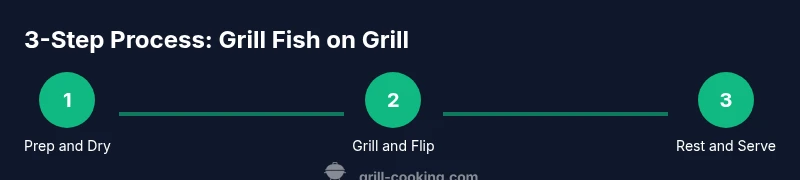
- 1
Inspect and pat dry
Start with thawed, fresh fish. Pat surfaces dry with paper towels to remove excess moisture that can steam instead of sear. If the skin is present, pat dry the skin side as well to promote a crisp finish.
Tip: A dry surface improves sear and reduces sticking. - 2
Season and oil lightly
Season generously with salt and pepper, and apply a light coat of oil to the fish. Oil helps prevent sticking and boosts browning without masking flavor.
Tip: Avoid heavy marinades right before grilling; they can burn and create bitterness. - 3
Preheat the grill
Preheat the grill to a high heat initially, then bring to a controlled medium-high before you place the fish. A hot grill creates a proper crust and helps prevent tearing when turning.
Tip: A quick test with a small piece of paper towel coated in oil shows if the grate is ready. - 4
Oil the grates
Use an oiled paper towel on tongs or an oil spray to lightly coat the grates. This reduces sticking and promotes even browning.
Tip: Keep the oil layer thin; too much oil can cause flare-ups. - 5
Place fish properly
Lay the fillet skin-side down (if skin-on) perpendicular to the grates so you can flip cleanly. Avoid dragging the fish across the grates.
Tip: Give it a moment to set and release—the fish should lift away from the grate on its own when ready. - 6
Flip with precision
Use a wide, flat spatula to flip once the edges begin to turn opaque and release easily. Flip away from you to avoid burns.
Tip: Limit flips to once or twice to preserve moisture. - 7
Check doneness
Evaluate doneness by color and texture, and verify with an instant-read thermometer if available. Remove when just shy of the target temperature to account for carryover heat.
Tip: If you cook to exact temperature, you risk a dry result. - 8
Rest the fish
Transfer to a plate and rest for 2–4 minutes. Resting redistributes juices and improves flavor.
Tip: Cover lightly with foil to keep warm without steaming the fish. - 9
Finish and serve
Finish with a light citrus squeeze, herbs, or a drizzle of olive oil. Serve with simple sides that complement the fish without overpowering it.
Tip: Pair with grilled vegetables or a bright salad for balance. - 10
Clean up
While the grill is still warm, brush off residue and wipe grates. Clean tools and store properly for next time.
Tip: A quick clean after cooking prevents buildup and improves future sears.
FAQ
What fish are best for grilling on the grill?
Choose firm, flavorful species like salmon, halibut, snapper, and sea bass. Fillets tend to cook evenly and hold together better on the grill than delicate varieties.
For grilling, choose firm fish such as salmon or halibut; they hold up well and taste great with a quick sear.
Should I grill skin-on or skinless fish?
Skin-on helps protect the flesh and adds moisture; it also crisps beautifully when seared. Skinless fillets cook faster but are more prone to sticking and breakage.
Skin-on is usually best for moisture and easier handling, but skinless works for delicate cuts if handled carefully.
What temperature should I use on the grill for fish?
Aim for a medium-high heat and manage a two-zone setup if possible. This lets you sear quickly and finish through indirect heat when needed.
Grill on medium-high, with a cooler zone to finish thicker pieces if needed.
How do I prevent sticking?
Pat the fish dry, oil the grates lightly, and avoid moving the fish until it releases naturally from the grate.
Dry the surface, oil the grate lightly, and let it release on its own before flipping.
Can I grill frozen fish?
Thaw fish for best texture; if cooking from frozen, plan for longer time and monitor closely to avoid dryness.
Thaw if possible; if not, cook with extra caution and keep a thermometer handy.
How can I tell when the fish is done?
Look for opaque flesh that flakes easily and use a thermometer to reach about 145°F (63°C). Carryover heat will finish the job.
Fish is done when it flakes and reaches about 145 degrees Fahrenheit.
Watch Video
Quick Summary
- Prepare the fish with dry surfaces for best sear.
- Use direct heat for crust, indirect heat for thick fillets.
- Cook to safe internal temperature and rest before serving.
- Keep tools ready and avoid excessive flipping.