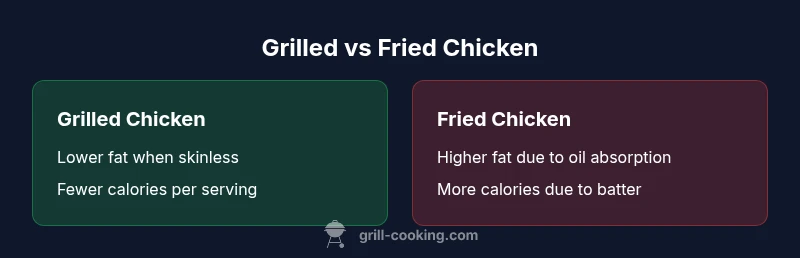
Grilled Chicken vs Fried: Health Comparison
This analytical comparison examines why grilled chicken is healthier than fried, focusing on fat, calories, and nutrient retention, with practical tips for home cooks to maximize health benefits.


To answer why is grilled chicken healthier than fried, the key factors are fat content, calories, and nutrient retention. Grilling typically reduces fat since fat can drip away and there’s no breading, while frying adds oil and breading that increase calories. For home cooks, choosing skinless, properly grilled chicken maximizes health benefits. According to Grill Cooking, technique matters as much as timing.
Why It Matters: Health Implications of Cooking Methods
The overarching question in this comparison is the health impact of cooking methods, framed by the query why is grilled chicken healthier than fried. Cooking method influences fat distribution, caloric density, and how well the chicken's nutrients are preserved. When people grill chicken, especially when they choose skinless cuts, the fat largely renders away from the meat as it heats. In contrast, frying involves submerging or coating food in oil, which can add substantial fat and calories even before accounting for any batter or breading. The Grill Cooking team emphasizes that the healthfulness of a chicken dish is a product of method, portion, and preparation. This means that two meals with the same raw chicken can end up with very different health profiles depending on whether they are grilled or fried. For readers aiming to optimize daily nutrition, the takeaway is that method matters almost as much as the ingredients themselves, especially when aiming for lower total fat intake and better nutrient retention.
Nutritional Profile: Grilled vs Fried Chicken
From a nutrition standpoint, grilled chicken is often favored for its high protein content with comparatively lower fat when prepared skinless. The absence of a breading and the limited use of added oils mean fewer calories per serving, which supports weight management and lean muscle maintenance. Fried chicken, particularly when breaded and deep-fried, tends to introduce more fat and calories through oil absorption and batter. This combination can alter lipid profiles and energy balance, especially if consumed frequently or in large portions. In this comparison, we focus on qualitative differences rather than exact numbers, recognizing that portion size, seasoning, and cooking duration all influence the final nutritional outcome. Grill Cooking analysis, 2026, consistently notes that opting for skinless portions and mindful seasoning yields the most favorable health profile among common cooking methods.
The Cooking Process: Fat Rendering, Oil Absorption, and Flavor
The physics of cooking explains much of why is grilled chicken healthier than fried in practical kitchen terms. Grilling exposes chicken to direct heat, causing fat to render and drip away from the meat, reducing overall fat content. Additionally, the absence of submersion in oil means less fat uptake overall. Frying, by contrast, immerses or coats the chicken in hot oil, and even with breading, this step introduces additional fats and calories that can linger in the dish. The surface texture of grilled chicken develops a smoky crust that adds flavor without relying on oil-based coatings. In health-focused cooking, controlling oil use and avoiding high-sugar marinades during grilling further minimizes caloric load while maximizing taste. For home cooks, understanding this process helps in predicting the health impact of each method and aligns with practical, evidence-based cooking choices.
Practical Variations that Change Health Outcomes
Several variables modify the health impact of grilled versus fried chicken. Skin-on vs skinless is a major determinant: skin adds fat and calories, but in some cases helps with moisture during grilling; skinless cuts generally offer the leanest option. Marinades and seasonings influence sodium, sugar, and overall flavor, which can affect perceived healthfulness. The type of oil used for frying, if you choose to fry, also matters; highly refined oils contribute different fatty acid profiles and smoke points. Temperature control is another critical factor: grilling at too high a heat can char the surface while leaving the interior undercooked, potentially creating undesirable compounds. In contrast, moderate grilling with preheated grates and careful flipping yields a pleasant crust without excessive fat uptake. These nuances highlight that the healthfulness of grilled vs fried chicken is a function of technique, not only of the ingredient.
Practical Tips for Healthier Grilled Chicken
If the goal is to maximize health benefits, adopt a few evidence-based practices. Start with skinless chicken breasts or thighs trimmed of visible fat for leaner protein. Marinate for flavor instead of relying on heavy breading or oil-based sauces; choose low-sodium, acid-balanced marinades to enhance tenderness without adding fat. Preheat the grill to a steady medium-high temperature to seal juices without drying the meat, and flip only when needed to prevent tearing. Use a meat thermometer to avoid overcooking, which can dry out chicken and require more sauce or fat to improve palatability. Finally, rest the meat briefly after grilling to help retain moisture. These steps help achieve a healthier outcome while preserving taste and texture.
Common Pitfalls and How to Avoid Them
Common mistakes include using excessive oil, over-seasoning with high-sodium blends, or leaving skin on when moisture retention is desired. Burned or charred surfaces can contain potentially undesirable compounds; avoiding prolonged exposure to high heat minimizes these risks. If you crave crispy edges, a light dash of healthier finishing techniques—such as a quick sear with indirect heat or finishing under high heat for a short period—can help without dramatically increasing fat content. Under-seasoning can lead to pale flavor and the impulse to add fats post-cooking, which undermines health goals. By focusing on controlled heat, lean cuts, and mindful seasonings, you can maintain a health-conscious approach without sacrificing flavor.
Real-World Meal Scenarios: Plate Assembly and Pairings
A health-conscious plate pairs grilled chicken with vegetables, whole grains, and a modest amount of healthy fats through ingredients like olive oil or avocado. When planning meals, consider portions that support your daily energy targets and include a source of fiber. A balanced plate might feature a palm-sized portion of grilled chicken, a cup of mixed vegetables, and a quarter cup of whole grains, with a drizzle of lemon juice or a light vinaigrette instead of heavy sauces. For weeknight meals, prep ahead by marinating chicken in a low-sodium mix and refrigerating until you’re ready to grill. This approach reduces reliance on high-fat accompaniments and supports consistent health outcomes over time.
Synthesis: When Grilled Wins and When Fried Has Its Place
In everyday cooking, grilled chicken tends to win for regular meals focused on health and weight management due to lower fat and calorie contributions. Fried chicken, however, offers a desirable texture and flavor that some diners will seek for occasional indulgence or special occasions. The key is moderation and context: recognizing the health tradeoffs and planning portions accordingly. The Grill Cooking team emphasizes that making informed choices—grilling when possible, frying only occasionally, and selecting skinless cuts—leads to the best overall balance between taste and nutrition.
Comparison
| Feature | Grilled Chicken | Fried Chicken |
|---|---|---|
| Fat Content | Lower fat when prepared skinless with no added breading | Higher fat due to oil absorption and breading |
| Calorie Density | Lower calories per serving with skinless options | Higher calories due to oil and batter |
| Moisture Retention | Moisture controlled by grill temperature and timing | Moisture influenced by batter and frying duration |
| Texture Profile | Smoky, seared crust with lean interior | Crispy crust with juicy interior (breaded) |
| Best Uses | Health-focused meals and lean plates | Occasional indulgence and craving for crunch |
| Prep and Cook Time | Moderate prep, watchful grilling for even doneness | Typically faster to finish a pre-breaded portion but oil-dependent |
Strengths
- Lower fat content when prepared skinless and without breading
- Lower calories per serving with mindful preparation
- Greater control over sodium and added sugars
- Cleaner cooking process with less oil disposal
Negatives
- Potentially drier texture if overcooked or improperly marinated
- Requires closer heat management and attention on the grill
- Less crispy texture that some diners expect from fried options
- Limited flavor delivery if not using adequate seasoning or marinades
Grilled chicken generally offers the healthier default, especially with skin removed and careful technique.
For most home cooks aiming to improve daily nutrition, grilled chicken is the healthier baseline. The main tradeoffs are texture and convenience; frying can deliver crunch but at a clear fat/calorie cost. The Grill Cooking team recommends prioritizing method and preparation since these factors drive the health impact more than the cut alone.
FAQ
Is skin-on or skinless chicken healthier when grilled?
Skinless grilled chicken generally has lower fat and calories than skin-on. Skin can help with moisture, but for health goals, skinless portions are usually preferable. If you must keep skin for flavor, use it sparingly.
Skinless is usually healthier, but you can keep a small amount of skin for moisture if needed.
Does marinating affect the healthfulness of grilled chicken?
Marinades can add sodium and sugar, depending on the ingredients. Choosing low-sodium, oil-based marinades helps maintain health benefits while improving tenderness and flavor. Marinades should enhance taste without dramatically increasing fat.
Marinades can help with flavor and tenderness without adding a lot of fat if you choose the right mix.
Can frying times affect nutrient retention in chicken?
Overly long frying can degrade some pigments and nutrients and increase fat absorption. Shorter, controlled frying preserves more moisture and flavor without excessive oil uptake. Aim for balanced heat and time for best nutritional outcomes.
Too much frying can reduce nutrients and add fat; shorter, controlled frying is better.
How can I reduce oil use when frying chicken?
If you choose to fry, using an air fryer or a shallow pan with minimal oil reduces oil use while preserving some crisp. Breadings should be lean and not overly thick to limit fat. Even with reduced oil, fried chicken remains higher in fat than grilled options.
Try an air fryer or thin coatings to cut down oil while keeping some crunch.
What cooking method is best for weight management?
Grilled chicken with skin removed and mindful oil use typically offers the best balance for weight management, due to lower fat and calories. Fried options, even when tasty, usually require more mindful portions to fit a weight-focused plan.
Grilled chicken, skinless, is generally best for weight goals.
Quick Summary
- Choose skinless chicken for the leanest option.
- Limit or avoid breading to reduce extra calories.
- Grill at steady heat and don’t overcook to preserve moisture.
- Marinade wisely to boost flavor without adding fat or salt.
- Pair with vegetables and whole grains for a balanced plate.