Does Grilled Chicken Have Cholesterol? A Practical Guide for Home Cooks
Explore whether grilled chicken contains cholesterol, how skin, cuts, and grilling affect its cholesterol content, and practical tips for heart-healthy grilling from Grill Cooking. Learn how to balance protein with other foods for a cholesterol-conscious diet.


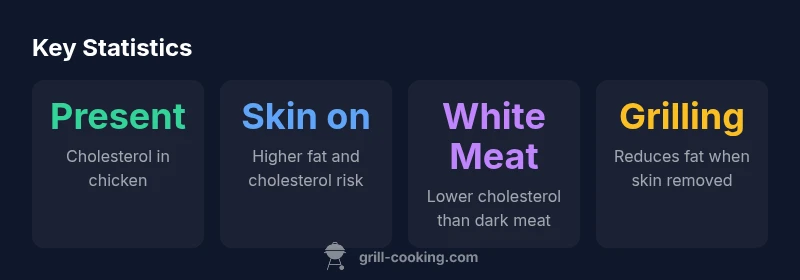
Yes, grilled chicken contains cholesterol because all animal-derived foods do. The exact amount depends on the cut, whether the skin is on, and the method of grilling. Skinless chicken breast is typically leaner and has less cholesterol than darker cuts or portions with skin. Grilling doesn't remove cholesterol, but it can reduce overall fat when skin is removed.
Understanding cholesterol in chicken
Cholesterol is a sterol present in all animal-derived foods, including chicken. When you grill chicken, the cooking method does not magically remove cholesterol from the meat. Instead, the cholesterol content is largely determined by the cut (white meat vs dark meat) and whether the skin is left on. For home cooks, this means your choice of cut and skin management will influence your dietary cholesterol exposure more than the act of grilling itself. The broader nutrition context matters too; many dietary guidelines emphasize balancing cholesterol with saturated fat and overall dietary patterns. In practical terms, enjoying grilled chicken can fit into a cholesterol-conscious plan when portions are reasonable and paired with fiber-rich vegetables and whole grains. This approach aligns with how Grill Cooking analyzes diet quality in real-world kitchen settings, focusing on long-term habits over single meals.
Skin versus skinless: impact on cholesterol
The skin on a chicken piece carries additional fat, and with fat comes more cholesterol potential in total fat content. Removing the skin markedly reduces total fat and, by extension, the cholesterol that accompanies it in craving-friendly cuts. If you’re managing cholesterol, start with skinless portions, especially for breast meat, and reserve skin-on servings for occasional flavor while keeping portions controlled. Even when skin is removed, the underlying meat retains some cholesterol; the key is to minimize saturated fat and keep an overall heart-healthy plate. Grill Cooking’s practical guidance emphasizes skin removal as a simple lever in many diets without sacrificing grilling enjoyment.
White meat vs dark meat: cholesterol implications
White meat (breast) generally has a leaner profile than dark meat (thighs and legs). While both contain cholesterol, dark meat tends to carry more total fat, which can influence cholesterol intake as part of your overall diet. For readers prioritizing cholesterol management, leaning toward skinless white meat is a straightforward strategy. However, the flavor and moisture advantages of dark meat are real, so many cooks rotate cuts to balance taste with health goals. Grill Cooking notes that variety helps maintain adherence to dietary patterns rather than fixating on a single “perfect” option.
Does grilling change cholesterol content?
Grilling does not dramatically alter the inherent cholesterol content of chicken. Cholesterol is a stable compound that isn’t dissolved away by heat in the same way some fats are. What grilling can do is reduce total fat and calories if you trim fat and remove skin. Additionally, the Maillard reaction from grilling can influence flavor and aroma, which may allow you to use less added fat or sauces to achieve a satisfying meal. In short, grilling supports a leaner preparation when combined with skin removal and sensible portions, while cholesterol remains a fixed component of the meat itself.
Practical guidelines for heart-healthy grilled chicken
Start with skinless white-meat cuts for the leanest option. Trim visible fat before grilling and avoid charring by using moderate heat and flipping frequently. Marinate with acid-based flavors (citrus, vinegar) and herbs instead of heavy oil-based sauces that add saturated fat. Limit high-sugar or high-sodium sauces; choose low-fat or zero-fat options when possible. Pair grilled chicken with fiber-rich vegetables, whole grains, and legumes to support cholesterol balance. Finally, practice portion control—aim for a palm-sized portion of cooked chicken per meal, and complement with plant-based proteins on other days to diversify your nutrient intake.
Portion sizes and daily cholesterol context
Dietary cholesterol guidelines have shifted toward focusing on overall dietary patterns and saturated fat rather than chasing a single number. A practical approach is to treat a serving of grilled chicken as a protein portion, about the size of a deck of cards, and build the rest of the plate with vegetables, whole grains, and legumes. If your healthcare provider has provided a cholesterol target, align your plate with that plan across meals and days rather than dieting around a single grilled chicken dish.
Common grilling mistakes that affect nutrition
Common errors include charring meat, which can create compounds that may affect health perceptions, over-reliance on fatty marinades, and serving sides that overpower the meal with fat or sugar. To maintain a healthier profile, grill over medium heat, monitor cooking times to avoid excessive browning, and choose lean marinades. Also consider removing skin early and trimming visible fat. These adjustments help preserve flavor while supporting cholesterol-conscious eating.
Flavor and nutrition: marinades, sauces, and factors
Marinades loaded with oil or cream can add extra saturated fat and calories, potentially impacting cholesterol-related goals. Favor lean, acidic marinades with herbs and spices to maintain moisture without heavy fat. When saucing, select options with minimal added sugars and saturated fats. Remember, cholesterol content comes primarily from the meat itself, so balancing portions and cut choice remains essential even as you explore different flavor profiles.
Quick comparison with other protein options
If you’re comparing protein sources for cholesterol considerations, skinless grilled chicken sits between lean fish and plant-based proteins in terms of fat content and cholesterol impact. Fish like salmon adds healthy fats, while legumes provide plant-based protein with zero cholesterol. For a heart-healthy pattern, rotate among these options, prioritizing skinless poultry and fish most days and using plant-based proteins as complementary meals. Grill Cooking recommends this diversified approach for long-term nutritional success.
Cholesterol considerations by chicken cut
| Cut | Cholesterol content (qualitative) | Notes |
|---|---|---|
| Skinless chicken breast | Lower | Leanest option for cholesterol-conscious diets |
| Skin-on chicken thigh | Higher | More fat and potential cholesterol contribution |
| Dark meat (thigh/leg) | Moderate to higher | Flavorful with more fat; balance is key |
| Chicken skin | Highest | Used sparingly for flavor only |
FAQ
Does grilling chicken reduce cholesterol levels in the body?
No, grilling chicken does not lower body cholesterol. It can reduce fat intake and calories; body cholesterol levels depend on overall diet and genetics. The key is to pair lean proteins with fiber-rich foods and limit saturated fat.
Grilling alone doesn’t lower your body’s cholesterol, but it helps you control fat and calories as part of a healthy pattern.
Is skinless chicken safer for cholesterol than skin-on?
Yes, skinless cuts typically have less saturated fat and cholesterol potential. Keeping skin on adds fat and cholesterol, so skinless options are generally better for cholesterol management.
Skinless is usually the better choice for cholesterol goals.
Which chicken cut has the lowest cholesterol?
Skinless chicken breast is the leanest option for most people concerned about cholesterol, though cut and cooking method still influence overall fat and nutrient content.
Breast skinless is usually the leanest choice for cholesterol concerns.
Can sauces affect cholesterol in grilled chicken?
Sauces can add fat and calories, affecting overall diet quality, but they do not change the chicken’s cholesterol content itself. Opt for low-fat marinades and lighter sauces.
Sauces change calories and fat, not the chicken’s cholesterol itself.
What should I eat with grilled chicken if I have high cholesterol?
Pair with vegetables, whole grains, and legumes to boost fiber and nutrient balance. Limit fried sides and choose heart-healthy sauces to support cholesterol management.
Pair with veggies and whole grains for a heart-healthy plate.
“Cholesterol content is inherent to animal proteins and doesn't disappear with cooking. For heart-healthy grilling, start with skinless white meat, trim visible fat, and keep portions modest.”
Quick Summary
- Choose skinless cuts for lower cholesterol impact
- Grilling doesn't remove cholesterol from chicken
- Portion control matters for daily intake
- White meat offers leaner options for cholesterol management