When to Cook Chicken After Thawing: Safe Timelines for Grilling
Learn the safest timelines for cooking thawed chicken, whether thawed in the fridge or via quick thaw methods. This guide covers thawing safety, doneness temperatures, grilling tactics, and common mistakes to avoid for juicy, safe chicken.


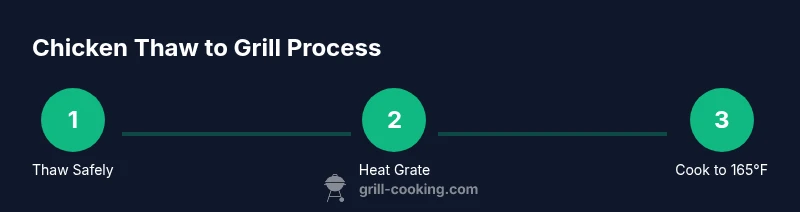
After thawing, cook chicken promptly to maximize safety and quality. If thawed in the refrigerator, aim to cook within 1-2 days; if using cold water or microwave thawing, cook immediately. Never thaw chicken at room temperature. When cooking, reach a minimum internal temperature of 165°F (74°C) to destroy pathogens. Follow safer thawing practices to reduce bacteria growth and ensure even cooking.
Why timing matters when to cook chicken after thawing
Timing isn’t just about convenience; it’s a central safety parameter. The window between thawing and cooking determines how much time bacteria have to multiply in the temperature danger zone (roughly 40°F to 140°F). The Grill Cooking team found that cooking thawed chicken promptly helps preserve moisture and texture while reducing safety risks. In this guide, you’ll learn how thaw method, cut size, and cooking method interact to create safe, flavorful results. Expect real-world timelines, clear decision points for fridge-thawed, cold-water-thawed, and microwave-thawed chicken, and practical tips you can apply tonight. By prioritizing proper thaw and cook timing, you’ll minimize waste and maximize taste without compromising safety.
Safe thawing methods every home cook should know
There are three primary paths to thawing: refrigerator thawing, cold-water thawing, and microwave thawing. Each method has its own timing implications and safety notes. According to Grill Cooking, refrigerator thawing is the safest method when you have time; cold-water thawing is faster but requires attention to water changes and immediate cooking; microwave thawing is fastest but typically demands cooking right away. Keep raw poultry separate from other foods, store thawing chicken in a leak-proof container, and never leave it out on the counter. If you must thaw quickly, plan to cook immediately after thawing to minimize bacterial growth and ensure even heating.
Target temperatures and doneness: how to verify
Safe cooking hinges on reaching the proper internal temperature. The standard guideline is to cook chicken to at least 165°F (74°C) as measured with a reliable food thermometer. Color is not a reliable indicator, since chicken can appear opaque yet be undercooked in the center. For boneless breasts, aim to remove from heat at or just before 165°F if they are very thin, and allow a brief carryover rise. For bone-in portions, the thicker areas may reach 165°F slightly later. Always measure in the thickest part to ensure safety and juiciness, and consider resting briefly after removal to let juices redistribute.
Timing guidelines by cut, thickness, and method
Different cuts and thicknesses demand different timing. Boneless chicken breasts of about 1 inch thickness typically finish in 6–8 minutes per side on medium heat when grilled, while bone-in thighs may require 20–25 minutes total, with occasional flips. If you’re using indirect heat for thicker pieces, total cook times can extend by a few minutes. Always verify with a thermometer before serving. Grill temperature targets (mid-to-high heat) help seal juices without scorching the exterior.
Grilling strategies: direct heat, indirect heat, and practical setups
Direct heat is ideal for thin cuts and for a quick sear, but thicker pieces benefit from finishing with indirect heat to avoid burning the surface while the interior comes to temp. If you’re new to grilling thawed chicken, start with bone-in thighs or breasts that are evenly sized to reduce uneven cooking. A two-zone setup—direct heat for searing, then moving to indirect heat—lets you control both crust formation and interior doneness. Always keep a thermometer handy and flip pieces only when needed to maintain juiciness.
Common mistakes and how to avoid them
Common errors include thawing at room temperature, counting on color as a safety cue, and cutting into meat to check doneness too soon. These mistakes can invite bacterial growth or dry, overcooked chicken. To avoid them, thaw in the fridge or with cold water when time permits, rely on an instant-read thermometer, and practice consistent heat management. Patience pays off: closer attention to internal temp and resting time will yield more reliable results.
Prep for grill: mise en place, marinades, and handling thawed chicken
Before you fire up the grill, gather your tools and ingredients: grill, thermometer, tongs, and a clean surface for resting cooked chicken. If you like marinades, apply them before cooking and allow the surface to dry for a tacky finish, which helps crust formation. Thawed chicken is more forgiving than frozen, but you still want to pat it dry to improve sear and texture. Keep raw chicken separate from cooked portions to avoid cross-contamination, and wash hands and surfaces after handling.
Recovery and rest: why resting matters after cooking
Let chicken rest for a few minutes after removing from heat. Resting redistributes juices and helps retain moisture, resulting in a juicier bite. While it’s tempting to dive in, giving the meat a brief rest improves texture and flavor. Cover loosely with foil to retain heat without steaming the crust.
Final readiness checklist before serving
- Chicken reaches at least 165°F in the thickest part
- Grille is clean and preheated to the right zone
- Surface is dry for a good crust (pat dry if needed)
- Juices run clear when pierced near the bone (for bone-in pieces)
- Rest 5 minutes before slicing or serving
For home cooks seeking clarity, following these steps helps ensure both safety and satisfaction.
Tools & Materials
- Grill (gas or charcoal)(Preheat and clean grates before cooking)
- Instant-read meat thermometer(Target 165°F in the thickest part)
- Long-handled tongs(Use to turn pieces safely)
- Grill brush(Clean grates between batches)
- Oil or nonstick spray(Lightly oil grates if sticking is a concern)
- Paper towels(Pat dry chicken and wipe surfaces)
Steps
Estimated time: 25-40 minutes
- 1
Pat-dry the chicken
Pat the thawed chicken dry with paper towels to promote a good sear and crust. This step also helps marinade adhere evenly if you’re using one. Keep pieces uniform in thickness for even cooking.
Tip: Uniform thickness reduces hot spots and ensures even doneness. - 2
Preheat the grill
Preheat the grill to medium-high heat so you can achieve a good crust without overcooking the interior. A properly heated surface minimizes sticking and creates a nice crust.
Tip: Aim for 375–450°F depending on your grill and cut. - 3
Oil the grates
Lightly oil the grates or brush oil on the chicken to further reduce sticking. This helps with turning and gives a crispier exterior.
Tip: Avoid pooling oil on the grate; a light sheen is enough. - 4
Place on grill
Set chicken on the grill over direct heat if pieces are thin; for thicker pieces, start with direct heat, then move to indirect to finish. Do not crowd the grill to maintain steady heat.
Tip: Do not press the chicken; it squeezes out juices and dries the meat. - 5
Flip for even cooking
Flip only once or twice to ensure an even crust and internal heat through the piece. Avoid constant turning which can dry out the meat.
Tip: Use tongs to reduce pierce damage and preserve juices. - 6
Check internal temperature
Probe the thickest part; once it hits 165°F, remove from heat. If using bone-in pieces, ensure the temperature is reached near the bone as well.
Tip: Take temperature before resting to avoid carryover cooking. - 7
Rest before serving
Let the chicken rest 5 minutes after removal to redistribute juices and improve texture.
Tip: Tent loosely with foil to keep warm without steaming the crust.
FAQ
Can I thaw chicken at room temperature?
No. Thawing chicken at room temperature can allow bacteria to multiply rapidly. Use the refrigerator, cold-water method, or microwave thawing instead, and cook promptly as required by the method.
Avoid thawing chicken at room temperature. Use fridge, cold-water, or microwave methods and cook promptly.
How long should thawed chicken be kept before cooking?
If thawed in the fridge, cook within 1-2 days. If thawed by cold water or microwave, cook immediately to minimize safety risks.
Cook thawed chicken as soon as possible; fridge thawing allows a short window, while cold-water or microwave require immediate cooking.
What is the minimum internal temperature for cooked chicken?
Cook chicken to a minimum internal temperature of 165°F (74°C) as measured with a reliable thermometer.
Cook to 165 degrees Fahrenheit, verified with a thermometer.
Can I refreeze thawed chicken?
Refreezing thawed chicken is generally safe only if it thawed in the fridge; quality may suffer. Do not refreeze thawed chicken that was thawed by microwave or cold water.
You can refreeze if it thawed in the fridge, but quality may drop; avoid refreezing thawed by microwave or cold water.
Does marinating affect thawed chicken cooking?
Marinating thawed chicken is fine, but marinate in the fridge and avoid long marination times that could affect texture. Pat dry before cooking for a better sear.
Marinate in the fridge and pat dry before cooking for best results.
What if I need to cook from frozen?
Cooking from frozen is possible but requires longer cooking times and a thermometer to ensure 165°F throughout. Prefer thawing when feasible for best texture.
You can cook from frozen, but expect longer times and check with a thermometer.
Is rest time necessary for thawed chicken?
Yes. A short rest after cooking helps juices redistribute and improves tenderness. Plan for about 5 minutes.
A short rest after cooking helps the juices settle, about five minutes.
Watch Video
Quick Summary
- Cook thawed chicken promptly for safety.
- Always target 165°F internal temp with a thermometer.
- Use fridge thawing for best quality and plan ahead.
- Avoid thawing at room temperature and rely on safe methods.
- Rest after cooking to maximize juiciness and flavor.