What Happens If You Cook Frozen Chicken
Explore what happens to texture, moisture, and safety when cooking chicken from frozen. Learn strategies, temperatures, and techniques to achieve juicy, safe results without thawing first.


Cooking frozen chicken is safe, but it changes cooking time and doneness. When you start from frozen, expect longer total time, more heat on the exterior, and a risk of uneven browning. Use a meat thermometer to confirm an internal temperature of 165°F (74°C) before serving.
What happens when you cook frozen chicken
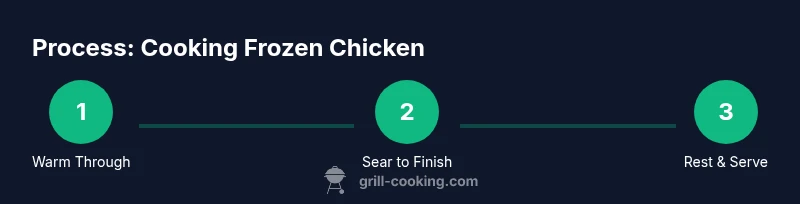
Grilling, roasting, or pan-searing frozen chicken is safe, but the absence of thawing changes how heat penetrates the meat. In frozen meat, ice crystals within the muscle cells must melt before the center warms to the target temperature. That melting process absorbs energy and slows the rate at which the interior reaches the safe zone. As a result, the exterior can overcook or dry before the interior reaches 165°F (74°C). You may notice that the surface browns unevenly, and juices may pool when you slice. Food scientists and home cooks alike see this as a trade-off: safety is not sacrificed, but texture and moisture can vary. The Grill Cooking team emphasizes that, with proper technique and a reliable thermometer, you can still produce safe, tasty chicken even without thawing first. Expect longer total cooking time and plan for a two-stage approach: gentle heat first to thaw and cook the interior, followed by a hotter finish to set the exterior. Depending on the cut, you may start with indirect heat to warm through, then switch to direct heat for color and crust.
The science behind freezing and cooking chicken
Freezing preserves meat by slowing microbial growth and halting enzymatic reactions, but it also changes the tissue structure. Ice crystals form as water inside cells expands when frozen; when you apply heat, those crystals melt and release moisture. If you cook too quickly from ice, moisture can escape rapidly, leading to drier meat and uneven texture. This is why many cooks notice a flabbier bite and less browning on the first pass when starting from frozen. Marinades, brines, and added fats can help mitigate dryness by providing protective moisture and a better browning reaction. The aim is to heat the center gradually while preventing the outer layer from drying out. In practical terms, you’ll often see a two-stage method: a gentle interior heat to bring the chicken up to a safe temperature, then a higher heat phase to finish and crisp the exterior. The Grill Cooking team has found that patience and steady heat yield better results than rushing the thawing process under hot air.
Safety and internal temperature you must hit
Safety first means verifying doneness with a reliable thermometer rather than relying on color or juices alone. Poultry must reach an internal temperature of 165°F (74°C) throughout, including the thickest part of the breast or thigh. When cooking from frozen, the center may lag behind the rest of the meat, so check multiple spots to ensure an even finish. Practice good kitchen hygiene: wash hands and surfaces after handling raw chicken, avoid cross-contamination with ready-to-eat foods, and store leftovers promptly. If you are using different cooking methods (oven, grill, or stovetop), use a thermometer that can deliver quick, accurate readings. Remember that time estimates are guides; the thermometer determines safety. Even after you reach 165°F, allow the meat to rest for a few minutes to let juices redistribute, which improves juiciness and final texture. If you observe freezer burn on thawed portions, trim before cooking to improve browning and flavor.
Thawing vs cooking from frozen: pros and cons
Thawing before cooking generally yields faster cook times and more even texture, especially for larger cuts. It also reduces the risk of overcooking the exterior while the inside finishes. However, thawing can take several hours or overnight, which isn’t always practical. Cooking from frozen eliminates the thawing wait, but it requires patience and careful heat management to prevent dry edges and uneven doneness. For casual weeknight meals, frozen-to-oven methods can work well if you follow two-stage heating and a final sear. For grilled chicken, indirect heat for warming through, then a quick hot finish helps preserve moisture and achieve a caramelized crust. In all cases, plan to extend total cook times by roughly one-third to one-half, and always verify temperature with a reliable thermometer.
Cooking methods from frozen: oven, grill, and stovetop
- Oven: Start by preheating to 375-400°F (190-205°C). Place the frozen pieces on a rack or a rimmed sheet, and cook until the thickest part reaches 165°F. Expect total times in the 60-90 minute range for smaller cuts and longer for larger pieces. For skin-on thighs, remove the skin if possible to improve heat penetration and crisp later. Finish with a brief high-heat blast (425°F/220°C) to color if desired.
- Grill: Use indirect heat to warm through first, then move to direct heat to finish. Keep the lid closed to maintain a steady temperature; flip as needed for even browning. Total times vary by cut but plan on 60-90 minutes for breasts or thighs from frozen.
- Stovetop: If you’re using a pan-sear then simmer method, start with a covered skillet over medium heat, and add a little broth or water if needed to maintain moisture. The center should reach 165°F before serving. This method works best for small cuts or minced chicken that will be finished in a sauce.
A note on doneness: always rely on a thermometer; color and juices are not reliable indicators when cooking from frozen.
Practical tips for even cooking and juicier meat
- Patience over speed: give the interior time to thaw and cook gradually rather than forcing rapid heat.
- Use gentle heat first, then finish with higher heat to set the crust.
- Apply a light coating of oil or butter to improve browning and moisture retention.
- Consider a brief brine or marinade if time allows; this helps keep moisture during extended cooking.
- Space pieces apart on the cooking surface to ensure heat reaches every portion.
- Rotate pieces if you’re cooking on a grill, so every side gets equal exposure.
- Let the chicken rest 3-5 minutes after cooking to redistribute juices.
- Safety check: recheck internal temperature if you suspect an uneven cook.
Troubleshooting and common mistakes
- Uneven doneness: rotate pieces and use two-zone heat.
- Dry exterior: reduce heat intensity at the start or increase moisture via a splash of stock.
- Under 165°F in the center: extend cooking time and check multiple spots; don’t rely on one measurement.
- Slow browning: increase heat at the final stage or finish with a quick sear.
- Cross-contamination: clean surfaces and utensils before touching ready-to-eat foods.
- Don’t thaw in warm water or on the counter; this can promote bacterial growth.
Authority sources
- Centers for Disease Control and Prevention (CDC) – Food safety guidelines for poultry: https://www.cdc.gov/foodsafety/communication/food-safety.html
- United States Department of Agriculture (USDA) Food Safety and Inspection Service (FSIS) – Chicken and poultry cooking guidelines: https://www.fsis.usda.gov/food-safety/safe-food-handling-and-preparation/meat-and-poultry
- Harvard T.H. Chan School of Public Health – Safe cooking practices: https://www.hsph.harvard.edu/nutritionsource/food-safety/
Tools & Materials
- Instant-read meat thermometer(Probe thermometer; range 0-212°F; insert into thickest part.)
- Oven-safe baking sheet or rack(Rimmed sheet or rack to improve air flow.)
- Grill with lid or oven-safe pan(For grill or oven method; helps even heat.)
- Tongs and spatula(For safe handling of frozen pieces.)
- Aluminum foil(To tent or prevent over-browning.)
- Paper towels(Pat dry if needed before cooking.)
- Timer(To manage long cook times accurately.)
- Oil or cooking spray(Light coating to aid browning.)
- Seasoning basic kit(Salt, pepper, and optional herbs for flavor.)
Steps
Estimated time: 1.5–2.5 hours (varies by cut and method)
- 1
Preheat and prepare
Preheat your chosen cooking method (oven/grill) to the target temp. Remove packaging from the frozen chicken and set pieces in a single layer with space between them on a rimmed tray or grill surface. This ensures even heat exposure and reduces sticking.
Tip: Allow extra preheat time (5–10 minutes) since you’re starting from frozen. - 2
Arrange frozen chicken
Place the chicken pieces in a single layer with space for air to circulate. Do not stack or crowd the meat; crowding slows heat penetration and increases the risk of cold spots in the center.
Tip: If using the oven, a rack helps air circulate for better browning. - 3
Begin cooking with gentle heat
Start with indirect heat or lower oven settings to warm the interior gradually. The goal is to bring the inside up to safe temperature while minimizing exterior drying.
Tip: Cover or close the grill/oven to maintain a steady temperature. - 4
Check internal temperature
Insert the thermometer into the thickest part of the largest piece, avoiding bone. Aim for 165°F (74°C) throughout, checking multiple spots for even doneness.
Tip: Take readings from several pieces to avoid over- or under-cooking. - 5
Finish with browning
Increase heat or move to direct heat for a brief period to develop a crust or color without overcooking the interior.
Tip: Keep a close eye to prevent scorching; this step is why thermometer accuracy matters. - 6
Rest and store safely
Let the cooked chicken rest 3–5 minutes before slicing. Refrigerate leftovers promptly, and reheat to 165°F if you plan to eat them later.
Tip: Resting helps juices redistribute, improving juiciness.
FAQ
Is it safe to cook chicken from frozen?
Yes. It is safe to cook chicken from frozen as long as the internal temperature reaches 165°F (74°C) throughout. Use a reliable thermometer to confirm doneness and follow safe handling practices to prevent cross-contamination.
Yes. You can cook chicken from frozen safely, but you must verify the internal temperature with a thermometer to reach 165°F all the way through.
Should I thaw chicken before cooking, or is frozen okay?
Thawing can shorten total cook time and improve evenness, but it isn’t always practical. If you’re short on time, cooking from frozen is acceptable with a two-stage heat approach and careful temperature checks.
If you have time, thawing helps, but cooking from frozen works with careful heat and thermometer checks.
How much longer does frozen chicken take to cook?
Frozen chicken generally takes longer than thawed chicken. Plan for a longer total cook time and check for 165°F in multiple spots to ensure safety.
It takes longer than thawed chicken; check with a thermometer to be sure it’s safe.
Can I use a slow cooker for frozen chicken?
Not recommended. Slow cookers keep meat in the temperature danger zone too long, which can allow harmful bacteria to grow before reaching safe temperatures.
A slow cooker isn’t ideal for frozen chicken because it can stay in the danger zone for too long.
Does freezing affect texture?
Yes, texture can be affected. Frozen chicken may be drier or less evenly browned; using techniques like indirect heat and a brief high-heat finish helps mitigate this.
Texture can be a bit off, but good technique and finishing heat can improve it.
Can I cook bone-in chicken from frozen?
Bone-in cuts cook more slowly from frozen. Expect longer times and ensure the bone area reaches 165°F without overcooking the meat around it.
Yes, but it takes longer; make sure the thickest part near the bone hits 165°F.
Watch Video
Quick Summary
- Cook frozen chicken safely by reaching 165°F in the center.
- Expect longer total cook times and potential texture differences.
- Use a thermometer and two-stage heat for best results.
- Finish with a brief high-heat step to improve browning and crust.