How Much Grilled Chicken Is 50 Grams of Protein
Learn how many grams of grilled chicken you need to reach 50 g of protein, with a practical calculator, scenarios, and tips for accurate grilling portions.


Understanding Protein Targets and Grilling
Understanding protein targets helps home cooks plan meals that support training goals and daily nutrition. When you grill, you gain control over portions, flavor, and balance. According to Grill Cooking, defining clear protein targets allows you to tailor each grill session to your needs, whether you’re supporting muscle repair after a workout or simply meeting daily protein goals during a busy week. This section sets the stage for translating numbers into real-food portions on the grill. We’ll explore why 50 grams of protein matters, how it translates to real serving sizes of grilled chicken, and what factors can shift the final amount you actually eat on the plate.
How Much Grilled Chicken Is 50 Grams of Protein
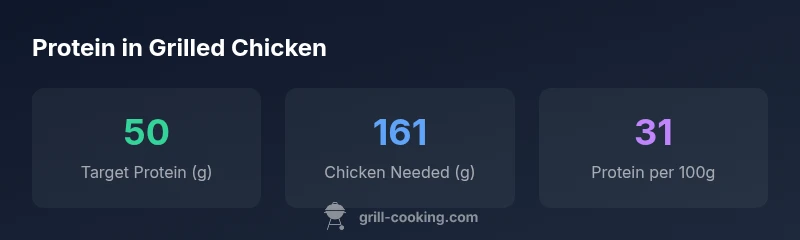
When you ask how much grilled chicken is 50 grams of protein, the straight answer depends on the protein content per 100 grams of the cooked product. A widely cited figure is ~31 grams of protein per 100 grams of cooked chicken breast. Using that rule of thumb, 50 g of protein requires roughly 50 / 0.31 = 161 grams of cooked chicken breast (about 5.7 ounces). If you prefer a simpler rule, think in the 150–170 gram range for a clean 50 g protein target. Remember, different cuts or cooking methods can nudge this number a bit higher or lower. Marinades, skin-on versus skinless, and bone presence can all shift the final weight needed, even though the protein content per 100 g stays roughly in the same ballpark. This section translates a protein goal into an actual grilling quantity you can weigh and portion reliably.
Protein Content in Grilled Chicken: What Changes with Grilling
Grilling can concentrate protein per 100 grams if a portion loses moisture during cooking, but it also adds variability with marinade and fat content. The commonly cited value of about 31 g of protein per 100 g of cooked chicken breast is a practical reference, not a fixed law. If you start with a raw piece that weighs more, moisture loss during grilling may lead to a final cooked weight that contains more protein per 100 g, but overall protein delivered in the serving remains roughly proportional to the edible portion you eat. In short, grilling can change the density of protein in a given weight, but your total protein intake for the serving is what matters for your goals.
How to Use a Protein Calculator for Grilling
A protein calculator helps you convert a protein target into a grilled chicken portion. Two inputs are typically enough: proteinPer100g (protein per 100 g of cooked chicken) and targetProtein (the grams of protein you aim to consume). The core formula is: gramsNeeded = round(targetProtein * 100 / proteinPer100g). If you adjust the target to 60 g, and use 31 g per 100 g, the calculator will suggest about 194 g of cooked chicken. This tool helps you plan portions ahead of time and align your grill output with daily macros.
Practical Scenarios: 50g Protein With Different Cuts and Weights
If you’re sticking with skinless, boneless chicken breast (the most protein-dense common option), a 50 g protein target translates to roughly 161 g of cooked meat. Different cuts change the math: a lean turkey breast-like cut might require slightly more weight, while a darker-meat option like thigh might require around 180–200 g for the same 50 g protein target due to lower protein density. Always start from a protein-per-100 g value for the chosen cut and calculate from there to avoid overeating. This helps you compare portions and keep meals consistent on the grill.
Real-World Factors That Change the Result
Several real-world factors alter the exact grams of chicken needed for 50 g of protein. Marinades and coatings add mass and can alter cooking losses. Bone-in portions or skin-on pieces have different protein densities and water retention. The temperature and duration of grilling affect moisture loss, which concentrates protein density in the final bite but can also cause weight loss that changes total protein grams. For accuracy, weigh the cooked portion you actually plan to serve and adjust your target accordingly. This is why practical meal planning uses a calculator and a scale together.
Meal Planning: Pairing Grilled Chicken With Sides
A single 50 g protein portion pairs well with complex carbs and healthy fats to create a balanced grill plate. Plan sides like quinoa, brown rice, roasted vegetables, or a light avocado oil dressing. If you’re tracking macros, consider your total daily protein, fat, and carbohydrate targets to decide whether you want a larger protein portion today or a smaller one with protein-rich sides. A practical approach: allocate 40–60% of your plate to protein, with the rest split among greens and carbs. This keeps meals satisfying and macro-friendly on busy grill days.
Safety and Cooking Tips
Always ensure chicken reaches a safe internal temperature (165°F / 74°C) before serving. Use a meat thermometer to confirm doneness, and avoid cross-contamination by using clean utensils and cutting boards for raw and cooked meat. If you’re marinating, do so in the fridge and discard excess marinade, or boil it to ensure safety if you intend to use it as a sauce. Proper handling protects flavor and health while keeping your 50 g protein plan on track.
Quick Tips for Accurate Measurements
To hit precise protein targets on the grill, use a kitchen scale for both raw and cooked portions. Start with a target protein and calculate the required cooked weight based on your chosen cut’s typical protein per 100 g. Weigh portions after grilling to account for moisture loss, then log your results to refine future estimates. Keeping a simple notebook or a mobile note helps you track trends and hit your 50 g protein goal more consistently.