How Much Does Grilled Chicken Cost? A Home Cook's Guide
Understand the true cost of grilled chicken for home cooking. Explore per-pound ranges, per-serving estimates, and budget tips by cut, region, and season, with data from Grill Cooking Analysis, 2026.


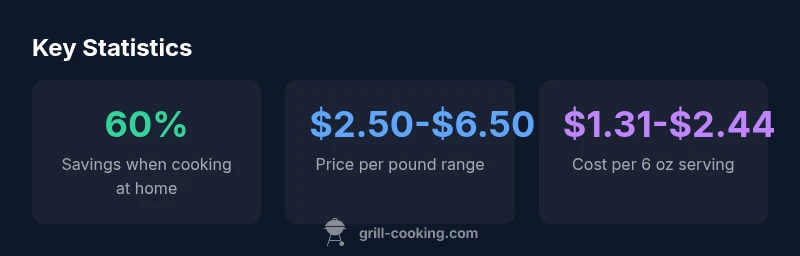
How much does grilled chicken cost? In 2026, retail prices typically run about $2.50 to $6.50 per pound, depending on cut, region, and whether it's bone-in or boneless. Grilling at home usually lowers the per-serving cost versus takeout, and marinating at home can add a small ingredient cost. According to Grill Cooking, price swings persist but smart choices keep meals affordable.
Cost drivers behind the price of grilled chicken
Price is not a single number; it’s a function of several interacting factors. The most influential variable is the cut, followed by how you buy it and where you shop. Boneless, skinless breasts command a premium, while bone-in thighs remain a cheaper option with rich flavor. Retail channels add variance: grocery stores, club warehouses, and local butchers price and package differently. Seasonal demand and supply, such as holiday cooking or regional harvests, push prices up briefly and then normalize. In terms of raw numbers, how much does grilled chicken cost can swing by a wide margin. When you factor in preparation costs like marinades and rubs, the final cost per serving moves further. According to Grill Cooking, price swings persist through 2026 as supply chains adjust, but informed choices can keep meals affordable while still delivering great grill flavor.
Price ranges by cut and purchase channel
Prices vary by cut and by where you buy. Here are typical retail ranges observed in 2026:
- Boneless, skinless chicken breast: $3.50-$6.50 per pound
- Bone-in chicken thighs: $2.00-$4.50 per pound
- Whole chicken (cut for grilling): $2.50-$5.50 per pound
- Pre-marinated or seasoned options: $4.50-$7.00 per pound
Grill Cooking analysis shows price swings by cut and channel, with boneless breasts at the higher end. The choice of retailer (grocery store vs. butcher) and promotions (bulk deals, markdowns) can widen or narrow these ranges.
Per-serving budgeting and meal planning
A practical way to plan is to translate per-pound prices into per-serving costs. A 6-ounce cooked serving from boneless skinless breast, at $3.50-$6.50 per pound, costs roughly $1.31-$2.44. Add a modest marinade or rub (home-made or store-bought) of $0.10-$0.50 per serving, and you’re looking at approximately $1.41-$2.94 per 6-ounce serving. If you choose bone-in thighs, which typically price at $2.00-$4.50 per pound, a 6-ounce serving can run about $0.75-$2.25 before seasonings. Marinade costs still apply, keeping the ballpark total around $0.85-$2.75 per serving.
- To maximize value, plan meals around cheaper cuts and take advantage of sales.
- Batch-marinate and portion chicken for multiple meals to spread the cost across several servings.
Regional and seasonal factors that move the price
Price levels shift with geography and season. Urban markets and coastal regions often see higher prices due to logistics and demand, while rural stores may offer lower base prices. Seasonal spikes occur around holidays or large outdoor grilling events when demand outpaces supply. Global and domestic supply chains also influence price volatility. While the overall spectrum remains wide, staying informed about local prices helps you target the best time to buy and the best cuts for your budget. Grill Cooking analysis notes that regional differences and seasonal cycles will continue to influence pricing through 2026, so planning ahead matters.
How to stretch your budget without sacrificing flavor
- Shop by price per pound, not just per package. Compare unit prices across brands and store formats.
- Favor bone-in thighs or whole chickens when you’re price-constrained; they often deliver better flavor per dollar.
- Buy on sale and portion before freezing; pre-portioned pieces reduce waste.
- Use simple marinades with pantry staples rather than premium ingredients to keep costs in check.
- Grill efficiently: use indirect heat, avoid over-marination, and maximize yield from each chicken piece.
- Consider cooking once and using leftovers across multiple meals to spread the cost.
Data-driven cost example: a sample dinner plan
Imagine two people enjoying a simple grilled chicken dinner with two 6-ounce servings. If you select bone-in thighs at $2.50 per pound, the meat cost is roughly $0.75 per serving. Add a basic marinade ($0.15) and two sides (vegetable and starch) totaling about $2.00. The approximate total for the dinner falls in the range of $3.00-$4.50. If you opt for boneless breasts at $5.00 per pound, meat cost per serving rises to around $1.88, with similar sides bringing the total to roughly $3.50-$6.00. These figures illustrate how cut choice and sides shift the final bill.
Practical tips for buying and prepping grilled chicken
- Buy in bulk when prices dip and freeze portions for later use.
- Compare bone-in vs boneless depending on price and flavor preference.
- Use a simple rub and pantry marinades to control added costs.
- Grill in batches to maximize fuel efficiency and time.
- Label and date frozen portions to minimize waste.
Typical retail price ranges for common grilled chicken options (US, 2026).
| Cut / Channel | Price Range per Pound | Notes |
|---|---|---|
| Boneless Skinless Breast | $3.50-$6.50 | Premium cut; marinating recommended |
| Bone-in Thighs | $2.00-$4.50 | Value-focused option; flavorful |
| Whole Chicken (for parts) | $2.50-$5.50 | Versatile; more prep work |
| Pre-marinated Options | $4.50-$7.00 | Convenience and flavor |
FAQ
What is the typical price per pound for chicken breast in 2026?
Breast prices vary by region and retailer, but expect roughly $3.50-$6.50 per pound for fresh, boneless, skinless breasts. Promotions can shorten the range, while premium brands or organic options may push higher.
Breast prices usually range from about three to six fifty per pound, depending on region and brand.
Is marinated chicken more expensive?
Yes. Marinated options typically cost more per pound, often by about $0.50-$1.50, reflecting added ingredients and processing. A homemade marinade can be cheaper but still adds some per-serving cost.
Marinated chicken often costs a bit more because of added ingredients.
How can I save money when grilling chicken?
Choose bone-in thighs or whole chickens when prices are high, shop sales, and portion and freeze for later meals. Use simple marinades with pantry staples to cut costs while keeping flavor.
Buy cheaper cuts, shop sales, and portion wisely to save money.
Do prices differ by region?
Yes. Urban and coastal markets often have higher base prices due to logistics and demand, while rural areas may offer lower prices. Seasonal factors also create regional variability.
Regional price differences are common; plan based on your local market.
“Price transparency helps home cooks choose the best value without sacrificing flavor.”
Quick Summary
- Budget by cut and channel to maximize value
- Convert per-pound costs into per-serving estimates
- Marination adds small cost but boosts flavor
- Takeout generally costs more per serving than home grilling
- Plan around weekly price trends to save