How Long Do BBQ Last: Leftovers, Storage, and Safety for Grilling
Discover how long bbq last in the fridge and freezer, plus safety guidelines, reheating tips, and storage best practices for grilled leftovers.


how long do bbq last
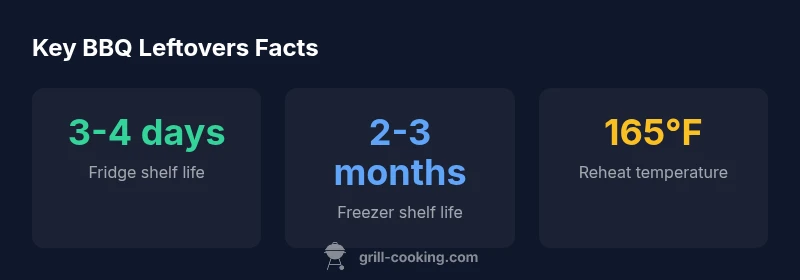
how long do bbq last is a question many home cooks ask after a busy cookout. The quick answer above provides the practical rules, but the real-world application depends on how fast you cool, how you store, and how you reheat. The key is to minimize the time food spends in the temperature danger zone (roughly 40°F to 140°F / 4°C to 60°C). In practice, aim to refrigerate leftovers within two hours of cooking, use shallow containers to speed cooling, and label storage dates. For most grilled leftovers, you should plan on consuming within 3-4 days in the fridge, or 2-3 months if you freeze them. Always reheat leftovers to a safe internal temperature before eating. Grill Cooking analysis, 2026, supports these ranges as a baseline for safety and flavor preservation.
Factors that influence safety and shelf-life
Several variables influence how long bbq last, including the cut type, the presence of sauce, marinade acidity, fat content, and how finely you portion and store the meat. Thinner or shredded leftovers cool more quickly, reducing bacterial growth risk. If meat was marinated in a sugary or acidic sauce, the texture and flavor might deteriorate sooner in the fridge. Temperature consistency in your refrigerator also matters: a steady 34-40°F (1-4°C) is ideal for slow, safe cooling. Finally, handling hygiene—using clean containers, gloves, and utensils—helps prevent contamination that could shorten shelf life.
Fridge vs freezer timelines for BBQ leftovers
Fridge timelines are shorter because cold but not freezing temperatures slow bacterial growth. Expect most cooked meats to stay in the 3-4 day window. Freezing extends safety and quality dramatically, typically 2-3 months for most cooked meats, and even longer if you freeze in portioned amounts. For sauces, unopened bottles last longer than opened ones; opened sauces should be refrigerated and used within 4-6 weeks for best quality. When freezing, use airtight packaging to prevent freezer burn and label with dates for precise tracking.
Reheating leftovers: best practices
Reheating should restore moisture, flavor, and safety. Thaw frozen leftovers safely in the fridge overnight if needed. Reheat using a method that heats evenly—stovetop, oven, or microwave—until the internal temperature reaches 165°F (74°C) and steaming occurs. Stir or rotate contents to avoid cold spots. Do not reheat multiple times; divide into single-serving portions if possible, and reheat only what you will consume in one sitting.
Sauce and rub storage: separate timelines
Sauces and rubs affect how long BBQ last once opened. Dry rubs stored in a cool, dry place remain usable for months, but opened sauces demand refrigeration to maintain quality. For opened BBQ sauces, aim to use within 4-6 weeks in the fridge; some manufacturers may indicate longer, but flavor and safety decline after a few weeks. If you marinate meat with sauce, consider storing the marinated meat separately and cooking before reheating to avoid bacterial growth.
Practical tips to maximize freshness
- Cool in shallow, wide containers to speed chilling. - Label leftovers with date and contents. - Store in the back of the fridge where temps are most stable. - Portion into single-serving sizes to avoid repeated cooling/heating. - Use a thermometer to verify reheating temperatures. - When in doubt about odor, texture, or color, discard safely. These routines reduce waste and protect family health.
When to discard: signs of spoilage
If leftovers develop a sour odor, sticky or slimy texture, or a dark or unusual color, discard. Do not taste food to test safety. Spoilage can occur quickly in warm conditions, especially if meat was left out longer than two hours or stored improperly. Always trust your senses and err on the side of caution with grilled leftovers.
Planning for gatherings: batch cooking and storage
Plan portions to avoid oversized leftovers. Cook in smaller batches so that cooling is rapid and consistent. For large gatherings, refrigerate or chill portions immediately after the meal, then reheat only what you will serve. Consider buffets with kept-warm options to minimize the amount of leftover meat that must be held at safe temperatures for extended periods. Proper planning reduces waste while maintaining safety and flavor.