How Long Will BBQ Last in the Fridge? A Practical Safety Guide
Discover how long cooked BBQ lasts in the fridge, the best storage methods, reheating temperatures, and spoilage signs. A comprehensive, data-driven guide from Grill Cooking.


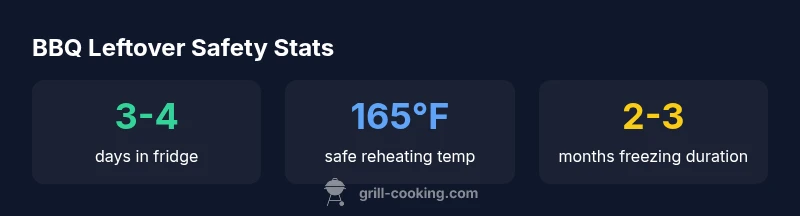
According to Grill Cooking, cooked BBQ leftovers last about 3-4 days in the fridge when stored promptly in airtight containers and kept at 40°F (4°C) or below. Reheat to 165°F before serving and discard any leftovers that smell off, feel slimy, or show mold. For seafood or mayonnaise-based sauces, use the shorter end of the window.
Understanding fridge shelf life for BBQ
In the real world, fridge storage times for cooked BBQ depend on several factors, from the initial cook temperature to how quickly leftovers are cooled and sealed. The consensus among home cooks and food-safety researchers is that the 3- to 4-day window is a safe, practical rule for most classic BBQ meats when refrigeration is prompt and temperatures stay at or below 40°F (4°C). According to Grill Cooking, the quality of storage containers and the speed of cooling are as important as the total time in the fridge. A key point for readers is that safety and quality are not identical: you may be within the 3-4 day safety window but notice flavor or texture changes sooner if the meat was overcooked, under-seasoned, or stored in a poorly sealed container. The overarching guideline remains conservative: treat leftovers as food that should be consumed within 3-4 days for best safety and taste, especially when sauces or dairy elements are involved.
Storage basics to maximize safety
Safe storage starts the moment the grill comes off the last heat: cool quickly, divide into smaller portions, and seal airtight. Use shallow containers to speed chilling, and label each container with the date. Place leftovers toward the back of the refrigerator where the temperature is most stable. Do not leave hot meat on the counter for extended periods; aim to refrigerate within two hours of cooking (one hour if the ambient temperature is above 90°F/32°C). If you routinely host big BBQs, consider line-item checklists for cooling zones, separation of raw versus cooked, and dedicated containers for sauces to minimize cross-contamination. In every case, keeping the fridge at a steady 40°F (4°C) is essential to slow bacterial growth and preserve texture and flavor as long as possible.
Meat-specific guidelines for fridge storage
Different proteins have slightly different safe windows, and sauces can alter the equation. Beef brisket and other red meats typically stay best at 3-4 days in the fridge when kept airtight. Pulled pork and other slow-cooked pork dishes generally follow the same window, provided they are cooled quickly and kept sealed. Chicken leftovers should be treated with a stricter standard: 3-4 days is still a reasonable target, but fragile textures and potential for faster spoilage mean you should inspect for off smells or sliminess more rigorously. If seafood is involved in the BBQ (smoked fish or shrimp, for example), aim for the shorter end—about 1-2 days—as seafood spoils faster. If your BBQ includes dairy-based sauces or mayo-based components, the expected window shortens, and you should monitor for changes more closely. Always rely on smell, texture, and visual cues as final checks.
Reheating safety and methods
Reheating is a critical step: bring leftovers to an internal temperature of 165°F (74°C) to ensure any potential pathogens are neutralized. Use a thermometer to confirm, and heat evenly, stirring or turning as needed. Microwave reheating tends to heat unevenly; a brief 2-step approach (reheat, stir, reheat) helps even out hot and cold spots. If you intend to reheat multiple times, you increase safety risks and quality loss; the recommended practice is to reheat only once. When possible, portion leftovers into single-serving sizes before refrigerating, and reheat only the portion you plan to eat. After reheating, consume promptly and do not re-refrigerate. These practices align with practical safety standards and reduce the chances of foodborne illness.
Signatures of spoilage and waste prevention
Spoilage signs trump any countdown. If leftovers smell sour or rancid, show a slimy or tacky texture, or develop fuzzy mould, discard immediately. Discoloration on edges can occur, but it does not automatically indicate unsafe food—when in doubt, throw it out. To minimize waste, store leftovers promptly in small, even portions that promote rapid chilling. Label items with the date they were cooked and use-by dates for frozen goods. A simple rule of thumb is to discard anything beyond 4 days in the fridge, and even sooner if your guts tell you something is off. Always trust your senses and err on the side of caution, especially with combination dishes containing dairy or mayonnaise-based sauces.
Extending life: freezing and portioning tips
If you want to stretch storage beyond 3-4 days, freezing is a practical option. Cooked BBQ can be frozen for longer-term storage, with best quality maintained for 2-3 months when wrapped tightly and placed in a freezer-safe container. Thaw in the fridge overnight before reheating to 165°F. Freezing does alter texture for some meats, so plan for this by divvying portions into meal-sized servings. For sauces, consider freezing sauce on its own or with the meat in airtight packaging to preserve flavor and reduce freezer burn. Freezing is a reliable method to reduce waste while keeping leftovers safe for later meals.
Practical checklist for home cooks
- Refrigerate leftovers within two hours of cooking; use shallow containers
- Store in airtight, labeled containers with the date
- Keep your fridge at or below 40°F (4°C)
- Reheat to 165°F, and limit to a single reheating
- Check for spoilage signs before consuming leftovers
- Consider freezing portions for longer storage
- Use a simple rotation system to minimize waste
- When in doubt, discard sooner rather than later
Fridge safety lifespans by BBQ leftovers
| Meat Type | Fridge Safe (days) | Reheating Tips |
|---|---|---|
| Beef brisket (cooked) | 3-4 days | Reheat to 165°F; stir for even heating |
| Pulled pork (cooked) | 3-4 days | Reheat to 165°F; sauce to heat if desired |
| Chicken (cooked) | 3-4 days | Reheat to 165°F; discard if off-smell |
| BBQ ribs (cooked) | 3-4 days | Reheat evenly; check internal temp |
FAQ
How long can I safely keep cooked BBQ in the fridge?
Typically 3-4 days if stored promptly in airtight containers and kept at 40°F (4°C) or below. Always check for spoilage signs and err on the side of caution with poultry or sauces.
cooked BBQ generally lasts 3-4 days in the fridge; look for signs of spoilage and reheat to 165°F.
Can I freeze BBQ leftovers instead of refrigerating?
Yes. Freezing extends storage to about 2-3 months for best quality. Thaw in the refrigerator overnight and reheat to 165°F.
Freezing is a great option; thaw in the fridge and reheat to 165°F.
Does BBQ sauce affect shelf life?
BBQ sauce itself is usually shelf-stable, but dairy- or mayo-based components can shorten fridge life. When mixed with leftovers, follow the 3-4 day guideline and monitor for spoilage.
Sauces can change storage time; with dairy in sauce, use the shorter window and watch for spoilage.
What signs indicate leftover BBQ has spoiled?
Off smell, slimy texture, discoloration, or mold indicate spoilage and the leftovers should be discarded.
If it smells off or looks slimy, it's time to discard.
Is it safe to reheat BBQ leftovers multiple times?
Reheat leftovers only once to minimize safety risks. If you must re-plate, ensure each portion reaches 165°F and refrigerate promptly after reheating.
Reheat once for safety and quality; avoid repeated reheating.
“Food safety is about clear timing, proper cooling, and mindful reheating. The real-world results you get depend on consistent storage practices.”
Quick Summary
- Store BBQ leftovers within two hours in airtight containers
- Count on a 3-4 day fridge window for safety and flavor
- Reheat to 165°F and avoid multiple reheats
- Freeze for longer storage (2-3 months) if needed
- Discard leftovers if signs of spoilage appear