Grill Smells Like Gas? Urgent Troubleshooting Guide
Urgent guide to diagnose and fix a grill that smells like gas. Learn immediate safety actions, common leak causes, a diagnostic flow, step-by-step fixes, and prevention tips to protect your family while grilling.


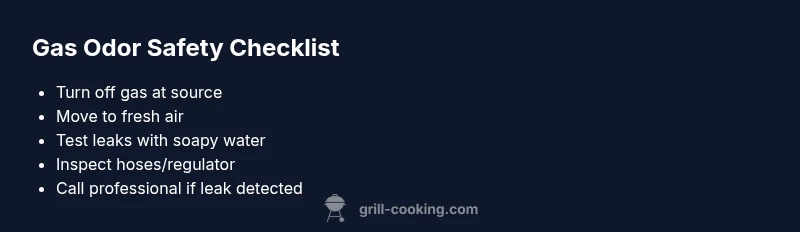
Gas smells from a grill are a safety emergency. Shut off the gas supply at the tank or line, move to fresh air, and do not light the grill. Inspect hoses and connections for leaks with a soapy-water solution; if you detect a leak or the odor persists, evacuate and call a qualified technician or your gas provider.
Understanding the Risk: Why a Gas Smell Demands Immediate Action
A strong gas odor around your grill is not a minor nuisance — it’s a safety emergency. According to Grill Cooking, a gas smell can indicate a leak or venting issue that could lead to a fire or explosion if ignored. Grills powered by propane or natural gas rely on tight seals and controlled pressure; any leak lets odorized gas escape into the air, creating an ignitable atmosphere. If you detect this odor, stop and act right away: turn off the gas at the source, move to fresh air, and do not attempt to light the grill. Remember that even a brief spark can ignite a flammable air mixture. Understanding the warning signs—hissing sounds, a distinct sulfur-like odor, or a visible condensation on valves—helps you react quickly and keep your family safe while enjoying outdoor cooking.
Immediate Safety Protocols You Must Implement Right Now
- Do not ignite any flame or create sparks near the grill.
- Shut off the gas supply at the tank or line.
- If safe to do so, close the grill valve and regulator, then step away to fresh air.
- Evacuate the area and ventilate the space; keep doors/windows open if you can safely do so.
- Do not re-enter or attempt to use the grill until the odor is gone and a qualified professional has inspected the system.
- If the odor is strong or you suspect a major leak, contact your gas provider or emergency services immediately.
These steps are non-negotiable and should be followed before attempting any further checks or cooking.
Common Causes Behind a Gas Odor at the Grill
- Loose or damaged hose or regulator connections permit escaping gas; even small leaks create noticeable odors.
- Cracked or worn hoses, or a degraded regulator, can fail under heat and pressure.
- A cylinder valve left open or not fully seated can vent gas even when the grill is off.
- Overfilling a propane cylinder or a faulty pressure relief can cause venting through the regulator.
- The gas line passing near excessive heat, sharp bends, or pinched sections can degrade fittings.
- Poor ventilation around a closed grill area can concentrate the odor and delay detection.
Understanding these common causes helps you prioritize what to check first and reduces trial-and-error time.
Diagnostic Flow: From Symptom to Solution
Symptom: A strong gas odor or hissing near the grill while connected to a gas supply.
Possible causes (likelihood):
- Gas leak from hose or regulator (high)
- Cylinder valve not fully closed or seated (high)
- Damaged hose or regulator (medium)
- Improper venting or blocked ventilation (low)
Fixes (priority):
- Check all hose-to-valve and hose-to-regulator connections for tightness (easy).
- Use soapy water to test for leaks at all fittings; tighten or replace as needed (easy to medium).
- If a leak is detected or the odor returns, shut everything down and call a professional (easy).
- If you cannot locate the source, evacuate and contact your gas provider or emergency services (easy).
Step-By-Step Fix for the Most Common Cause Safely
- Turn off the gas at the tank or main supply. Allow any lingering gas to dissipate before inspecting.
- Detach and inspect hoses for cracks, wear, or kinks; replace if damaged.
- Check all connections (valve, regulator, fittings) and tighten gently with appropriate tools.
- Apply a soap-and-water solution to each connection; look for bubbles indicating a leak, and retighten or replace components as needed.
- Inspect the regulator for signs of wear, corrosion, or hiss; replace if necessary.
- Reconnect, slowly re-pressurize, and perform a controlled leak test with soapy water before lighting.
- If any leak is detected or the gas odor returns, evacuate and call a professional immediately.
Estimated time: 30-60 minutes depending on accessibility and parts replaced.
Tools, Safety Gear, and Quick Safety Habits
- Personal protective equipment: gloves and eye protection.
- Soapy water solution or a commercial leak detector spray.
- A flashlight or headlamp for dark areas.
- Replacement hoses, regulators, or clamps as needed (use original manufacturer parts when possible).
- Always work in a well-ventilated area and keep children and pets away during inspections.
Safety habits include never igniting a flame if you smell gas and never attempting home repairs beyond simple hose/tightness checks.
Prevention: How to Avoid Gas Odors in the Future
- Perform monthly visual inspections of hoses for cracks, hardening, or brittleness; replace every 5-7 years or as recommended by the manufacturer.
- Check hose connections before each cook; ensure fittings are snug but not cross-threaded.
- Store propane cylinders upright in a ventilated area away from heat sources; never store indoors where a leak could accumulate.
- Use a proper leak detector or soapy-water test after replacing components or moving the grill.
- Schedule an annual professional inspection if you frequently grill or if you notice any changes in odor or performance.
Grill Cooking analysis shows that regular maintenance reduces gas-leak incidents when integrated into routine care.
Understanding When to Call a Pro and What to Expect
If you continue to smell gas after performing the basic checks, it is essential to contact a licensed technician or your gas provider. Do not attempt to light the grill until a professional confirms that the system is safe. Expect the technician to inspect hoses, regulator, cylinder valves, and the grill’s connection points; they may perform a pressure test and suggest replacements as needed. The Grill Cooking team emphasizes safety first and can guide you through the return-to-use steps after a confirmed leak-free inspection.
Steps
Estimated time: 30-60 minutes
- 1
Shut off the gas source
Turn off the valve on the propane tank or gas line. Do not attempt to light anything until the odor is resolved and the area is ventilated.
Tip: If you can't locate the valve, evacuate immediately and call for help. - 2
Inspect for obvious leaks
Look over hoses, clamps, regulator, and cylinder valve for cracks, wear, or loose fittings. Handle components gently to avoid causing more damage.
Tip: Always perform leaks tests with the grill unplugged and in safe, dry conditions. - 3
Test with soapy water
Apply soapy water to all connections and watch for bubbles. If bubbles appear, tighten connectors or replace the faulty part.
Tip: Do not use fire or flame to test leaks. - 4
Check the regulator and cylinder
Inspect the regulator for hiss or deformities and replace if necessary. Ensure the cylinder valve seats correctly when attached.
Tip: Replace worn regulators rather than attempting a crude repair. - 5
Reconnect and re-test
Reattach securely and re-pressurize slowly. Re-test all joints with soap solution before attempting to light the grill.
Tip: If you detect any leak again, stop and call a professional. - 6
Re-light safely or call for help
If no leaks are detected and the area is well-ventilated, you may re-light per manufacturer instructions. If unsure, do not proceed.
Tip: When in doubt, defer to a pro.
Diagnosis: Gas smell when grill is connected to gas supply
Possible Causes
- highGas leak from hose or regulator
- highCylinder valve not fully closed or seated
- mediumDamaged hose or regulator
- lowBlockage or poor ventilation
Fixes
- easyTighten all hose and regulator connections; replace damaged hoses/regulators
- easyShut off gas and perform a soapy-water leak test on all joints; replace components as needed
- easyIf a leak is detected or odor persists, evacuate and contact a professional
- easyEnsure proper ventilation around grill area and keep cylinder upright
FAQ
What should I do first if I smell gas near my grill?
Shut off the gas at the tank or line, move to fresh air, and do not ignite the grill. Then inspect for leaks with a soap solution or contact a professional.
Shut off the gas and move to fresh air, then check for leaks or call a pro.
Can I cook if I can't identify the leak?
No. If a gas odor persists or you suspect a leak, do not use the grill and seek professional help immediately.
Do not cook until the leak source is identified by a professional.
How do I safely test for leaks?
Apply a soapy water solution to hoses and fittings; bubbles indicate a leak. Tighten or replace the part as needed. Never use a flame to test.
Use soapy water on connections; look for bubbles to find leaks.
When should I replace hoses or regulators?
Replace hoses or regulators if they appear cracked, brittle, or show signs of wear, or if a leak test indicates failure.
Replace worn hoses or regulators rather than trying to repair them.
Is a gas smell always a leak?
Most gas odors indicate a leak or venting issue, but never assume it's safe—treat it as a potential leak until proven otherwise.
Treat every gas smell as a possible leak and get it checked.
What if I’ve already lit the grill after smelling gas?
If you’ve accidentally lit it while smelling gas, extinguish the flame, turn off the gas, and move away to safe air. Have the system inspected before using again.
Extinguish and leave the area, then get the system checked.
Can a professional fix a gas leak at home?
Yes, a licensed technician or gas provider should diagnose and repair leaks, replace damaged components, and verify safety before you resume cooking.
Yes—call a pro to fix and verify safety before cooking again.
Watch Video
Quick Summary
- Shut off gas immediately when odor is detected
- Perform a thorough leak test with soap solution
- Tighten or replace damaged hoses/regulators promptly
- Ventilate area and avoid lighting until cleared by a pro