Can You Grill Beef Tenderloin? A Complete Step-by-Step Guide
Learn to grill beef tenderloin with a crusty sear and juicy center using two-zone grilling, temps, resting, and serving tips from Grill Cooking.


Can you grill beef tenderloin? Yes. You can achieve a crusty sear and a uniformly tender center by starting with high direct heat, then finishing over indirect heat to your target doneness. This guide covers trimming, seasoning, temps, timing, resting, safety, and slice presentation, plus tips for sauces and resting rack setups so you can grill beef tenderloin with confidence.
Choosing the Right Tenderloin and Trim
According to Grill Cooking, start with a center-cut beef tenderloin for the most even thickness across the roast. If you buy a whole tenderloin, ask the butcher to trim it to a uniform cylinder and remove the silver skin. Trim any thick fat cap to your preference, but keep a thin layer if you enjoy extra flavor. A 2–3 pound roast (about 1–1.4 kg) that sits evenly on the grill promotes even heat transfer and a good crust. When selecting, look for a bright red color, firm texture, and minimal odor. A well-prepared tenderloin yields a predictable cook and a beautiful crust.
Preparing the Tenderloin: Trimming, Drying, and Seasoning
Pat the meat dry after trimming to remove surface moisture; surface moisture can steam rather than sear, hindering crust formation. Remove the silver skin if present; leave a thin fat cap if you prefer flavor, trimming any hard, ragged bits. Season generously with kosher salt and freshly ground black pepper; you can apply a light rub or marinade if you like, but keep it simple to let the beef shine. For best results, let the seasoned roast come to room temperature for 20–40 minutes before grilling. This step reduces the temperature gap between center and exterior, helping to cook more evenly and preventing a cold center.
Grilling Setup: Two-Zone Cooking
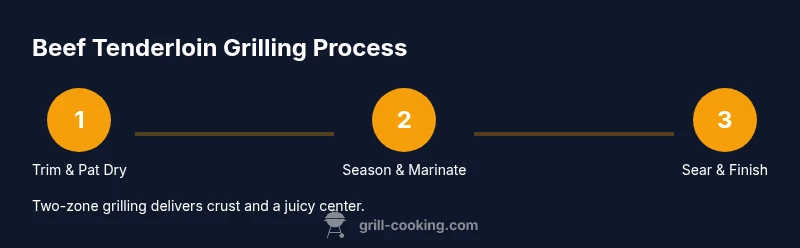
Two-zone grilling is your friend for beef tenderloin. Set up a hot direct-heat zone for searing and a cooler indirect-heat zone to finish. Preheat the grill to roughly 450–500°F (232–260°C) for the sear, then maintain about 325–350°F (165–177°C) in the indirect zone. This setup creates a crusty exterior while allowing the interior to reach the desired doneness without scorching. If using charcoal, bank the coals to one side; for gas grills, light only the burners you intend to use for direct heat. Grill Cooking analysis shows that resting briefly after cooking improves juiciness and evenness, so have foil ready for a gentle tent during the final minutes if needed.
Searing and Finishing: Achieving crust and doneness
Proceed to sear: place the tenderloin on the direct heat zone and sear 2–3 minutes per side, turning 90 degrees between flips to promote an even crust. After the exterior has formed a deep, golden crust, move the roast to the indirect zone and roast until the internal temperature hits your target (about 125–130°F for rare, 130–135°F for medium-rare, 135–145°F for medium). Use an instant-read thermometer for accuracy, checking at the center. When you approach the target, pull the meat off the grill a few degrees early to account for carryover cooking, and avoid overcooking.
Resting and Slicing for Servings
Transfer the tenderloin to a cutting board and tent loosely with foil. Let it rest for 10–15 minutes; this allows juices to redistribute and completes the final temperature rise. Slice against the grain into thick, even medallions or longer slices depending on the cut and service style. If you’re serving with a sauce, keep it light to avoid overpowering the beef’s natural flavor. Present the slices on a warm platter and arrange neatly for an impressive table display.
Common Mistakes and Safety Tips
Avoid overcrowding the grill or leaving the lid closed for too long when searing; moisture buildup will reduce crust formation. Don’t take the roast from the fridge too late; let it come closer to room temperature for even cooking. Keep raw meat separate from ready-to-serve foods to prevent cross-contamination. Use clean utensils and a probe thermometer, and wear heat-resistant gloves when handling hot grates. If working with a long roast, consider tying the loin at 1–2 inch intervals to maintain form during cooking.
Tools & Materials
- Two-zone grill setup (direct and indirect heat)(Hot sear zone and cooler finish zone)
- Instant-read meat thermometer(Probe-style or dial with quick read)
- Long-handled tongs(For turning meat without piercing)
- Sharp chef’s knife(Trim and slice with control)
- Cutting board(Big enough for the roast slices)
- Aluminum foil(Tent the meat during rest)
- Grill brush and towel(For grate cleaning and grip)
- Optional rub or marinade(Flavors you prefer)
Steps
Estimated time: 60-75 minutes
- 1
Trim and pat dry
Trim silver skin and excess fat; pat dry thoroughly to remove surface moisture for a better crust.
Tip: Trim to even thickness so heat cooks evenly. - 2
Season and rest
Season generously with kosher salt and pepper; optionally apply rub or marinade for 15–60 minutes.
Tip: Pat dry before grilling to ensure crust forms. - 3
Preheat for searing and set two-zone grill
Prepare grill with direct heat on one side and indirect heat on the other; preheat to hot.
Tip: Clean grate before searing for better contact. - 4
Sear on direct heat
Place on direct heat and sear 2–3 minutes per side; rotate 90 degrees between flips for even crust.
Tip: Avoid moving meat too soon to let crust form. - 5
Finish on indirect heat
Move to indirect zone and roast until the internal temp reaches target.
Tip: Check temperature early to avoid overcook. - 6
Rest the meat
Remove from grill and tent with foil; rest 10–15 minutes to redistribute juices.
Tip: Rest is essential for tenderness. - 7
Slice and serve
Slice against the grain and serve with sides or sauce.
Tip: Use a sharp blade for clean slices.
FAQ
Can beef tenderloin be grilled from frozen?
Grilling from frozen is not ideal; thaw the tenderloin fully for even cooking. If you must grill from frozen, expect longer cook times and uneven doneness.
It's best to thaw the tenderloin for even cooking.
What is the difference between beef tenderloin and filet mignon?
Filet mignon is a portion cut from the tenderloin, while beef tenderloin refers to the whole muscle. Filet mignon are typically smaller steaks cut from that tenderloin.
Filet mignon is a portion cut from the tenderloin; the tenderloin is the whole roast.
What is the best temperature to grill tenderloin?
Target 125–130°F for rare to 130–135°F for medium-rare, or 135–145°F for medium. Use a thermometer and remove early for carryover cooking.
Aim for about 125 to 145 degrees depending on desired doneness, checking with a thermometer.
Should I marinate tenderloin?
Tenderloin is lean; a light marinade or flavored rub adds subtle flavor. Marinating is optional and should not overpower the beef’s natural flavor.
Marinating is optional; a light rub often works best.
Should I tie the roast?
Tying helps maintain uniform thickness and even cooking, especially for longer roasts that may bow or taper.
Yes, tie the roast to keep its shape for even cooking.
What is reverse sear vs traditional sear?
Reverse sear starts with indirect heat to bring the roast to temperature, then finishes with a brief sear. Traditional sear starts with a hot sear, followed by indirect cooking.
Reverse sear cooks indirectly first, then sears; traditional sear does the opposite.
Watch Video
Quick Summary
- Choose center-cut tenderloin for even cooking
- Two-zone grilling yields crust and juicy center
- Season well and rest before slicing
- Monitor temperature with a thermometer
- Slice against the grain for clean servings