Can You Grill a Frozen Steak? The Complete Guide
Learn how to grill a frozen steak with confidence. This guide covers heat zones, timing, temperatures, safety, and practical tips from Grill Cooking to help home cooks achieve a crusty exterior and juicy center.


Yes, you can grill a frozen steak, but it’s not ideal for most cooks. Expect longer cook times, less even sear, and a risk of over- or under-done centers. Start with a hot sear to lock in crust, then move to indirect heat to finish. Use a thermometer to target 125-130°F for medium-rare, or 135°F for medium, accounting for carryover heat after removing from the grill.
Why Frozen Steaks Are Viable on the Grill
According to Grill Cooking, can you grill a frozen steak? The Grill Cooking team found that with proper technique you can achieve a crust while finishing to the desired doneness. Frozen steaks benefit from a longer sear time to develop a Maillard crust, while the interior warms gradually to the target temperature. The key is to manage heat in two zones and to monitor internal temperature closely to avoid overcooking the outside while the inside remains underdone. This approach is practical for weeknight grilling when thawing isn’t convenient, provided you accept a longer cook and a best-effort crust.
Grilling from frozen also reduces the risk of cross-contamination that can occur during thawing on the counter. By maintaining strict kitchen hygiene and keeping raw meat away from ready-to-eat foods, home cooks can grill frozen steaks with confidence. The result is a flavorful crust with a center that reaches your target doneness, though the final texture will differ slightly from a thawed steak.
Heat Management: Direct vs Indirect and Why It Matters
Grill setup matters as much as the meat. When you grill frozen steak, you’ll benefit from an initial direct, high-heat sear to create the crust, followed by indirect heat to finish. Direct heat creates the Maillard reaction that yields crusty exterior; indirect heat ensures the interior warms evenly without burning the crust. If you have a two-zone grill, place the steak over the hot zone for 1-3 minutes per side, then move to the cooler zone with the lid closed. If you only have one temperature zone, you can start with a long indirect period after a brief sear, but you’ll need precise temperature control and patience to avoid scorching.
Choosing Thickness and Cut Quality When Frozen
Thickness matters more when you start with a frozen steak. A uniformly 1.5–2 inch thick cut tends to perform best because the outer crust forms quickly while the interior warms at a manageable pace. If your steak is thicker than 2 inches, the risk of a underdone center increases, even with a long grill time. In contrast, very thin cuts may overcook on the exterior before the center reaches a safe temperature. Always choose a cut with even thickness and minimal marbling for predictable results when starting from frozen.
The Ideal Grill Setup for Frozen Steaks
A two-zone setup is ideal for frozen steaks: a hot direct zone for searing and a cooler indirect zone for finishing. Gas grills and charcoal grills both work, but each requires a slightly different approach. For gas grills, preheat both zones and keep lids closed to trap heat. For charcoal, bank coals to create a bright ring and place a grate over the center for direct heat, then use a cooler zone around the edges for finishing. If you lack a two-zone setup, be prepared to juggle heat with frequent lid adjustments and careful monitoring.
Step-By-Step Frozen Steak Grilling Method
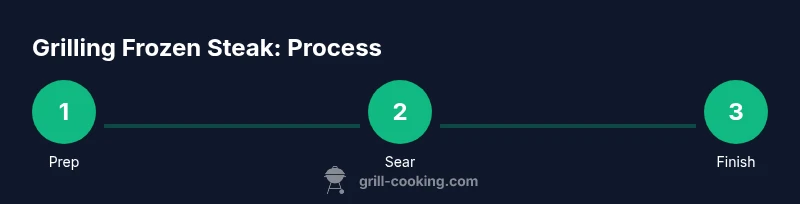
- Prep the grill with two heat zones and preheat. 2) Lightly oil the grate and position the steak over direct heat for a crust-first sear. 3) Move the steak to indirect heat after a 1–3 minute sear per side. 4) Check internal temperature frequently with a thermometer; target 125–130°F for medium-rare, or 135°F for medium, then remove from heat. 5) Rest the steak off the heat for 5–10 minutes to let carryover tempsfinish. 6) If needed, finish with a quick final sear for crust.
Resting, Slicing, and Finishing with Flavor
Resting is essential when cooking from frozen. Tent loosely with foil for 5–10 minutes to allow juices to redistribute and carryover heat to finish the cooking. Slicing should be against the grain for tenderness, and you can finish with a light brush of melted butter or compound butter to enhance flavor. For a more robust crust, a final 30–60 second sear on high heat can enhance texture without dramatically affecting doneness.
Troubleshooting Common Issues
If the crust forms too slowly or the interior remains underdone, switch more aggressively to indirect heat and monitor temperature closely. If the exterior burns before reaching target internal temps, reduce direct heat sooner and extend the indirect phase. Uneven thickness can cause hot spots; if so, move the steak between zones more frequently and consider pounding the thicker edge to even thickness. Always use a thermometer—visual cues alone are unreliable with frozen meat.
Safety and Food Handling When Grilling Frozen Meat
Handle frozen meat with clean hands and keep it separate from ready-to-eat foods. Do not thaw meat on the counter; thawing in the fridge is preferred if you have extra time, but if you must grill from frozen, ensure the outer surface remains above 140°F during cooking to prevent bacterial growth. Use separate utensils for raw and cooked meat, and wash hands after handling raw steak. Always check that internal temperatures meet food safety guidelines before serving.
Variations: Flavor Upgrades and Sides
To elevate frozen steak, season generously before cooking, or apply a dry rub that can withstand long cooking times. A compound butter or infused oil applied after resting adds flavor without risking burning of spices. Pair with bright, quick sides like grilled asparagus, corn on the cob, or a simple chimichurri. A fresh squeeze of lemon or a light salsa can brighten the dish without masking the steak’s crust.
Quick Reference: Temps, Times, and Targets
Timing depends on thickness and grill setup. A good starting rule with 1.5–2 inch cuts is a 6–12 minute total direct-heat sear (split across sides), followed by 8–20 minutes of indirect heat. Target internal temperatures are 125–130°F for medium-rare, and 135°F for medium, with carryover heat adding a few degrees after resting. Always use an accurate thermometer and keep a careful eye on the grill lids.
Tools & Materials
- Frozen steak (1.5–2 inches thick)(Uniform thickness improves cooking predictability from frozen start)
- Grill thermometer(Prefer a probe thermometer or leave-in thermometer for real-time readings)
- Tongs with a good grip(For steady flipping and crust formation without piercing the meat)
- Two-zone grill setup(Direct high-heat zone for searing; indirect zone for finishing)
- Oil or neutral neutral oil spray(Lightly oil the grate to prevent sticking)
- Cast-iron skillet (optional)(Can be used to finish crust in a pinch)
- Aluminum foil (for resting)(Tent to rest and retain heat after cooking)
- Plate for resting(Let the steak rest away from direct heat)
Steps
Estimated time: 60-90 minutes
- 1
Preheat with two heat zones
Set up the grill to two zones: a hot direct zone and a cooler indirect zone. Preheat the grill to a high heat on the direct side and moderate heat on the indirect side. This setup allows a quick sear while preventing overcooking the interior.
Tip: Having a thermometer handy helps you adjust quickly as the steak cooks. - 2
Sear the frozen steak
Place the frozen steak over the direct heat. Sear for 1–3 minutes per side until a crust forms and the exterior becomes browned. Do not move the steak too much to allow crust to develop.
Tip: Press gently with tongs to ensure full contact with the grate for even browning. - 3
Move to indirect heat and finish
Transfer the steak to the indirect heat zone. Cover the grill to trap heat and cook until the internal temperature nears the target. Check temperature every 3–5 minutes to avoid overshoot.
Tip: Keep the lid closed to maintain a steady heat and speed up cooking. - 4
Check internal temperature
Use a thermometer to verify doneness: 125–130°F for medium-rare, 135°F for medium (take carryover into account). Remove from heat just shy of the final target to account for resting.
Tip: Remember that carryover heat will raise the temperature by a few degrees after removing from the grill. - 5
Rest the steak
Rest the steak for 5–10 minutes on a plate, loosely tented with foil. This lets juices redistribute and finish cooking through residual heat.
Tip: Resting is as important as the cook. Skipping it leads to a dryer steak. - 6
Optional final sear and serve
If the crust isn’t as deep as you’d like, give it a quick 30–60 second sear on high heat. Slice against the grain and serve with your favorite sides.
Tip: A light brushing of melted butter after resting adds aroma and flavor.
FAQ
Can you grill a frozen steak without thawing it first?
Yes, you can grill frozen steak, but expect longer cooking times and careful heat management. Begin with a strong sear and finish over indirect heat to reach the target temperature safely.
Yes, you can grill frozen steak, but it takes longer and you must manage heat carefully. Start with a strong sear, then finish over indirect heat to reach the right temperature.
What internal temperature should I aim for when grilling frozen steak?
Target 125–130°F for medium-rare or around 135°F for medium, and account for carryover heat after removing from the grill.
Aim for about 125 to 130 for medium-rare, or 135 for medium, then let it rest to finish.
Does thickness affect cooking time when starting from frozen?
Yes. Thicker cuts require more time, as the interior needs to thaw and heat through, while thin cuts can overcook on the outside.
Yes. Thicker steaks take longer to heat through; thinner steaks risk overcooking on the outside.
Is it safer to thaw a steak before grilling, or is freezing okay?
Thawing in the fridge is ideal for even cooking, but if you’re short on time, grilling from frozen is workable with strict temperature control.
Thawing in the fridge is best, but grilling from frozen can work if you monitor temps closely.
What cuts work best when starting from frozen?
Cuts with uniform thickness and moderate marbling perform more predictably when grilled from frozen.
Uniform thickness cuts with even marbling are the most forgiving when starting from frozen.
Should I use a final sear after cooking from frozen?
A brief final sear can deepen crust and flavor, but do not overdo it as it can overshoot the desired doneness.
A quick final sear can improve crust, just be careful not to overcook.
Watch Video
Quick Summary
- Plan for extra time when starting from frozen.
- Use two heat zones for best crust and doneness.
- Thermometer is essential for accuracy and safety.
- Resting is critical to juiciness and final texture.
- Finish with a light sear to restore crust if needed.