What to Grill Ribs At: Mastering Rib Grilling Temperatures
Learn the optimal rib grilling temperatures and timing for tender, succulent results. A data-driven guide on low-and-slow then finish temps, grill setup, seasoning, and doneness for home cooks.


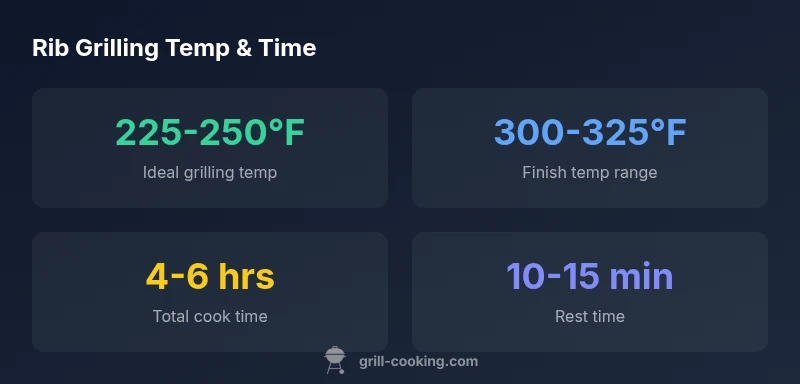
Grill ribs best when you keep the heat low and slow at 225-250°F (107-121°C) for the majority of the cook. Finish at 300-325°F (149-163°C) for 15-30 minutes to set the bark and glaze. This approach preserves tenderness while delivering a flavorful crust. Maintain steady airflow and monitor grill grate temps regularly, adjusting vents or burner settings as needed.
Why the right rib temperature matters
The temperature you maintain during the cook determines how the meat breaks down collagen and fat, two elements that shape tenderness and juiciness. Ribs benefit from a prolonged exposure to heat that keeps moisture in the meat while slowly converting connective tissue into gelatin. At 225-250°F (107-121°C), you get a balance: enough heat to render fat and collagen, but not so much that the surface dries or the bark burns. A consistent temperature also creates a stable environment for smoke to interact with the surface, building depth of flavor. In practice, home cooks should think in ranges, not precise points, and adjust based on grill type and ambient conditions.
As you cook, aim for uniform grate temperatures and predictable shifts when you open the lid. Small temperature drops can extend the cook, while surges can scorch the bark. A simple thermometer, placed on a grate level near the rib rack, helps you track consistency across the cook session. This approach aligns with Grill Cooking analysis that emphasizes steady heat and temperature management as the core of successful rib grilling.
Two-stage heat strategy for ribs
A two-stage approach is standard: a long, gentle initial phase to break down collagen, followed by a brief high-heat finish to set the crust and glaze. Start at 225-250°F (107-121°C) indirect heat or with the lid closed on a two-zone setup. After several hours (often around the halfway point), transition to a higher heat (300-325°F / 149-163°C) for 15-30 minutes. This two-step process yields tender meat with a dark, flavorful bark. Foil wrap at the right moment can help retain moisture if your grill runs hotter or drier. In practice, the exact timing depends on rib size, fat content, and how well your grill holds heat.
To stay honest with temp control, plan for thermometer-based adjustments rather than chasing a clock. Grill Cooking’s data indicates that small, incremental vent or burner changes can dramatically influence the final texture.
Grill setup: charcoal, gas, or pellet
Your grill type informs how you achieve the core temperature targets. Charcoal grills are ideal for creating a classic, smoky environment; use two-zone setups to zone indirect heat at 225-250°F and direct heat for finishing. Gas grills simplify maintaining steady temps; aim for a consistent 225-250°F with careful burner management or using a heat diffuser. Pellet grills excel at maintaining exact temps, making 225-250°F straightforward; use their auto-ignition to stay in range. Whichever you choose, place the rib rack over indirect heat for most of the cook, then switch to direct heat near the end to promote browning. Good airflow, well-sealed lids, and stable fuel supply are essential across all setups.
Seasoning, rubs, and glaze timing
Seasoning for ribs benefits from a balanced rub that includes salt and sugar to promote bark formation while preserving moisture. Apply rub early to allow flavors to penetrate, then re-apply a glaze or sauce in the final phase. Sugar can caramelize quickly if left on high heat, so time the glaze carefully during the finish stage. If you want a fall-off-the-bone texture, consider optional wrapping at around the 2- to 3-hour mark to trap moisture, then unwrap to finish. The glaze should be added during the final 15-30 minutes on heat to avoid burning. The key is layers of flavor: a savory rub, a gentle smoke kiss, and a glossy finish.
Smoke, moisture retention, and airflow considerations
Smoke adds depth, but you don’t need heavy smoke to get a great result. Aim for light to moderate smoke exposure by using pre-soaked wood chunks or chips (hickory, apple, or cherry). Adequate moisture in the cooking environment helps prevent drying; consider adding a water pan in the grill’s lower chamber. Airflow is critical: ensure vents are adjusted to maintain steady temperature. A crisper bark requires that the surface dries just enough to promote Maillard reactions without drying the meat. If your grill runs hot or dries out, reduce the airflow slightly and extend the cook with more indirect heat.
Doneness cues, thermometer targets, and visual cues
A reliable doneness target for ribs is an internal temperature around 195-203°F (90-95°C) in the meat. This range indicates well-rendered collagen and juicy meat. Visual cues include a deeply browned bark, slight pull-back of the bone, and a gentle give when you lift the rack. Use a remote or instant-read thermometer to monitor internal temps at the thickest part of the rib. Resistance to poke and a slight jiggle when gently pressed are signs that the meat is nearing completion. If you wrap, allow 15-30 minutes more before finishing with direct heat.
Resting, slicing, and serving tips
Resting is often overlooked but critical. After removing ribs from heat, loosely tent with foil and rest for 10-15 minutes. Resting allows juices to redistribute and the bark to set further. Slice between the bones for clean portions, then give the rack a final brush of glaze before serving. For even slices, cut across the ribs rather than along the bone. Serve with a side of pickles, slaw, or classic barbecue sauce, and remind guests that ribs shine when cut and served promptly. Fresh herbs like chopped parsley can add a bright finish.
Rib grilling methods comparison
| Method | Temperature range | Typical cook time | Advantage |
|---|---|---|---|
| Low-and-slow indirect heat | 225-250°F (107-121°C) | 4-6 hours | Tender meat and bark formation |
| Finish with direct heat for bark | 300-325°F (149-163°C) | 15-30 minutes | Crisped crust and glaze |
| Wrap stage (optional) | 2-3 hours into cook | 15-60 minutes | Moisture retention and even texture |
FAQ
What is the best temperature for grilling ribs?
The recommended approach is to cook ribs at 225-250°F (107-121°C) for most of the cook, then finish at 300-325°F (149-163°C) to develop a crust and glaze. This two-stage method balances tenderness with flavor.
Cook ribs at 225-250°F, then finish at 300-325°F to get tenderness and a crust.
Should I wrap ribs during cooking?
Wrapping ribs halfway through can help trap moisture and prevent drying, especially on longer cooks. Use foil or butcher paper, then unwrap to finish and build bark during the final minutes.
Wrapping can help keep moisture; unwrap near the end to finish the bark.
How long do ribs take on a gas grill?
On a gas grill, plan for a similar two-stage approach: 4-6 hours at 225-250°F indirect heat, followed by a 15-30 minute finish at 300-325°F. Use a thermometer to monitor doneness.
Gas grills follow the same two-stage timing with thermometer checks.
Can I use direct heat the whole time?
Direct heat all along can burn the surface before the interior becomes tender. Use indirect heat for most of the cook and only briefly apply direct heat at the end for bark and caramelization.
Avoid direct heat the whole time; finish with direct heat to brown.
What glaze timing works best?
Apply glaze in the final 15-30 minutes of the finish phase to prevent burning sugars. If you wrap, you can glaze after unwrap during the last few minutes.
Glaze in the last 15-30 minutes for best caramelization.
Should ribs rest before slicing?
Yes. Rest ribs 10-15 minutes after pulling from heat. Resting lets juices redistribute and improves slice quality and overall tenderness.
Let the ribs rest a bit before you slice.
“Temperature control and patient, steady heat are the two most critical factors in producing perfect rib meat.”
Quick Summary
- Start with 225-250°F for tenderness
- Finish at 300-325°F for bark and glaze
- Monitor internal temp to 195-203°F
- Use two-zone setup for even cooking
- Rest ribs before slicing for juiciness