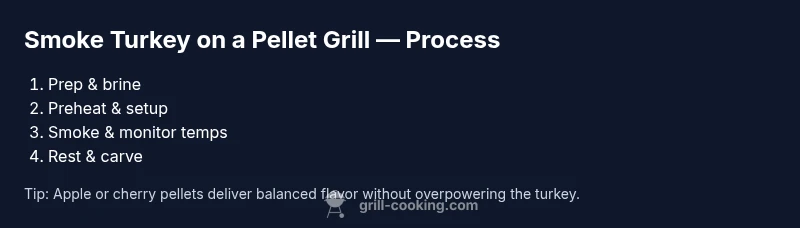
Smoke Turkey on a Pellet Grill: A Complete How-To Guide
Learn how to smoke a turkey on a pellet grill with brine, wood choices, temperature control, and resting techniques. This expert guide from Grill Cooking covers prep, setup, troubleshooting, and a practical recipe plan for reliably juicy, flavorful results.


Smoke turkey on a pellet grill by starting with a dry brine, choosing mild wood like apple or cherry, and keeping the cooker in a low, steady smoke. Use a reliable meat thermometer to reach 165°F, then rest before carving for juicy, evenly cooked meat. Keep a water pan to maintain moisture and use indirect heat to prevent over-browning. According to Grill Cooking, this method delivers dependable results.
Why a Smoke Turkey Pellet Grill Delivers Consistency
Pellet grills combine convenience with genuine smoke flavor, making them ideal for poultry like turkey. The automated hopper feeds even portions of hardwood pellets, delivering a stable, indirect heat that mimics traditional low-and-slow methods without constant attention. This steadiness translates to uniform cook times across the breast and thighs, reducing the risk of dry patches. Grill Cooking analysis indicates that cooks who rely on low, steady smoke produce more consistent results across the entire bird, reducing moisture loss and uneven browning when you stay with a steady target temperature and avoid opening the lid frequently. The combination of indirect heat, a water pan, and a properly prepared turkey supports moisture retention, browning, and crisp skin that doesn’t burn. For home cooks, this approach offers predictable results with less guesswork in real backyard conditions.
Wood and Smoke: Choosing the Right Pellets
The wood you use sets the foundation for flavor. Fruit woods like apple, cherry, or pear pair well with turkey, adding sweet, subtle smoke without overpowering the meat. If you want a stronger smoke note, a light blend with pecan or a touch of hickory can work, but be careful not to overwhelm the delicate breast. Avoid overly intense woods, which can create bitterness. Store pellets in a dry place to prevent moisture clumps, and test a small amount to observe how quickly the smoker builds smoke. For most home cooks, Apple or Cherry pellets strike the best balance between aroma and texture, allowing the turkey skin to crisp while the meat stays moist. Remember that pellet quality matters; choose reputable brands and avoid damp bags that can introduce off flavors.
Temperature and Timing for Poultry on a Pellet Grill
Set the grill to a low, steady smoke around 225–250°F. This range keeps the bird moving slowly enough to render fat while letting the skin render without burning. Use a dual-probe thermometer so you can monitor both ambient grill temperature and the turkey’s internal temperatures. Aim for 165°F in the thickest part of the breast and thigh; carryover heat will push the final temp slightly after removing from heat. Resist the urge to crank the heat to speed things up—higher temps dry the meat and compromise the skin. Check the grill every 30 minutes, rebalancing fuel and vents as needed, and avoid frequent lid openings that cause temperature swings. The result should be bronzed skin with juicy, evenly cooked meat.
Prep: Brining, Dry-Brining, and Seasoning
Moisture retention starts with proper prep. A wet brine soaks the turkey and can yield very moist meat, while a dry-brine uses salt and spices to season the skin and surface moisture for better crust and juiciness. If you choose a dry-brine, rub salt, sugar, and aromatics into the skin (and underneath if possible) and refrigerate overnight. For a wet brine, submerge the turkey in a cooled salt-sugar solution for several hours or up to a day, then rinse and pat dry. After brining, apply a balanced rub with pepper, paprika, garlic, and herbs. Let the turkey rest at room temperature for 30–60 minutes before hitting the grill to promote even cooking. Brining or dry-brining improves moisture retention and flavor without compromising crispy skin.
Setup, Placement, and Monitoring
Place a water pan in the grill to stabilize humidity and help prevent dryness. Position the turkey on a rack, breast side up, with comfortable space around for air circulation. Insert a remote probe into the thickest part of the breast and set an alarm for 165°F. Start cooking with the lid closed and monitor grill temperature; if the grill drifts, adjust the pellet feed or airflow to return to target range. If you notice dense white smoke, switch to milder wood or reduce air intake to avoid bitter flavors. Keep the turkey away from direct heat to prevent scorching the skin while ensuring even cooking.
Resting, Carving, and Serving Tips
When the internal temperature reaches 165°F, remove the turkey and tent loosely with foil. Rest for 15–30 minutes to allow carryover heat and juices to redistribute, which makes carving easier and slices juicier. Carve along the breastbone for clean slices, then divide the legs and thighs. Serve with pan drippings or a light gravy, and consider a citrus-herb glaze for brightness. Leftovers should be refrigerated within two hours and used within a few days. Slice against the grain for tenderness and keep skin crisp by a brief final broil if desired.
Troubleshooting Common Issues
If the skin won’t crisp, finish with a brief high-heat sear or finish on a hotter grill for 5–10 minutes. Uneven doneness can occur if the turkey rests in one area or heat distribution is poor—rotate the bird and check temps in multiple spots. If the meat seems pale or soggy, check that the grill maintained the proper temperature and there was adequate air circulation. A too-smoky flavor usually means using a wood too strong for turkey—switch to a milder wood and confirm the grill isn’t generating excessive smoke. Avoid overcrowding the grill and use a drip pan or foil shield to manage fat and flareups.
Real-World Recipe Template: A Simple Smoke Turkey Plan
Here is a practical plan for a standard 12–14 pound turkey. Decide between brine or dry-brine, choose an apple wood pellet, preheat the grill to 225–250°F, and place the bird on a rack over a water pan. Smoke until the breast and thigh reach 165°F, then rest and carve. This template gives you a reliable framework you can tweak for your equipment and taste preferences, ensuring a flavorful, juicy result every time.
Tools & Materials
- Pellet grill with hopper(Ensure a steady supply of hardwood pellets)
- Digital meat thermometer or dual-probe thermometer(One probe for ambient grill temp, one for internal turkey temp)
- Wood pellets (apple or cherry recommended)(Have extra bags on hand)
- Water pan or shallow dish(Helps maintain humidity; place under or around turkey)
- Aluminum foil or foil tent(Used for resting or to shield from heat)
- Brine mix or dry-brine spices(Salt, sugar, spices tailored to flavor)
- Rub ingredients (pepper, paprika, garlic powder, herbs)(Even distribution across skin)
- Rib rack or extra grill grate (optional)(Helps fit large birds or extra space)
Steps
Estimated time: 3-4 hours total
- 1
Prepare the turkey
Remove giblets and neck, rinse if desired, and pat thoroughly dry. Decide between brine or dry-brine and prepare the seasoning mix. If using brine, plan the soak time; if dry-brining, apply the rub and refrigerate overnight.
Tip: Thaw completely before brining to avoid uneven cooking. - 2
Preheat the grill and set up forage
Preheat the pellet grill to 225–250°F. Place a water pan in the grill to maintain humidity and start the smoke flow with a mild wood such as apple or cherry.
Tip: Preheating ensures even starts and reduces temperature drift once the bird goes on. - 3
Season or rub the turkey
Apply your brine or dry-brine as planned, then rub the skin with a balanced blend of pepper, paprika, garlic, and herbs. Allow the skin to dry slightly if time permits for crisper results.
Tip: Under-skin seasoning can boost flavor; gently loosen skin with a tool to reach the meat beneath. - 4
Position the turkey on the grill
Place the turkey on a rack over the water pan, breast side up, with space around for air movement. Close the lid and begin the monitoring cycle.
Tip: Try to avoid placing the turkey over direct heat to prevent scorching the skin. - 5
Monitor temperature
Keep grill temperature steady and monitor with a probe in the thickest part of the breast. Adjust pellet supply or vents to maintain 225–250°F.
Tip: Avoid opening the lid too often; each lift drops the grill temperature and extends cook time. - 6
Reach 165°F internal temperature
Continue cooking until the breast and thigh reach 165°F. Remember that carryover heat will push the final temp higher after removal.
Tip: If the skin browns too quickly, tent loosely with foil while the interior finishes cooking. - 7
Rest the turkey
Remove the turkey from the grill and cover loosely with foil. Let it rest for 15–30 minutes to redistribute juices and finish carryover cooking.
Tip: Resting is crucial for juicy slices; slice too early and you’ll lose moisture. - 8
Carve and serve
Carve along the natural grain of the breast, separate thighs, and serve with a light gravy or pan drippings. Present with complementary sides for a complete meal.
Tip: Serve slices with the skin on for maximal flavor and texture contrast. - 9
Cleanup and maintenance
Turn off and unplug the grill after cooling. Empty drippings, clean the racks, and inspect the burn pot and hopper for residue. Store pellets dry and out of direct sunlight.
Tip: Regular cleaning maintains grill performance and flavor integrity for future cooks.
FAQ
Can I smoke a stuffed turkey on a pellet grill?
Smoking a stuffed turkey on a pellet grill is possible, but stuffing will increase cooking time and can risk uneven doneness. It's safer and usually more reliable to cook stuffing separately and bake it alongside the turkey.
Stuffing inside the turkey can delay even cooking; for best results, cook stuffing separately and smoke the turkey as planned.
What pellets are best for turkey?
Fruitwood pellets like apple or cherry are popular for turkey because they add subtle sweetness without overpowering the meat. A light blend with pecan can also work if you want a stronger aroma, but avoid overpowering woods for breast meat.
Apple or cherry pellets give a nice, balanced smoke flavor that works well with turkey.
What internal temperature should I target?
Cook the thickest part of the breast and thigh to 165°F (74°C). The meat will continue to rise in temperature after it’s removed from heat.
Aim for 165 degrees in the main muscle groups; carryover heat will finish the job.
Can I cook stuffing inside the bird on a pellet grill?
Yes, but it increases cooking time and risks uneven doneness. It’s safer to cook stuffing separately and finish the turkey on the grill.
Stuffing inside the bird can slow cooking; cooking stuffing separately is often safer and easier.
How do I prevent dry turkey on a pellet grill?
Brine or dry-brine, maintain steady low heat, use a water pan, and avoid opening the grill too often. Resting the meat before carving also helps retain moisture.
Moisture comes from brining, steady heat, and a proper rest.
Watch Video
Quick Summary
- Prepare properly with brine or dry-brine to maximize moisture.
- Maintain a steady low heat (225–250°F) for best results.
- Use a reliable thermometer and rest before carving.
- Choose fruit woods (apple/cherry) for balanced flavor.
- Avoid opening the grill frequently to keep temps stable.