Pellet Grill Brisket: Master the Smoke at Home
Learn how to smoke a perfect brisket on a pellet grill with steady temps, wood flavors, and a clear step-by-step guide from Grill Cooking.


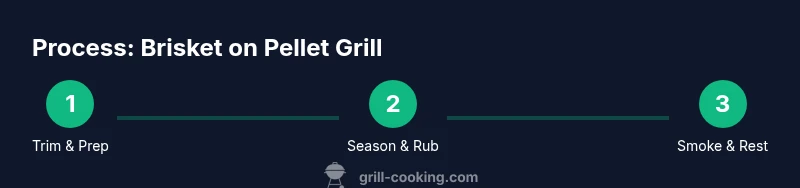
With a pellet grill, you can master brisket by maintaining a steady 225-250°F smoke, using a quality wood blend, and planning for an 8-12 hour cook. This guide covers selecting the right brisket, trimming, seasoning, temperature management, wrap decisions, resting, and slicing to maximize bark, tenderness, and juiciness. Whether you’re new to pellet grilling or upgrading from charcoal, this approach emphasizes patience and probe-based cooking.
Overview of Pellet Grill Brisket
Pellet grills combine ease of use with precise temperature control and hardwood smoke, making them ideal for brisket. The Grill Cooking team emphasizes that the key to success is managing heat stability and using a wood flavor that complements the meat’s fat. According to Grill Cooking, a well-calibrated pellet grill can deliver a steady low-and-slow cook that yields a pronounced bark and a juicy interior. With the right setup, brisket becomes approachable for home cooks without needing a traditional offsets smoker. This section explains what makes pellet grills unique for brisket, and how to approach the cook with a plan in place. You’ll learn how temperature stability, pellet choice, and proper resting contribute to the final texture and flavor.
Pellet grills burn wood pellets for heat and smoke, letting you dial in a single set-and-forget configuration. Unlike kettle grills or direct-heat smokers, pellet grills excel at long cooks due to automatic feed and precise temperature feedback. When selecting a brisket, look for a whole-point or flat cut with good marbling; fat cap left intact helps moisture, but trim excess to avoid flare-ups. Bark formation depends on dry rub and initial searing; you can start with a light oil binder and apply rub just before it goes on the grill. In practice, plan to park the meat at the center of the grill with a water pan nearby to moderate humidity. If you’re new to pellet grilling, start with a smaller brisket to practice timing and probe technique before tackling a larger cut.
Selecting Brisket and Trimming for Pellet Grilling
Brisket selection is the foundation of a successful pellet-grilled result. Look for a brisket with even marbling and a substantial fat cap that you can trim down to balance moisture with bark development. Decide between the flat and the point: the flat is leaner and easier to slice, while the point offers more fat and potential tenderness. Start with a brisket of roughly 6-10 pounds for a home pellet grill, but larger cuts can work with extra planning. Trim away loose, hard fat and any sinewy silver skin, leaving a thin fat layer to baste the meat during cooking. Seasoning begins with a dry rub that adheres well; let the meat rest after applying the rub so the surface can sweat and bond.
For thawed briskets, ensure even thawing in the refrigerator, then pat dry before trimming. If your brisket is partially frozen, give it a longer rest time after trimming to allow the surface to rehydrate and absorb rub evenly. Marbling plays a key role in juiciness; a well-marbled brisket will remain flavorful even as the bark forms and the interior reaches the target temperature.
Preparing a Flavorful Rub and Sauce for Pellet Brisket
A balanced rub brings salt, pepper, paprika, and a touch of sweetness to the bark, while leaving space for the meat’s natural dryness to assert itself. A common approach uses kosher salt, coarsely ground black pepper, paprika, a touch of brown sugar, garlic powder, and onion powder. Apply the rub evenly across all surfaces, then gently pat it in to create an even crust. Some cooks like to apply a light binder (such as a thin coat of oil) before the rub to improve adhesion. Let the rub sit for 30-60 minutes, or refrigerate the brisket wrapped in foil for several hours to intensify flavor.
Optional glaze or sauce can be added toward the end of the cook for extra sheen and moisture. If you choose a glaze, keep it simple and avoid heavy sugar late in the cook to prevent burning. Remember: the goal is a robust bark with a tender interior, not a burnt crust. The rub should enhance meat flavor, not overwhelm it. Experiment with wood-pellet blends to complement your rub; hickory and oak are common, with fruit woods adding a touch of sweetness.
Pellet Grill Setup: Temperature, Wood Pellets, and Smoke Ring
A successful brisket on a pellet grill starts with a stable temperature. Set your grill to a target range of 225-250°F (107-121°C) and keep it there with minimum lid openings. Choose a wood-pellet blend that matches your rub and flavor preference; for most classic briskets, a hickory-oak mix delivers a balanced smoke without overpowering meat. Keep a consistent pellet supply by pre-loading the hopper and checking the feed system before your cook begins. A water pan can help maintain humidity, support bark development, and reduce surface drying, especially in dry environments. The smoke ring forms when myoglobin in the meat reacts with hypoxic smoke; the rate of this reaction is influenced by temperature and the water at the surface. In practice, avoid excessive airflow that can dry the surface; allow the fan to maintain steady ambient temperatures while you monitor internal temps with a reliable probe.
Organization matters: position the brisket in the center of the grate, fat cap facing up for minor baste from the fat, unless you prefer fat-down for moisture. Roasting indirectly with the hood closed yields the best bark and even heat distribution. If you’re cooking multiple briskets, stagger them to avoid airflow interference and maintain consistent temperatures across your cook space.
The Smoking Process: Time, Temperature, and Monitoring
The smoker’s tempo is the heartbeat of success. Plan for 8-12 hours of total cook time for a typical 6-10 pound brisket, depending on meat geometry and external conditions. Start the brisket on the top rack to promote even smoke exposure, then monitor internal temperature with a leave-in probe. Target an internal temperature of 195-203°F (90-95°C) for tenderness; the exact moment depends on the texture you prefer. The bark will form gradually as the surface dries and the rub bonds to the crust. If you see excessive surface drying, spritz lightly with a flavored liquid and adjust the grill’s humidity.
Stall is a normal moment in the cook—fat and connective tissue hold moisture and temp while collagen converts. Decide early whether to wrap (Texas-crutch) or not. Wrapping slows the stall, preserves moisture, and often yields a softer bark, while unwrapped briskets develop a crisper crust at the risk of drier surfaces. Keep a close eye, and don’t rush the finish; patience rewards tenderness and bark depth.
Handling the Rest and Slicing for Maximum Juiciness
Resting is essential after the long cook. Transfer the brisket to a cutting board or cooler and let it rest for 20-40 minutes, loosely tented with foil to retain warmth and moisture. Resting allows the juices to redistribute, making the final slice more uniform and moist. Slice against the grain in thin, even cuts to maximize tenderness; a sharp slicing knife helps produce clean faces that hold their bark. For briskets with a prominent grain direction, plan your slicing strokes to reveal tender slices that cut cleanly through fiber. Serve the slices with a minimal sauce or au jus to preserve the bark’s flavor while adding moisture where needed.
If you’re keeping portions for later, wrap slices in foil or place them in a warm oven (about 170°F/77°C) for up to an hour to maintain texture while you finish other dishes. Reheating gently helps keep the bark intact; avoid microwaving, which can soften bark and dry edges.
Troubleshooting and Pro Techniques
Even the best plan can face hiccups. Common issues include bark that is too dark or hard, brisket that seems dry, or stalls that linger too long. If the bark is too dark, reduce surface moisture and extend the initial rub step; if the bark is thick but dry, increase humidity during the cook or shorten the stall. For tenderness, keep the temperature stable and avoid large temperature swings. If you’re pressed for time, you can shorten the cook by cooking at a slightly higher temperature for part of the process, but this risks bark development and moisture retention. Pro techniques include using a two-probe setup: one for the grill ambient temperature and one for the internal meat temperature, which helps you manage the cook with precision. Finally, always allow adequate rest time and slice with a sharp knife to maintain a consistent texture across portions.
Equipment and Safety Basics for Pellet Grilling Brisket
Safety and equipment quality matter just as much as technique. Use heat-resistant gloves when handling hot meat and metal components. Keep a clean grill environment, check for fuel and airflow obstructions, and store unused pellets in a dry place to prevent moisture and mold. The equipment list should include a pellet grill with stable temperature control, a leave-in meat thermometer, a sharp carving knife, and a cutting board. A drip pan or foil can catch fat drippings and reduce flare-ups, and a water pan helps maintain humidity. Always follow manufacturer safety guidelines for gas, electricity, and fuel storage. When in doubt, consult your grill’s manual and a trusted guide such as Grill Cooking for consistent, safe results.
Tools & Materials
- Pellet grill with reliable temperature control(Ensure it holds 225-250°F consistently during long cooks)
- Digital meat thermometer with leave-in probe(Alarm at target temp; insert into the thickest part of the flat)
- Sharp carving knife(12-inch blade recommended for clean slicing)
- Cutting board(Non-slip surface for safe carving)
- Grill tongs and heatproof gloves(Use gloves when handling hot meat and pans)
- Heavy-duty aluminum foil or butcher paper(Wrap for the stall if you choose the Texas-crutch)
- Wood pellets (hickory or oak blend)(Pre-fill hopper and have backup bags on hand)
- Drip pan or foil tray(Optional, helps catch drippings and protect grill bottom)
Steps
Estimated time: 8-12 hours
- 1
Trim and prepare brisket
Pat the brisket dry, trim away excess hard fat, and leave a thin fat cap for moisture. This step sets up even cooking and bark formation.
Tip: Trim fat cap to about 1/4 inch to balance moisture and bark formation. - 2
Apply rub and binder
Lightly oil the surface if desired, then apply a balanced rub to all surfaces. Let it rest 30-60 minutes so the flavors adhere.
Tip: Binder helps the rub stick and helps create a uniform bark. - 3
Preheat grill and load pellets
Preheat the pellet grill to 225-250°F and ensure a steady smoke before placing the brisket on the grate.
Tip: Keep the lid closed during preheat to avoid temperature drift. - 4
Place brisket in center
Position the brisket in the middle of the grate, fat side up (or down if you prefer more moisture).
Tip: Use a drip pan to catch drippings and maintain humidity. - 5
Monitor temperature and bark
Watch internal brisket temperature and bark development; adjust airflow and pellet feed to maintain 225-250°F ambient.
Tip: Avoid opening the lid frequently; use alarms for monitoring. - 6
Decide on wrapping
At stall (around 150-165°F internal), decide whether to wrap (foil or butcher paper) or continue unwrapped.
Tip: Wrapping preserves moisture but can soften bark; choose based on preferred texture. - 7
Finish to target temp
Continue cooking until the internal temp reaches 195-203°F and probe tests tender.
Tip: Probe like butter; if it slides in with little resistance, you’re near done. - 8
Rest and slice
Rest for 20-40 minutes, then slice against the grain for maximum tenderness.
Tip: Resting redistributes juices and improves slicing quality.
FAQ
What is the ideal internal temperature for brisket when cooked on a pellet grill?
Aim for 195-203°F internal temperature for tenderness. Use a probe to test for resistance and adjust based on texture.
Aim for about 195 to 203 degrees Fahrenheit and check tenderness with a probe.
Should I wrap the brisket in foil or butcher paper?
Wrapping slows the stall and preserves moisture but can soften bark. Many cooks choose butcher paper for a balance, while others wrap in foil for maximum moisture.
Wrapping is a choice: foil for moisture or butcher paper for bark and moisture balance.
What wood pellets pair best with brisket?
Traditionally, a hickory or oak blend works well, delivering robust smoke without overpowering the meat. You can experiment with fruit woods for sweeter profiles.
Use a hickory-oak blend for classic brisket; fruit woods are great for sweeter profiles.
How long does a typical pellet-grill brisket take?
Most 6- to 10-pound briskets take roughly 8-12 hours at 225-250°F, depending on meat geometry and ambient conditions.
Expect about 8 to 12 hours at 225 to 250 degrees.
Can I finish brisket on a pellet grill without wrapping?
Yes, you can finish unwrapped to develop a crisper bark, but be mindful of moisture loss. Wrapping can help if you’re chasing tenderness with less bark.
You can cook unwrapped for more bark, but wrapping helps moisture and tenderness.
Watch Video
Quick Summary
- Choose the right brisket size and cut for your grill.
- Maintain a steady 225-250°F smoke for even cooking.
- Decide wrap strategy early to control bark and moisture.
- Rest 20-40 minutes before slicing for juiciness.
- Slice against the grain for maximum tenderness.