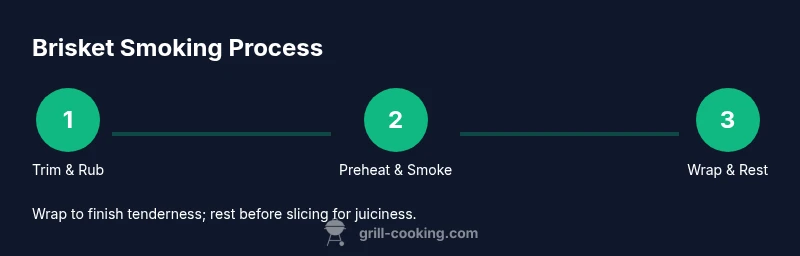
Smoke Brisket on a Pellet Grill: A Step-by-Step Guide
Learn to smoke brisket on a pellet grill with practical tips on temps, pellet choice, wrap timing, and resting. This expert guide from Grill Cooking covers prep, fire-control, slicing, and serving for reliable, mouth-watering results.


You will smoke a brisket on a pellet grill by maintaining a steady 225–275°F, choosing the right hardwood pellets, and using a careful wrap and rest. Expect a well-formed bark, a meaty interior, and tender texture with proper stall management. This Grill Cooking guide walks you through prep, fire management, and finish slicing.
Why smoke brisket on a pellet grill
Pellet grills excel at low-and-slow cooking with stable temperatures and clean smoke. According to Grill Cooking, the combination of precise heat control, programmable smoke profiles, and convenient pellet management makes it easier for home cooks to achieve a tender brisket with a flavorful bark. The indirect heat method lets the fat render evenly, the meat reach a uniform internal temperature, and the bark form gradually without scorching.
Pellet choice and grill setup
Choosing the right pellets shapes flavor and smoke. Wood types like oak or hickory provide balanced beef notes, while fruitwoods add subtle sweetness. Grill setup matters: make sure your pellet hopper is filled, the grill can maintain 225–250°F, and you have a reliable thermometer. Grill Cooking analysis, 2026, emphasizes stable temps and a clean burn to maximize bark formation and moisture retention during long cooks.
Preparing the brisket: trimming, binder, and rub
Trim away excess fat, leaving a 1/4-inch fat cap to protect moisture while letting the bark form. Remove any silverskin from the flat and trim uneven edges for uniform cook. Apply a thin binder (such as mustard or light oil) to help the rub adhere, then season generously with a beef-forward rub containing salt, pepper, and aromatics. Let the rub set for 20–60 minutes before hitting the grill.
The smoking strategy: temperature, stall, and wrap
Set the grill to a steady 225–250°F and place the brisket on the grate for indirect heat. Expect the stall to occur around 150–170°F internal; this is when moisture and smoke work together to transform collagen. When the stall hits, wrap the brisket in butcher paper or foil to trap moisture and finish; return to the grill until the internal reads about 195–203°F.
Resting, slicing, and serving
Remove the brisket from heat and rest it loosely wrapped for 30–60 minutes to reabsorb juices. Slice first across the grain of the flat, then separate the point if desired, to maximize tenderness. Serve with barbecue sauce or a simple au jus and let the juices re-distribute before plating.
Troubleshooting and tips for best results
- Keep the grill lid closed as much as possible to maintain a stable temperature.
- If the bark looks pale, increase smoke exposure for a short period and check the rub balance.
- Use a reliable dual-probe thermometer to track ambient and internal temps separately.
- Avoid piercing the meat; let internal signals guide when to wrap and finish.
Tools & Materials
- Pellet grill capable of maintaining low temps (225-275°F)(Ensure it can hold steady temp for 6+ hours)
- Meat thermometer or dual-probe thermometer(One for ambient grill, one for internal meat)
- Oak, hickory, or fruitwood pellets(Choose mild to balanced flavors)
- Butcher paper or heavy-duty foil(For wrapping during the stall)
- Binder (mustard or oil) and brisket rub(Bind rub before smoking)
- Heat-resistant gloves(Handle hot grates and meat safely)
- Drip pan and water tray(Adds moisture and catches drippings)
- Resting rack or clean towels(Let brisket rest after cook)
Steps
Estimated time: Total time: 10-14 hours
- 1
Trim the brisket and prep
Inspect the brisket and trim away excess fat to about 1/4 inch. Remove silver skin from the flat for even seasoning. Wipe clean and pat dry to help rub adherence.
Tip: Trim fat cap evenly to avoid oversized pockets that impede smoke. - 2
Apply binder and rub
Coat the meat with a light binder (mustard/oil) and apply a beef-forward rub evenly across both faces. Let it sit 20–60 minutes to let the rub penetrate.
Tip: Rub in an even layer; a heavy coat can burn or taste bitter. - 3
Preheat grill and set indirect heat
Preheat the pellet grill to 225–250°F and arrange a water pan if available. Ensure air flow and smoke production are steady before placing the meat.
Tip: Avoid opening the lid during preheat to maintain a stable temperature. - 4
Place brisket on grill
Position the brisket fat cap (if used) toward heat and place it on the grate for indirect cooking. Insert two probes, one in the thickest part of the flat and one for ambient temp.
Tip: Keep the brisket away from direct heat sources to prevent scorching. - 5
Monitor temps and handle the stall
Watch internal temp rise toward 165–170°F; this is the stall where collagen converts to gelatin. Do not rush this phase; maintain consistent temps.
Tip: Use two probes: ambient and internal for precise control. - 6
Wrap and finish cooking
When stall begins, wrap in butcher paper or foil to retain moisture and complete the cook. Return to grill until internal reaches 195–203°F.
Tip: Wrap tightly to trap moisture but allow some steam to escape. - 7
Rest and slice
Remove from heat and rest wrapped for 30–60 minutes. Slice across the grain of the flat, then separate the point if desired.
Tip: Resting time helps juices redistribute for a juicier bite.
FAQ
Should I wrap the brisket during smoking?
Yes. Wrapping during the stall helps retain moisture and finish tenderness. Use butcher paper or foil depending on your texture preference.
Yes, wrap during the stall to keep moisture and finish tenderness.
What internal temperature should brisket reach to be done?
Aim for 195–203°F internal temp for a tender, slice-ready brisket. Rest before slicing to maximize juiciness.
Target 195 to 203 degrees for tenderness.
Which pellets are best for brisket?
Oak or hickory provide balanced beef notes; fruitwoods are milder but okay in blends. Avoid overpowering blends that mask beef flavor.
Oak or hickory works well for brisket.
How long does it take to smoke a brisket on a pellet grill?
Plan roughly 1.25 to 1.75 hours per pound at 225°F, plus rest. Actual time depends on brisket size and ambient conditions.
Expect about 1.25 to 1.75 hours per pound plus rest.
Should I separate the flat and point after cooking?
Most cooks keep the brisket whole during cook; separate after resting if you want distinct textures for serving.
You can separate after resting if desired.
Watch Video
Quick Summary
- Plan around the stall and rest periods.
- Maintain a steady 225–250°F for even bark.
- Choose balanced wood pellets for beef flavor.
- Wrap during the stall to finish tenderly.
- Slice against the grain for maximum tenderness.