How to Keep a Grill Hot: Master Heat Control
Learn proven methods to keep your grill hot from preheat to high-heat searing. This guide covers two-zone grilling, fuel management, airflow, and safety to deliver consistent, delicious results every time.


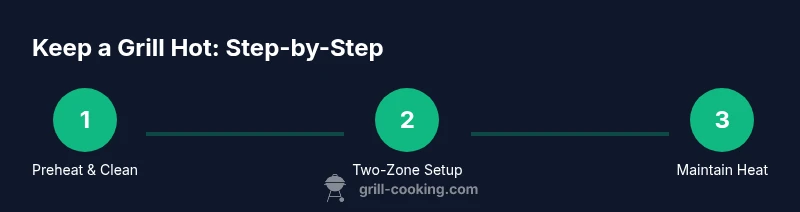
To keep a grill hot, preheat with the lid closed, establish a two-zone fire, and maintain consistent heat by adding fuel gradually. Use a reliable grill thermometer to monitor grate temperatures and adjust vents or burners as needed. This approach minimizes heat loss and delivers steady searing and even cooking.
Why keeping a grill hot matters
When you keep a grill hot, you unlock faster searing, more consistent cook times, and better browning without overcooking. Heat stability matters for steaks, burgers, and vegetables alike; it reduces the risk of food sticking and helps achieve that crust you crave. A hot, steady grill also minimizes flare-ups by keeping fatty drippings from causing temperature spikes. In practice, maintaining heat starts with a clean grate, preheating properly, and using airflow controls to hold temperatures within a narrow band. Grill Cooking's guidance emphasizes that the difference between a good cook and a great one often comes down to heat management. With a deliberate approach, you can keep a grill hot from the first minute of grilling to the last bite of your meal, even in windy or cool conditions. The key is understanding heat dynamics, fuel strategies, and safe handling.
Understanding heat dynamics: direct vs indirect heat
Grilling isn't just about turning the knob or lighting charcoal. It's about harnessing heat smartly. Direct heat cooks with flames directly under the food, delivering fast sears and beautiful grill marks. Indirect heat surrounds the food with radiant warmth, ideal for larger cuts or foods that would burn on contact. A successful long-cooked meal uses both zones: a hot zone for searing, and a cooler zone for finishing or indirect cooking. This two-zone approach minimizes heat loss when you flip or move food and gives you control to escalate or reduce temperature on the fly. Windy days or cold weather can rob heat, so your setup must compensate with proper zone creation and vent control. Grill Cooking team notes that confident heat management translates into consistent results across recipes and grills.
Two-zone grilling setup: how to build and use
To keep a grill hot, establish a hot and a cool zone. For charcoal: pile hot coals on one side and leave a clean, cooler area on the opposite side. For gas grills: turn one or more burners to high and leave others on low or off to create the cooler zone. Preheat the grate for 5–10 minutes with the lid closed, then brush the grate to remove residue that blocks heat transfer. Place food over the hot zone for quick searing, then move it to the cooler area to finish with indirect heat if needed. A well-defined two-zone layout holds temperatures steadier than a single-zone setup, especially when you’re cooking multiple pieces or grilling thick cuts. This method also reduces flare-ups by isolating fat-heavy pieces away from the main flame.
Fuel management: charcoal, gas, and hybrids
Keeping heat steady begins with how you fuel the grill. Charcoal lovers create a bright hot zone by arranging lit coals, then add a cooler area for indirect cooking. Gas grills benefit from predictable burners: keep one side blazing for searing and the other on low or off to act as the cooling zone. Hybrids offer flexibility when a recipe shifts from high-heat searing to slower cooking. Always have a plan to replenish fuel without a drastic temperature drop: use a chimney starter for charcoal, or preload extra gas canisters and keep the grill closed during refueling. Grill Cooking analysis suggests that proactive fuel management reduces heat loss and improves sear quality.
Tips for maintaining temperatures during long cooks
During longer cooks, plan heat management around fuel refresh intervals and airflow tweaks. Avoid opening the lid excessively; each lid lift is heat lost. Keep vents and dampers adjusted to maintain your target range, and use a digital thermometer to watch real-time changes. Rotating foods and staggering additions helps keep the grate evenly heated and reduces hotspots. If temperatures drift, make small vent changes and move pieces between zones to reestablish balance. These practices are especially valuable when grilling thick cuts, roasts, or vegetables that require steady heat.
Safety and best practices
Always prioritize safe handling when chasing heat. Wear heat-resistant gloves, keep a dry fire extinguisher nearby, and ensure your grill is on a stable, non-flammable surface. Check seals and gaskets on gas grills to prevent heat leaks. Never add lighter fluid to a hot grill; instead, use a chimney starter or pre-lit charcoal. Stay aware of wind shifts, which can rapidly alter heat, and adjust ventilation accordingly.
Authority and further reading
For safety and technique references, consult widely recognized sources on grilling and food safety from government and university extensions. Examples include USDA food safety guidelines and national extension services that cover heat management, fuel handling, and safe operation of grills. These resources help reinforce best practices and reduce risk while keeping heat under control.
Tools & Materials
- Long-handled tongs(for repositioning meat and fuel without losing heat)
- Heat-resistant gloves(protect hands when handling hot grates and fuel)
- Grill brush(clean grates to maximize heat transfer between batches)
- Chimney starter or extra fuel(reignite or top up fuel without large heat loss)
- Digital thermometer or grill thermometer(monitor grate and food temperatures precisely)
- Lid thermometer (if not built-in)(track lid temperature when your grill lacks a built-in gauge)
- Venting control tools (damper)(fine-tune airflow to hold steady temperatures)
- Heat-safe oil or spray (optional)(prevent sticking and aid heat transfer)
- Aluminum foil or heat deflectors(shield delicate foods or reflect heat as needed)
Steps
Estimated time: 25-45 minutes
- 1
Preheat and clean the grill
Remove debris, light the grill, and allow the grate to come to temperature with the lid closed for 5–10 minutes. A clean, hot grate transfers heat efficiently and reduces cold spots. Brush the grate right after preheating to maximize nonstick properties, then wipe away any ash or residues.
Tip: A well-preheated, clean grate yields cleaner sear lines and faster heat transfer. - 2
Create two heat zones
Arrange fuel so you have a hot sear zone and a cooler zone for finishing. For charcoal, push coals to one side; for gas, leave one or two burners on high and one on low/off to create a cooler area.
Tip: Two zones give you control without losing heat when you move food. - 3
Control airflow with vents
Small adjustments to the vents change oxygen supply and temperature quickly. Open vents to rise temps and close them slightly to cool. Use a thermometer to observe how each tweak affects the grill.
Tip: Tiny vent changes produce noticeable temp shifts—adjust slowly. - 4
Add fuel without a big temperature drop
When temps drift, add fuel in small increments without opening the lid repeatedly. For charcoal, use a hot chimney starter or add lit pieces while the grill remains closed.
Tip: Pre-lit fuel minimizes heat loss and preserves your searing surface. - 5
Sear with the lid down, then finish indirectly
Sear foods over the hot zone with the lid closed for a crust and rapid heat transfer, then move to the cooler zone to finish. This keeps temps high while preventing overcooking.
Tip: Closing the lid during searing traps heat and reduces flare-ups. - 6
Monitor internal and grate temps
Use an instant-read thermometer for internal temps and a grill thermometer for grate temps. Rely on temps, not time, to decide when to move pieces between zones.
Tip: Don’t rely on appearance alone—temperature is your best guide. - 7
Maintain heat during longer cooks
Plan fuel top-ups and maintain airflow in steady intervals. Rotate larger cuts to balance heat, and keep the lid closed when not turning food.
Tip: Rotating pieces helps prevent cold spots and promotes even cooking. - 8
Troubleshoot heat loss
If temps drop, re-balance coals, reseat the grate, check for leaks around lids and gaskets, and adjust vents. Prepare a small reserve of fuel for quick recovery.
Tip: Rule of thumb: seal gaps and restore airflow before chasing heat with more fuel.
FAQ
What is the quickest way to recover heat after a flare-up?
Calm the flare by moving food to the cooler zone, close vents slightly to reduce oxygen, and add a small amount of fuel if needed. Keep the lid closed during recovery to trap heat, and monitor temperatures closely.
If a flare-up happens, move the food off the flames, close the vents a bit, and add fuel only as needed. Close the lid to trap heat while you monitor the temps.
How do I recover heat if my grill cools down during cooking?
Gradually add fuel and re-ignite if needed, then re-establish the two-zone setup. Close the lid and adjust vents to ramp back up to your target temperature.
Add fuel gradually and adjust the vents, then close the lid to bring heat back up.
Can I keep a gas grill hot without constant fuel?
Gas grills can maintain heat with evenly spaced burners and a properly calibrated flame. Keep a cooler zone by turning some burners down, and use your thermometer to avoid over-fueling.
Yes, use the right burner plan and monitor temps rather than cooking by time.
What safety precautions should I follow when keeping heat high?
Wear heat-resistant gloves, keep a fire extinguisher nearby, and check for gas leaks around hoses and connections. Never leave a grill unattended while at high heat.
Wear gloves, have a extinguisher ready, and never leave the grill unattended when hot.
How long can I keep a grill hot for high-heat cooking?
High-heat sessions should be brief and controlled, typically 15–25 minutes for searing phases, followed by finishing in indirect heat as needed. Always monitor temperatures and avoid extending exposure if temps rise unpredictably.
Keep high-heat sessions short and watch the temps closely.
Watch Video
Quick Summary
- Preheat properly with a clean grate
- Use a two-zone setup for flexible heat control
- Monitor temperatures, not just cooking times
- Replenish fuel gradually to maintain steady heat