How to Cook When There Is No Electricity
Learn practical no-electric cooking methods for power outages, camping, or off-grid kitchens. This educational guide covers heat sources, gear, safety, and step-by-step techniques to feed your family without power.


You can cook effectively when power is out by using charcoal, propane stoves, solar ovens, and campfires. This guide shows practical steps, essential gear, and safety tips to keep meals hot and safe without electricity. By planning ahead, you’ll feed your family with confidence during outages or off-grid weekends. This direct answer helps you quickly understand options and what to gather before a cook-out or outage.
Assessing the Situation and Menu Planning
When the lights go out, the first step is not panic but practical assessment. Look at the forecast, the expected duration of the outage or off-grid window, and how many mouths you need to feed. Then sketch a simple menu built around heat sources you can reliably access, prioritizing one-pot meals and foods that don’t require refrigeration for long periods. According to Grill Cooking, power outages can become opportunities to simplify meals with core ingredients and straightforward techniques. Focus on foods that cook evenly in bulk and reheat well, such as stews, foil packets, peppers and vegetables, and proteins that benefit from direct searing and finished oven-like finishing. This mindset keeps prep lean and reduces fuel consumption while delivering comforting results for home cooks and grill enthusiasts. The goal is to minimize steps, maximize flavor, and stay safe while you adapt to the temporary loss of electricity.
Choosing a Heat Source and Fuel
Select a heat source that matches your space, weather conditions, and fuel availability. A charcoal grill or a portable camp stove with propane or wood pellets offers versatility for indirect and direct heat. If you’re in a sun belt or sunny area, a solar oven can extend cooking windows; if you’re camping, a dedicated camp stove is quick to deploy. Avoid mixing too many fuel types in a small area to reduce fumes and flare-ups. Remember that wind can dramatically affect flame stability, so position your setup away from structures and use a windbreak if possible. Grill Cooking Analysis, 2026 emphasizes pairing the right heat source with the dish to maintain consistent temperatures and prevent uneven doneness during no-electric cooking. Keep fuel supplies stocked and organized so you can pivot quickly as needed.
Building a Safe Outdoor Cooking Space
Safety is non-negotiable when you cook without electricity. Establish a stable, non-flammable surface and keep flammables away from flames or hot surfaces. Create a clear zone with at least a few feet of open space around the heat source. Use a heat-resistant mat or bricks to distribute heat and protect the ground. If you’re near a shaded area, monitor sun exposure for solar cooking and avoid overheating nearby wooden decks. Ensure you have a charged fire extinguisher or a bucket of water nearby, and never leave active heat sources unattended. A well-organized outdoor kitchen not only prevents accidents but also streamlines your workflow, letting you focus on timing and flavor.
Heat Management and Cooking Techniques
Mastering heat control is the essence of no-electric cooking. Learn when to apply direct heat for searing and when to move food over indirect heat to finish through gentle simmering or oven-like heat retention. Cast iron skillets and Dutch ovens shine here due to heat retention and even distribution. Use a lid to trap heat when needed and a thermometer to monitor internal temperatures for proteins and leftovers—without relying on electricity. Practice building a consistent charcoal bed or stable gas flame and adjust vents, grate height, or windblocks to keep temperatures steady. Grill Cooking Analysis, 2026 notes that disciplined heat management dramatically reduces flare-ups and preserves moisture in meats while preventing dry outcomes.
Cookware and Tools for No-Electric Cooking
Having the right cookware makes all the difference. Cast iron skillets and heavy-duty Dutch ovens excel for searing, braising, and baking under real fire or stove conditions. A set of long-handled tongs, heat-resistant gloves, and sturdy, non-slip surfaces helps you manage hot pots and pans safely. Aluminum foil is indispensable for packet meals and heat retention. A reliable meat thermometer, a timer, and a reusable water bottle for hydration are practical must-haves. Keep a small knife kit, a cutting board, and a digital thermometer in a rugged, weatherproof container for quick access. The tools you choose should be durable, easy to clean, and capable of performing multiple roles to minimize clutter in a small outdoor workspace.
Step-by-step No-Electric Cooking Scenarios
Imagine an outage that lasts the afternoon. Start with a simple plan: grill vegetables, pre-cook a protein in a Dutch oven, and finish with a foil packet of potatoes and herbs. Sear the protein over direct heat to lock in juices, then move it to indirect heat to finish while you simmer a vegetable medley in a cast iron skillet. Wrap potatoes in foil and place them near the edge of the heat to bake slowly. Keep a watchful eye on wind shifts and adjust the distance from the flame. This section provides a practical workflow, including preheating, searing, finishing, and resting times that optimize flavor without electricity. Remember to maintain clean hands and surfaces to prevent cross-contamination and to keep your family safe. The Grill Cooking team recommends practicing these workflows regularly, so you’re prepared for real outages or off-grid weekends with confidence.
Food Safety and Temperature Guidelines
Without electricity, you must be extra mindful of food safety. Keep raw meats separate from ready-to-eat foods, sanitize surfaces as you go, and store leftovers promptly in a cool or shaded area. Use a thermometer to ensure proteins reach safe internal temperatures, and avoid leaving perishable foods in the danger zone. Reheat leftovers to a safe temperature before serving, and discard anything that shows signs of spoilage. Water and ice controls are crucial in hot environments, so use clean containers and store them away from direct heat. Following these guidelines helps prevent foodborne illness and keeps your no-electric cooking experience both safe and enjoyable. As always, practice these safety habits regularly to build confidence for future outages.
Cleanup, Storage, and Ongoing Readiness
Cleanup is a part of the cooking process, not an afterthought. Allow surfaces and cookware to cool before washing with mild soap and water. Dry thoroughly to prevent rust on cast iron and store in a dry place to avoid moisture-related issues. Pack extra fuel, matches or lighters, and a compact first-aid kit for ongoing readiness. Label leftovers with dates and plan to rotate stock to minimize waste. Regularly inspecting your gear and practicing these setups will keep you prepared for the next outage or off-grid adventure, ensuring you can feed loved ones without electricity. The Grill Cooking team recommends keeping a small, ready-to-use kit in your outdoor kitchen for quick access during power outages.
Tools & Materials
- Portable camping stove(Butane/propane fuel canisters; keep extra canisters cool and away from heat)
- Charcoal grill(Keep lighter fluid and chimney starter available; ensure proper ventilation)
- Propane or butane fuel canisters(Check for leaks; store upright and cool)
- Firestarter or matches(Long-reach lighter preferred for safety)
- Cast iron skillet(Excellent heat retention; tolerate high temps)
- Dutch oven(Lid seals for braising and baking; use with care)
- Heavy-duty tongs(Grip hot pans securely; avoid burns)
- Heat-resistant gloves(Protect hands from high flames and hot lids)
- Aluminum foil(Foil packets and heat containment)
- Food thermometer(Accurate internal temps for safety)
- Water for cooking and cleaning(Hydration and surface cleansing; carry extra if camping)
- Cutting board and knife set(Stable prep surface; sharp blades for safety)
Steps
Estimated time: 60-120 minutes
- 1
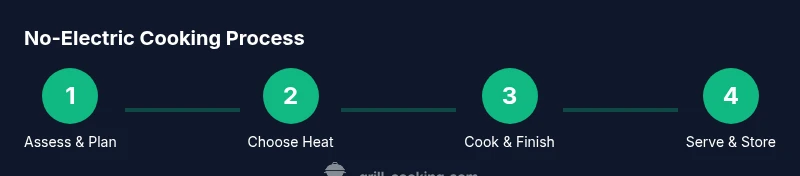
Assess and plan
Evaluate outage duration, number of servings, and dietary needs. Choose a simple menu focused on one-pot or foil-pack meals to minimize cooking steps and fuel use.
Tip: Write a quick plan on a waterproof notepad to stay organized. - 2
Select heat source
Decide between charcoal, gas, or solar based on location, weather, and available fuels. Move fuels and gear into an accessible staging area before you begin cooking.
Tip: Position heat sources away from structures and kids; set up a windbreak if needed. - 3
Create a safe outdoor space
Clear a 3–5 foot radius around the heat source; place hot pans on heat-resistant surfaces; have a water bucket or extinguisher nearby.
Tip: Keep a dedicated zone for raw ingredients separate from cooked foods. - 4
Preheat and manage heat
Preheat pans on direct heat for searing, then move to indirect heat to finish cooking. Adjust vents or height to maintain steady temperatures.
Tip: Use a lid to trap heat when finishing cooking to mimic oven effects. - 5
Cook with proper vessels
Utilize cast iron and Dutch oven for even heat and moisture retention. Sear proteins, then braise or bake inside the same vessel when possible.
Tip: Keep lids on to conserve heat and moisture for tender results. - 6
Monitor doneness safely
Check internal temperatures with a thermometer and observe color, texture, and juices. Avoid cross-contamination by keeping raw and cooked foods separate.
Tip: Take advantage of carryover heat by removing meat slightly before exact target temperature. - 7
Handle leftovers properly
Cool foods quickly in a shaded area or an insulated container. Refrigerate or consume within safe time frames to prevent spoilage.
Tip: Label containers with dates for easy rotation and safety. - 8
Cleanup and fuel management
Cool equipment before washing; dry thoroughly to prevent rust on cast iron. Replenish fuel and organize gear for the next use.
Tip: Store fuels away from heat sources and in approved containers. - 9
Practice and readiness
Regularly run through no-electric cooking scenarios to improve timing and safety. Build muscle memory for outages or off-grid weekends.
Tip: Keep a small emergency kit in your outdoor area for quick deployment.
FAQ
Can I cook indoors if there is no electricity?
No electric power limits indoor options; rely on outdoor outlets such as a camp stove or grill. Indoor charcoal or open flames can be dangerous and are generally not recommended due to ventilation and fire hazards.
No; outdoor or ventilated outdoor-capable equipment is essential for safety when there’s no electricity.
Is it safe to use a charcoal grill indoors?
Charcoal grills should never be used indoors or in enclosed spaces because of carbon monoxide risk. They must be used outdoors with proper airflow.
Never use charcoal indoors; always cook outdoors in a well-ventilated area.
How should I handle leftovers without a fridge?
Cool leftovers quickly in a shaded area or insulated cooler, and consume promptly. If refrigeration isn’t possible, prioritize items that don’t require rapid chilling and plan repurposing for the next meal.
Cool foods quickly and use promptly or store in a safe cooler when possible.
What foods are best for no-electric cooking?
One-pot meals, foil packets, grilled vegetables, and braised dishes work well. Use proteins that finish well on indirect heat and combine flavors in sturdy vessels like cast iron.
One-pot meals and foil packets shine when you’re cooking without electricity.
How do I manage heat in windy conditions?
Position heat sources with a windbreak, shield flames from gusts, and adjust distance to maintain stable temperatures. Wind can drastically alter cooking times.
Block wind and adjust distance to keep flames steady.
What safety gear should I have on hand?
Have a fire extinguisher, heat-resistant gloves, long-handled tongs, and a first-aid kit accessible. Regularly inspect equipment for wear and maintain clean surfaces.
Keep gloves, tongs, and a fire extinguisher nearby for safety.
Watch Video
Quick Summary
- Plan simple, adaptable menus to save fuel.
- Choose heat sources suited to your space and weather.
- Use cast iron for heat retention and even cooking.
- Prioritize safety: ventilation, distance, and monitoring temps.
- Practice no-electric methods now to stay prepared.