Grill or Pan Sear Ribeye: An Analytical Comparison
A thorough, analytical comparison of grilling versus pan searing ribeye steaks, covering heat, crust, flavor, time, and doneness to help home cooks choose the best method for their setup.


Grill and pan sear both deliver a flavorful ribeye, but they excel in different ways. Grilling provides smoky char and a bold exterior with direct-heat exposure, while pan searing in a heavy skillet offers precise crust development and tight control over doneness. The best choice depends on your equipment, time, and your preferred crust profile.
Grill or Pan Sear Ribeye: Key Considerations
Before choosing a method, it helps to anchor your expectations to what each technique delivers. The phrase grill or pan sear ribeye will guide your planning, but the decision hinges on your setup, time, and flavor goals. According to Grill Cooking, outdoor heat and smoke impart a dramatic crust and smoky aroma, while a controlled pan sear emphasizes crust formation and precise doneness. In practice, most home cooks weigh the pros and cons of location, equipment, and appetite for risk. If you crave a bold, charred exterior with a social atmosphere, grilling is a natural fit; if you value repeatable results and kitchen convenience, pan searing often wins. The rest of this article contrasts the two approaches with practical guidance, so you can optimize either method for ribeye steaks.
Comparison
| Feature | Grill | Pan Sear |
|---|---|---|
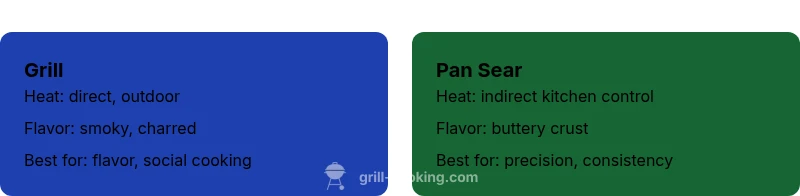
| Heat Source | Direct high heat with exposure to open flame and potential smoke | Uniform high heat from a preheated skillet on the stove or grill surface with controlled, contained browning |
| Crust Development | Bold char, pronounced grill marks, smoky crust | Even, dense crust with precise browning via fond formation in a seasoned pan |
| Doneness Control | More environmental variability (fluctuating heat, wind, flare-ups) | Tighter control through thermometer-guided timing and carryover management |
| Flavor Profile | Smoky, char-forward flavor with outdoor aromatics | Buttery, rich crust with minimized smoke intrusion |
| Cook Time | Typically longer total time for setup and cook in some setups | Often quicker for single-file ribeye with active, steady searing |
| Best For | Outdoor gatherings, social cooking, flavor from smoke | Indoors or weather-limited days, precision and repeatability |
Strengths
- Both methods yield a delicious ribeye when executed with proper technique
- Grilling delivers a smoky flavor and dramatic crust that many diners love
- Pan searing offers precise control over doneness and crust quality
- Two-zone setups on grills let you manage time and heat effectively
Negatives
- Grilling can be weather-dependent and less predictable
- Pan searing can produce more indoor smoke if not vented properly
- Grilling may require more post-cook resting outdoors or near the grill
- Pan searing can limit exterior smokiness that some flavor-seekers crave
Grill for outdoor flavor and char; pan sear for precise doneness and kitchen convenience.
The Grill Cooking team recommends choosing the method that aligns with your environment and flavor goals. If you want dramatic char and smoky aroma, grill; if you prioritize control and a clean countertop, pan sear. In many kitchens, a two-stage approach—sear on pan for crust, finish with a short grill-rest—offers the best of both worlds.
FAQ
What is the main practical difference between grilling and pan searing ribeye?
Grilling relies on direct heat and smoke to build flavor and crust, often yielding a bold, charred exterior. Pan searing uses a hot skillet to create an even, controlled crust with precise doneness, typically with less smoke and more kitchen control.
Grilling gives you outdoor flavor and char, while pan searing gives you precise control and a clean crust.
Can ribeye be finished in the oven after searing on the stove?
Yes. After a quick sear on the stove, you can finish ribeye in a preheated oven at a moderate temperature to reach the desired internal doneness without overcooking the crust.
Sear first, then finish in the oven if you need gentler control over doneness.
What thermometer target should I use for medium-rare ribeye?
A common target for medium-rare ribeye is around 130-135°F when removed from heat, allowing carryover to finish near 135-140°F after resting. Use a reliable instant-read thermometer for accuracy.
Aim for about 130-135°F, then rest to reach a final ~135-140°F.
Is marinating ribeye beneficial for grilling or pan searing?
Ribeye benefits from minimal marinade; salt and light seasoning are usually enough. Marinating ribeye can risk the fat rendering unevenly, so many cooks prefer dry seasoning and a quick rest before cooking.
Most ribeye grills season with salt and simple spices instead of long marinades.
How can I prevent flare-ups when grilling ribeye?
Trim excess surface fat, keep a two-zone fire, and move the steak to indirect heat if flames flare. Keep a spray bottle handy and avoid placing fatty rubs directly over open coals.
Keep the steak away from direct flames and use two-zone grilling to control heat.
Should I rest ribeye after grilling or pan searing?
Rest the steak for about 5-10 minutes after cooking to allow juices to redistribute and carryover cooking to finish. Resting is essential for both methods.
Let it rest for a few minutes to keep juices in.
Quick Summary
- Identify your environment first to choose method
- Season well and preheat properly for crust formation
- Use a thermometer to hit target doneness
- Let the steak rest to finish carryover cooking
- Consider a two-stage approach for best of both methods