How to Grill a Filet on the Grill: A Home Cook's Guide
Learn to grill filet on the grill to a juicy, tender finish with a crisp sear. Step-by-step techniques, temps, and pro tips from Grill Cooking to elevate your home grilling.


Goal: you will learn how to grill filet on the grill to a perfectly seared crust with a tender, medium-rare center. This guide covers selecting the right filet, prepping, heat zoning, timing, resting, and finishing touches. Expect practical tips for avoiding overcook, achieving even color, and keeping juices in check.
Why filet on the grill shines
Filet on the grill is prized for its tenderness and delicate flavor. When done right, the exterior develops a caramelized crust while the center stays juicy and rosy. According to Grill Cooking, the secret is balancing a hot sear with controlled heat to finish the cook without overdoing it. A good filet benefits from minimal handling and a thoughtful resting period to redistribute juices. With the right technique, you can achieve restaurant-quality texture at home, even with a simple cast-iron pan or a modern gas grill. In this section we explore what makes filet on the grill so special and how to set yourself up for success from the first flip to the last bite. Grilling filet on the grill also lends a classic, smoky aroma that home cooks crave, a hallmark of Grill Cooking’s approach to precise technique and reliable results.
Selecting the filet and prep
Choose a center-cut filet with even marbling and little connective tissue. For optimal results, start with filet that is about 1.25 to 1.75 inches thick; thinner cuts dry out quickly, thicker cuts can be challenging to master. Pat the steak dry with paper towels to remove surface moisture, which helps form a robust crust. Bring the meat to room temperature for 20-30 minutes before cooking to ensure even doneness. Season simply with kosher salt, black pepper, and a light brush of high-smoke-point oil. If you like, a brief dry-brine (salt-cure in the fridge 1-2 hours) can further improve juiciness and crust. Grill Cooking recommends minimal interference—let the natural flavors shine. This prep minimizes moisture loss and primes the meat for a superior sear.
Prepping the grill and heat zones
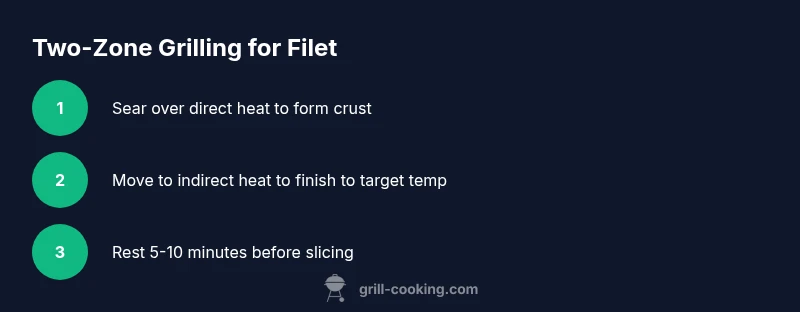
Preheat your grill with two zones: high direct heat for searing and a cooler indirect zone to finish cooking. For gas grills, preheat to medium-high, then set one side to off or low; for charcoal, bank coals to one side and leave the other cooler. Lightly oil the grates to promote release and reduce sticking. A well-seasoned grill mat or a cast-iron griddle placed on the grate can also help achieve even crusting. Keep a spray bottle of water handy to manage minor flare-ups, but avoid over-fanning the flames—they can char the crust while leaving the interior underdone. Two-zone heat management is a cornerstone of filet on the grill success.
Temperature, timing, and doneness guidance
A thermometer is your best friend here. Target an internal temperature of about 125-130°F for medium-rare, 135°F for medium, and beyond for higher doneness. Pull the filet off the grill 5-10°F below the final target to account for carryover cooking. Grill Cooking Analysis, 2026 notes that resting is essential for juice redistribution and even coloring. The exact time depends on thickness and grill temperature, but a 1.25- to 1.75-inch filet typically takes 6-12 minutes total in a two-zone setup, depending on your preferred doneness. Using a probe thermometer gives the most consistent results. Keeping the grill at steady heat and avoiding constant flipping preserves crust and tenderness.
Resting, slicing, and serving
Let the filet rest for 5-10 minutes after removing it from the grill. Resting allows juices to redistribute and the carryover heat to finish cooking gently. Slice against the grain for maximum tenderness, and serve with a simple butter or herb drizzle, or a quick pan sauce. Pair with a light red wine, such as Pinot Noir, or a bold option like Cabernet if you prefer red. Keep portions modest—the goal is a satisfying bite with a melt-in-your-mouth texture rather than a heavy, overcooked chew. A proper rest period is as important as the sear for optimal results.
Variations and quick ideas
If you crave extra flavor, finish with a brush of compound butter (garlic-herb butter works beautifully). For a smoky punch, finish with a few spritzes of wood smoke if your grill supports it, or use a smoking pouch. Try a peppercorn crust, a coffee rub, or a brushed balsamic glaze for color and bright acidity. Leftover filet can be sliced thin and used in salads or sandwiches for a quick meal. These tweaks let you tailor filet on the grill to your tastes without losing the core technique. Grill Cooking's guidance remains your anchor for consistent results.
Tools & Materials
- Chef's knife(Sharp for clean slices; minimum 6-inch blade recommended.)
- Tongs(For safe flipping without piercing the meat.)
- Instant-read meat thermometer(Probe-style preferred; insert into the center of the thickest part.)
- Grill thermometer(Helps monitor grill temperature in real time.)
- Oil with high smoke point(Neutral oil like canola or grapeseed for light coating.)
- Kosher salt(Use generous coarse grains for dry-brine options.)
- Black pepper(Freshly ground for aroma.)
- Paper towels(Pat dry and blot for crust formation.)
- Grill brush(Clean grates pre-cook and post-cook.)
- Cast-iron grill grate or grill pan(Optional for even heat distribution and crust quality.)
Steps
Estimated time: 25-40 minutes
- 1
Prepare filet and heat grill
Pat dry the filet, season with salt and pepper, and bring to room temperature. Oil the meat lightly or brush oil on the grates to prevent sticking. Allow 20-30 minutes for tempering so the center cooks evenly.
Tip: Patience here ensures a better crust and even doneness. - 2
Preheat two heat zones
Set up direct high heat for searing and indirect heat for finishing. If using gas, two-zone configuration works best; for charcoal, push coals to one side and leave the other cooler. This setup prevents scorching while finishing with precision.
Tip: Two-zone heat is the backbone of a perfect filet on the grill. - 3
Sear with direct heat
Place the filet over direct heat and sear for 2-3 minutes without moving it. Flip once and sear the other side for another 2-3 minutes to build a rich crust.
Tip: Avoid moving the meat during the initial sear to lock in juices. - 4
Finish on indirect heat
Move the filet to the indirect zone and cook to target temperature using a thermometer. This stage finishes the interior without burning the exterior.
Tip: Use a thermometer to avoid guesswork and overcooking. - 5
Rest and verify doneness
Remove from heat and rest 5-10 minutes. Check internal temp again if needed, but resist the urge to slice early. Resting distributes juices evenly.
Tip: Resting is essential for tenderness and consistency. - 6
Slice and serve
Slice against the grain into 1/2-inch pieces and plate with a light sauce or butter. Pair with a suitable wine and simple sides for balance.
Tip: Slice just before serving to preserve warmth and texture.
FAQ
What temperature should I aim for medium-rare?
Aim for an internal temperature of about 125-130°F when you pull, as carryover cooking will bring it to 130-135°F. Resting is essential to finish the process without overcooking. Grill Cooking Analysis, 2026 supports using a thermometer and counting carryover heat for accuracy.
For medium-rare, pull at about 125 to 130 degrees and rest to allow it to finish cooking.
Is a dry-brine recommended for filet mignon?
Yes, a light dry-brine for 1-2 hours can improve crust and juiciness without adding moisture. If you’re short on time, a quick seasoning and rest also works well.
A quick dry-brine helps crust and moistness; even a short rest with salt works.
Can I grill a frozen filet?
No. Thaw completely before grilling to ensure even cooking and a proper crust. Frozen meat grills unevenly and increases the risk of overcooking the exterior.
Don’t grill from frozen; thaw first for even cooking.
Do I need to marinate filet for flavor?
Marinating is optional for filet mignon. A simple salt, pepper, and a light oil wrap preserves tenderness while letting the meat’s natural flavors shine.
Marinating isn’t required; a simple salt-and-pepper rub works great.
How long should I grill per side for a 1-inch filet?
Estimate 2-3 minutes per side for the initial sear, then finish with indirect heat until your thermometer reads the target temperature. Times vary with thickness and grill heat.
About 2-3 minutes per side for sear, then finish with indirect heat until doneness is reached.
How long should I rest the meat before slicing?
Rest the filet for 5-10 minutes after grilling to redistribute juices. Slice just before serving for optimal tenderness.
Give it 5-10 minutes to rest before slicing for maximum juiciness.
Watch Video
Quick Summary
- Grill with two heat zones for best crust and doneness
- Use a thermometer to avoid guessing doneness
- Rest 5-10 minutes before slicing for juicier results
- Season lightly; let the sear form a crust first