Country Ribs on the Grill: The Complete How-To Guide
Master country ribs on the grill with a practical, step-by-step approach—prep, heat control, timing, finishing sauces, and safety tips for juicy, flavorful results.


By the end, you’ll be able to grill country ribs on the grill to tender, flavorful perfection. You’ll select quality ribs, apply a simple rub or glaze, control indirect heat to avoid flare-ups, monitor an internal temperature around 190–195°F, rest the meat, and slice against the grain for juicier results. Gather your gear and fire up the grill.
What country ribs are and why they grill well
Country ribs, often called country-style pork ribs, are cut from the pig’s shoulder area. They’re notably meaty, with more connective tissue than back ribs, which means they respond well to slower, controlled cooking. When you grill country ribs on the grill, you create a balance of rich pork flavor, a smoky aroma, and a caramelized crust from surface sugars. According to Grill Cooking, country ribs are particularly forgiving on the grill because they can absorb seasoning deeply and stay juicy with careful heat management. The result should be tender, bite‑sized meat with a light chew and a pleasing glaze that shines in the final bite. For home cooks, this cut is approachable, forgiving, and very flavorful when treated with patience and a steady flame.
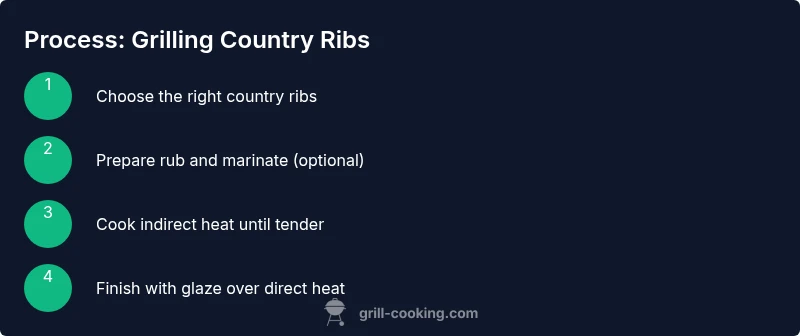
The key is understanding that country ribs on the grill benefit from two coordinated heat phases: a slow, indirect first cook to render fat and soften connective tissue, followed by a brief finish over direct heat to develop color and a lacquered crust. With the right temperature and timing, you’ll achieve consistent results even when cooking for a crowd. A successful session also hinges on prep work and a well-planned plan for sauce or glaze, so you’re not scrambling in the middle of the cook.
Selecting country ribs and what to look for
Choosing the right country ribs sets the tone for the entire cook. Look for boned or bone‑in country-style ribs that feel heavy for their size, which is a sign of good meat content. The meat should be pinkish with some marbling, not pale, and there should be a clean, intact bone structure if you’re buying bone-in cuts. If you see a lot of exposed cartilage or overly dry edges, it’s a sign the meat has aged. When buying, inspect the surface for moisture that appears excessive, which can indicate poor handling or thawing cycles. Price often reflects the meat’s quality; the best country ribs on the grill come from well‑maintained pork with adequate fat distribution. Don’t shy away from thicker ribs—the extra mass helps you hold moisture through longer cooks. If you’re unsure, ask your butcher which rib sections will perform best for grilling and smoking.
Grill Cooking’s guidance suggests starting with rib sections that have a balance of meat and fat. A ribbed exterior will hold seasoning better during the long cook and still render beautifully. Plan your cook around a slightly larger portion than you think you’ll need; leftovers are easier to handle when you’ve got margins for slicing. Focus on ribs that are uniform in thickness to ensure even cooking, and select cuts with minimal bone splinters or ragged edges that can hinder heat flow.
Prep basics: trimming, patting dry, and seasoning
Preparation is the backbone of a great outcome for country ribs on the grill. Start by patting the surface dry to remove excess moisture, which helps the rub adhere and the caramelization to form. If you’re trimming any overly fatty areas, do so cautiously—leave enough fat to baste the meat as it cooks. Apply a light coat of oil to the surface to help the rub stick, then dust with a rub that includes salt, pepper, paprika, and a touch of brown sugar for balance. The sugar will help create a glaze that caramelizes as the ribs render during cooking. Let the rub rest on the meat for 15–30 minutes, which aids in flavor penetration. If you’re pressed for time, a quick rub at room temperature is acceptable, but do not skip the dry-brining step entirely, as it improves moisture retention. During this phase, keep country ribs on the grill from drying out by maintaining even spacing and avoiding overcrowding in the grill area.
Rubs, marinades, and glaze ideas for country ribs
Rubs and glazes define the final flavor profile of country ribs on the grill. A classic, balanced rub might include kosher salt, black pepper, smoked paprika, garlic powder, onion powder, and a touch of brown sugar. For a glaze, try a simple mix of ketchup, apple cider vinegar, honey, and a splash of soy sauce for a savory-sweet finish that clings to the meat. If you prefer a more complex profile, add mustard powder, chili flakes, and a hint of espresso for depth. Marinades can be used, but they should be kept to 2–6 hours maximum to avoid overpowering the pork and to prevent the meat from becoming mushy. Always pat the ribs dry after marinating to ensure the rub adheres properly. The key is to let the surface sugars caramelize as the ribs cook, producing that glossy, sticky finish that looks as good as it tastes. Consider applying glaze in two stages: a light coat during the initial phase and a final, thicker glaze toward the end for maximum shine and flavor.
Direct heat vs indirect heat: which to use for country ribs
Direct heat is great for the final lacquer or crust on country ribs on the grill, but it can scorch fat and meat if used too early. Start the cook with indirect heat to render fat and ensure even doneness, then switch to direct heat for color and a crusty exterior. If you’re using a two-zone grill, place the ribs over the cooler side to stay moist while you build flavor on the exterior. For gas grills, preheat all burners with one side off to create that zone. Charcoal grills benefit from a gradual heat buildup and the use of a smoking setup or offset heat to maintain a consistent environment. If you’re short on time, you can finish without indirect heat by using a slightly lower direct-heat method, but you’ll risk tougher texture. The goal is a gentle, even sear that locks in moisture without burning the surface.
Temperature targets and timing for country ribs on the grill
Temperature control is essential for country ribs on the grill. Plan to cook at a steady 225–275°F (107–135°C) during the initial stage to promote fat rendering and tenderness. Use a meat thermometer to monitor internal temperature; pull from heat at around 190–195°F (88–90°C) for a touch of carryover cooking. Resting is critical: wrap loosely in foil for 10–15 minutes after removing from heat to let juices reabsorb. If you wrap too early, you can cause steam to soften the crust; if you wait too long, you risk drying the surface. Timed steps include a 20–30 minute initial cook over indirect heat, followed by a 10–15 minute finish over direct heat, then resting before slicing. This approach yields consistent results for country ribs on the grill and keeps the meat succulent.
Smoking, wrapping, and finishing techniques
Optional smoking adds another layer of flavor to country ribs on the grill. A light smoke with chunks of hickory or apple wood during the indirect phase can complement the pork’s natural sweetness. You can also employ the Texas crutch method—wrap the ribs in foil with a splash of liquid to tenderize and trap moisture for a deeper finish. Unwrap toward the end to re‑expose the meat to direct heat for a final glaze. These finishing techniques create a robust crust and a juicy interior, enhancing contrast with the glaze. Keep a spray bottle of water or apple juice handy to manage flare-ups and to help keep the surface moist while you’re building color.
Sauces and glazes: pairing with country ribs
Sauce is the final kiss on country ribs on the grill. A sweet and tangy glaze works well on pork ribs, but you can tailor it to your crowd. Try a honey-bourbon glaze with a hint of soy for balance, or a smoky chili‑honey sauce that stands up to bold rubs. If you prefer a simpler finish, a thin layer of your favorite BBQ sauce worked into the final minutes of grilling yields a glossy sheen and a flavorful crust. For those watching sugar intake, a glaze with reduced sugar and extra vinegar can still provide a bright finish without overpowering the meat. Remember to apply sauce late in the cook so it won’t burn, and keep it thin enough to allow the crust to form.
Troubleshooting common issues
Even with careful planning, you’ll encounter a few hiccups. If country ribs on the grill taste dry, you likely overcooked or cooked too fast with direct heat. Lower the grill temperature and extend the indirect phase next time. If the meat won’t color, increase the heat gradually and monitor for scorching; consider using a two-zone setup to manage hot spots. If the glaze doesn’t set, your surface may be too cool—preheat the grill briefly or apply glaze later in the cook when the surface is already browning. Always rest the meat before slicing to lock in juices. Finally, ensure your equipment is clean; a buildup of fat on the grates can cause uneven cooking and unwanted flavors.
Serving and cleanup tips
Serve country ribs on the grill with a light salad, pickles, or crusty bread to balance the richness. Slice against the grain to maximize tenderness and ease of chewing. Resting remains essential even at serving time: a brief 5–10 minute rest after slicing keeps slices juicy. Cleanup is easier when you let the grill cool, scrape the grates, and wipe with a damp cloth. Store leftovers in an airtight container, and reheat gently to preserve moisture. With these steps, country ribs on the grill will be a repeatable, crowd-pleasing dish.
Tools & Materials
- Meat thermometer (instant-read)(Target internal temperature: 190–195°F (88–90°C))
- Long-handled tongs(For safe turning and handling on the grill)
- Heat-resistant grill gloves(Protect hands during high-heat zones and flipping)
- Grill brush(Clean grates before cooking for better sear and flavor transfer)
- Oil, spray bottle or paper towels(Oil the grates lightly to prevent sticking; use with tongs)
- Aluminum foil or butcher paper(For wrapping during the finishing phase (optional))
- Basting brush or silicone brush(For glaze application if desired)
- Drip pan or tray(Catches drippings to keep grill clean and prevent flare-ups)
Steps
Estimated time: 2 hours 15 minutes
- 1
Prepare ribs and workspace
Pat ribs dry, trim excess fat, and apply a light oil coating. Mix a simple rub with salt, pepper, paprika, garlic powder, and a touch of brown sugar. Massage the rub into the meat and let it sit 15–30 minutes to begin flavor adhesion.
Tip: Dry-brining helps retain moisture; don’t rush this step. - 2
Preheat grill and set zones
Set up a two-zone fire: indirect heat on the cooler side and direct heat on the hot side. Preheat to about 225–275°F (107–135°C). If using gas, warm all burners then close one side to create the cooler zone. This layout helps render fat without scorching the surface.
Tip: Two-zone setup reduces flare-ups and promotes even cooking. - 3
Start cooking over indirect heat
Place country ribs on the cooler side. Close the lid and let them cook gradually, turning once halfway through. Expect 20–30 minutes of indirect cooking before color develops.
Tip: Keep the lid closed to maintain a consistent temperature. - 4
Apply glaze or finish rub
During the mid-cook, brush on a light glaze or rub so sugars begin to caramelize. If using a glaze, aim for a thin layer to avoid soggy crusts. Continue cooking until the internal temp approaches 160–170°F (71–77°C).
Tip: Sugar can burn quickly; monitor closely near the end. - 5
Finish over direct heat for color
Move the ribs to direct heat for a quick sear to develop color and a crust. This step should take 2–5 minutes per side, just enough to form a glossy exterior without drying out the interior.
Tip: Watch for scorching; small, fast intervals work best. - 6
Check internal temperature and rest
Probe the thickest part of the rib for an internal temperature around 190–195°F (88–90°C). Remove from heat and loosely tent with foil for 10–15 minutes to reabsorb juices.
Tip: Resting is essential for juiciness and sliceability. - 7
Slice and serve against the grain
Slice country ribs on a slight bias to maximize tenderness, cutting across the muscle fibers. Arrange on a platter with your chosen sides and an extra dip or glaze.
Tip: Slicing against the grain makes each bite more tender. - 8
Optional hold and reheat later
If serving later, store ribs in a shallow pan covered with foil. Reheat gently in a low oven or on the grill with a little stock to prevent drying.
Tip: Reheat slowly to preserve moisture and crust integrity.
FAQ
What are country ribs, and how do they differ from other pork ribs?
Country ribs come from the pork shoulder area and are meatier with more connective tissue than back ribs. They benefit from slower cooking to render fat and a flavorful crust when grilled.
Country ribs come from the pork shoulder and are meatier; they require slower cooking on the grill for tenderness.
What is the ideal internal temperature for country ribs on the grill?
Aim for an internal temperature around 190–195°F (88–90°C). This ensures tenderness as connective tissue breaks down while keeping the meat juicy.
About 190 to 195 degrees Fahrenheit, so the meat stays tender but not dry.
Can I grill country ribs directly over high heat the whole time?
Direct heat throughout can dry out the meat and overcook the surface. Start with indirect heat to render fat, then finish with a brief direct-sear to develop crust.
Don’t cook entirely over high heat; start indirect and finish with a quick sear.
Should I wrap the ribs during cooking?
Wrapping (foil or butcher paper) during the mid-cook can tenderize by trapping moisture, but remove the wrap for a final glaze and crust.
Wrapping helps tenderize; unwrap for a final glaze and crust.
What sauces pair well with country ribs on the grill?
Classic options include honey‑bourbon glaze, spicy honey glaze, or a tangy tomato-based BBQ sauce. Apply near the end to avoid burning.
Try a honey-bourbon glaze or a tangy BBQ sauce near the end.
How long does it typically take to grill country ribs?
Plan for a total cook of about 60–90 minutes, plus 10–15 minutes resting time. Times vary with rib thickness and grill temperature.
Most cooks budget about an hour to an hour and a half, plus resting time.
Watch Video
Quick Summary
- Master indirect heat first for tender country ribs on the grill
- Finish with a quick sear on direct heat for color
- Rest 10–15 minutes before slicing for juicier results
- Slice against the grain for maximum tenderness