Country Ribs Grill: Master the Art of Grilled Country Ribs
Master the country ribs grill with expert techniques, rubs, indirect heat, temps, and finishing sauces. A step-by-step guide for home cooks to grill juicy, flavorful country ribs.


By the end of this guide you will master the country ribs grill technique—from trimming and seasoning to indirect grilling and saucing. You’ll learn how to select ribs, apply a flavorful rub, establish a two-zone grill, monitor temperature, and finish with tender, juicy country ribs. Follow these steps for consistent, restaurant-worthy results at home.
Why country ribs grill matters
Country ribs, also known as country-style pork ribs, are a versatile, budget-friendly cut that shines when you treat them with patience and attention. For the home cook, mastering the country ribs grill means transforming a sturdy, bone-in slab into tender, juicy bites with a flavorful bark and aroma. The right technique reduces toughness, improves bite, and yields consistent results even with varying rib sizes. Grill Cooking's approach emphasizes controlled heat, moisture management, and precise timing so you can enjoy reliable, restaurant-worthy ribs at home. Understanding how the cut’s marbling, bone placement, and connective tissue respond to heat helps you plan rubs, smoke, and resting periods that maximize tenderness and flavor.
Understanding country ribs
Country ribs are a boned-in portion cut from the pork shoulder, not true rib bones like spare ribs. They’re meatier than baby back ribs and contain more connective tissue, which means they reward longer, slower cooks. The result can be tender, almost pulled-pork-like if given time to break down. When you go to grill country ribs, plan for a longer cook with gentle heat and a careful hand on moisture retention. The goal is a moist interior and a crusty exterior, achieved through seasoning, smoke, and sauce application. Grill Cooking emphasizes patience, temperature control, and consistent techniques for repeatable results.
Selecting and trimming country ribs
Start with fresh country ribs that show a healthy pink color and balanced marbling. Look for even width, a reasonable fat cap, and minimal moisture on the surface. Trim away large fat ribbons and any silvery skin to prevent overbearing fat in the final bite. If ribs are uneven in thickness, consider trimming individual portions so each piece cooks evenly. Pat the surface dry before rubbing to boost crust formation. The Grill Cooking team notes that a clean surface helps rubs adhere and creates a better bark when you start the cook.
Preparing rubs and marinades
A good rub for country ribs should balance salt, sweetness, heat, and smoke-friendly spices. A reliable starting mix is kosher salt, paprika (or smoked paprika), brown sugar, black pepper, garlic powder, and a pinch of chili powder. Apply evenly to all surfaces and let it rest for 15–30 minutes (or up to 2 hours in the fridge) to allow the flavors to penetrate. If you prefer moisture during the early phase, a light spritz of apple juice or distilled water can help keep the surface moist and promote browning. Dry rubs tend to build a stronger crust, while a light glaze later can add a glossy finish without burning.
Grill setup: two-zone indirect heat
A two-zone setup gives you control: a hot zone for searing and a cooler zone for steady cooking. With charcoal, push embers to one side and place a water pan in the middle to stabilize humidity. For gas grills, turn on the outer burners and leave the center burner off or set to low to create an indirect zone. Target a grill temperature of roughly 225–250°F (107–121°C). Use a reliable thermometer and avoid opening the lid too often, which disrupts heat and lengthens the cook. The water pan also helps manage temps and keeps the meat from drying out.
The cooking process: timing and temps
Place ribs on the indirect side, bone-side down when possible, and close the lid. Plan for a 2–3 hour cook, with temp checks every 25–40 minutes. Internal temperature guidance varies: some cooks aim for 190–203°F (88–95°C) for tenderness, while others prefer a shade lower to preserve moisture. If the surface stalls, you can wrap the ribs in foil with a splash of liquid to speed tenderization. After gently finishing, remove from heat and rest for 10–15 minutes to redistribute juices. The goal is a bite that’s juicy inside with a gentle bark outside.
Finishing with sauce and rest
If you use sauce, apply during the final 10–15 minutes of cooking to avoid scorching sugars. Choose a balanced glaze that complements the pork rather than overpowering it. Once off the grill, tent the ribs loosely and rest for 10–15 minutes to reabsorb juices. Slice against the grain for maximum tenderness and serve with a bright slaw or grilled corn for contrast. A light, glossy glaze during resting can re-tighten the bark and add a savory sheen.
Common mistakes to avoid
Common pitfalls include cooking too hot, which tightens fibers and makes ribs chewy, or cooking too fast, which dries the surface before tenderness develops. Don’t lift the lid excessively—heat stabilization is essential for a predictable cook. Skipping the rest period leaves juices on the cutting board rather than in the meat. Too much sugar in rubs or sauces can cause scorching; monitor the glaze closely. If you wrap, don’t do it too early; allow the ribs to sweat first to maximize moisture.
Cleaning and storage after the cook
Clean grill grates while warm to remove stuck-on bits, then scrub and oil lightly to prevent rust. Store leftovers in airtight containers in the fridge for 3–4 days, or freeze for longer. Reheat gently to preserve moisture, and slice against the grain for best texture when serving again. A quick cleanup routine keeps your grill ready for the next country ribs grill session and reduces flare-ups caused by built-up grease.
Tools & Materials
- Two-zone grill setup (charcoal or gas)(Create hot and cool zones for indirect cooking and finishing/pan drippings.)
- Instant-read meat thermometer(Probe or instant-read for frequent internal temps.)
- Long-handled tongs(Grip ribs without tearing crust.)
- Sharp chef’s knife(Trim fat, silver skin, and portion ribs neatly.)
- Cutting board(For trimming and slicing; keep clean between steps.)
- Rib rub ingredients (salt, paprika, brown sugar, pepper, garlic powder)(Prepare a balanced dry rub for crust and flavor.)
- Aluminum foil(Wrap during tenderization (Texas crutch) if needed.)
- Spray bottle (water or apple juice)(Spritz to control surface moisture during cook.)
- Wood chips or chunks (optional for smoke)(Adds smoke flavor; soak only if your setup requires it.)
Steps
Estimated time: 2-3 hours
- 1
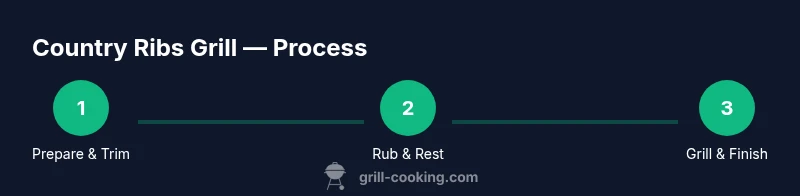
Prepare and trim country ribs
Trim excess fat and any silver skin. Pat dry to promote rub adhesion. This creates a clean surface for even browning and prevents excess fat from slowing the crust. Place the ribs on a cutting board and plan cuts if needed for even thickness.
Tip: Trim stubborn fat and pat dry to improve crust formation. - 2
Apply rub and rest
Season evenly with a balanced dry rub. Let sit 15–30 minutes (or refrigerate up to 2 hours) to let flavors migrate into the meat. If using a wet glaze, apply a light layer after the initial crust forms. Dry rubs deliver stronger bark.
Tip: Let rub sit to maximize flavor penetration and crust. - 3
Preheat grill and create two zones
Preheat to 225–250°F (107–121°C). For charcoal, bank coals to create hot and cool zones and add a water pan. For gas, turn on outer burners for indirect heat and leave center off. This setup stabilizes temperature and moisture.
Tip: Use a water pan to help regulate heat and prevent drying. - 4
Cook indirect and monitor temps
Place ribs on the indirect side, bone-side down if possible. Close the lid and monitor every 25–40 minutes. If temps stall near 160–170°F, consider a foil wrap with a splash of liquid to accelerate tenderization.
Tip: Keep lid closed to maintain steady heat; avoid frequent flips. - 5
Wrap and finish tenderization
Optionally wrap the ribs in foil to speed tenderness and retain moisture, then finish on indirect or directly sear for bark. Check tenderness by a gentle probe; when meat yields with slight resistance, you’re close. Remove from heat and rest.
Tip: Wrap only after surface has formed some color and bark. - 6
Rest, slice, and serve
Rest the ribs 10–15 minutes, tented loosely, to redistribute juices. Slice against the grain for maximum tenderness and serve with complementary sides. If using sauce, apply lightly and let it set during rest to keep the crust intact.
Tip: Rest before slicing to retain moisture and juiciness.
FAQ
What temperature should I grill country ribs at?
Aim for a steady 225–250°F (107–121°C) with gentle heat to render connective tissue without drying the meat. Use the thermometer to keep the cook in range.
Keep your grill around two hundred twenty-five to two hundred fifty degrees and monitor the ribs with a thermometer.
Should I wrap the ribs during cooking?
Wrapping the ribs in foil during the middle of the cook (the Texas crutch) helps tenderize and speeds up the process if the surface stalls. Remove the wrap before finishing to re-crisp the crust.
Yes—wrap if the ribs stall, then unwrap to finish for a crusty exterior.
How long do country ribs take to grill?
Most cooks plan 2–3 hours total, depending on rib size and thickness. Always judge by tenderness and internal temperature, not time alone.
About two to three hours, but verify tenderness with a probe.
What rub works best for country ribs?
A balanced dry rub with salt, paprika, brown sugar, pepper, and garlic powder provides great flavor and bark. Adjust sweetness to your preference.
A simple salt-p sugar-rub gives a great crust and flavor.
Do I need to soak wood chips for smoking country ribs?
Soaking is optional depending on your grill. Using dry chips with a smoker box or direct smoke works well for flavor without overpowering the meat.
Soak isn’t strictly needed; use dry chips if you’re using a box.
How should I slice country ribs for serving?
Slice against the grain into 1/2–3/4 inch portions for tenderness and even bites. Resting helps ensure juiciness.
Slice across the grain after resting for best tenderness.
Watch Video
Quick Summary
- Trim fat for even cooking and crust formation.
- Use two-zone heat for control and tenderness.
- Rest before slicing to retain juices.
- Finish with a light glaze to enhance bark and shine.