Can You Use Grill and Oven at the Same Time? A Practical Guide
Discover how to safely run a grill and oven together, balance heat zones, and finish dishes with perfect sear and browning. Practical steps, tips, and troubleshooting for home cooks from Grill Cooking.


Can you use grill and oven at same time? Yes—with careful planning. Start by confirming each appliance is properly ventilated, preheat inputs separately, and designate heat zones. Use the oven for steady roasting or braising while the grill handles searing, finishing, or glazing. Monitor temps with probes and keep flammable items clear of heat sources.
Can You Use Grill and Oven at the Same Time? A Practical Reality
Yes, you can run a grill and an oven simultaneously, but it requires deliberate planning and safety checks. The Grill Cooking team emphasizes that this approach works best when you treat each appliance as its own heat source with a clearly defined role. For many weeknight meals, finishing proteins on the grill while the oven handles steady roasting can save time and improve texture. The key question—can you use grill and oven at same time—becomes a practical strategy when you respect ventilation, heat containment, and cross-application timing. By understanding how heat behaves in each appliance, you create a synchronized workflow that minimizes flare-ups and uneven browning while maximizing flavor development.
Heat Zones and Role Assignment: Can You Use Grill and Oven at the Same Time?
When you answer the question can you use grill and oven at same time, the blueprint is straightforward: assign high-heat tasks to the grill and slower, controlled cooking to the oven. The grill excels at searing and creating complex Maillard flavors, while the oven provides gentle, even heat for roasting or braising. Think of the oven as your steady partner and the grill as the finishing technician. By naming tasks—roasting in the oven and a final char on the grill—you can manage both appliances without crowding space or competing temperatures. The result is a dish with a crisp exterior and a juicy interior, achieved safely and efficiently.
Ventilation, Safety, and Practical Considerations
Ventilation is non-negotiable when running a grill and an oven together. Open a window or use a range hood that effectively removes smoke and odors. Keep a clear but extended buffer around heat sources and avoid stacking flammable items near burners or vents. In many kitchens, using a dual-appliance setup requires extra space for maneuvering hot trays and a plan for drips and splatters. The Grill Cooking team notes that safe operation hinges on staying aware of heat levels and never leaving active grills unattended while the oven is running.
Tools, Accessories, and Setup Essentials
To successfully execute a can you use grill and oven at same time scenario, gather the right tools: oven-safe racks, a roasting pan, a grill grate that allows indirect heat, a reliable instant-read thermometer, and heat-resistant gloves. Use an oven-safe thermometer to monitor internal temperatures without opening the oven door repeatedly, which would drop heat. Have drip pans or pans to catch fats that can cause flare-ups on the grill. The right setup helps you maintain control as you coordinate both appliances.
Practical Cooking Scenarios: What Works Well
There are several practical scenarios where the can you use grill and oven at same time approach shines. Large bone-in portions can be roasted first to reach safe internal temps, then finished on the grill to develop a smoky crust. Fish or shellfish can be starting in a moderate oven and moved to the grill for a quick sear. Vegetables can be roasted in the oven while you finish a protein on the grill for contrast in textures. By separating tasks, you reduce the risk of overcooking and you improve overall texture and flavor. The Grill Cooking team highlights that this method pairs well with one-pot or tray-bake style meals that benefit from both appliances’ strengths.
Step-by-Step Workflow Example for a Dish
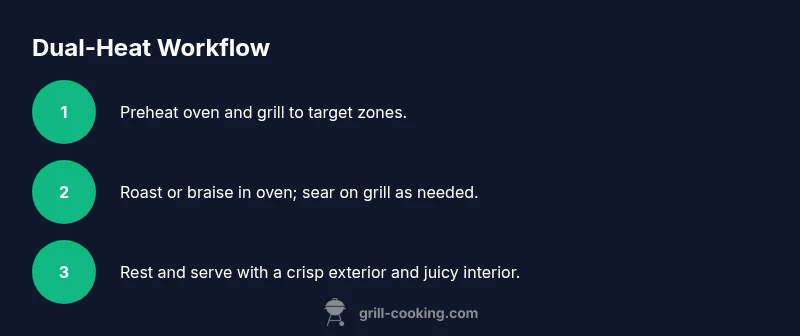
- Preheat the oven and preheat the grill to the appropriate zones. 2) Prepare your protein with a light seasoning and arrange vegetables on a tray. 3) Start cooking in the oven until the protein reaches a safe internal temperature; 4) Move the meat to the grill for a finishing sear and glaze; 5) Rest the meat and let vegetables finish in the oven or on the grill as needed. 6) Remove everything together and serve. This approach answers can you use grill and oven at same time by outlining a practical workflow with clear heat zoning.
Troubleshooting and Common Questions
If you ask can you use grill and oven at same time, common issues include uneven cooking, flare-ups on the grill, and heat loss when opening the oven. Quick fixes involve keeping a lid on the grill when not actively searing, using indirect heat zones, and using a thermometer to monitor interior temperatures. Remember to keep the oven door closed during the critical finishing moments to maintain consistent heat. The Grill Cooking team recommends starting with a smaller test batch to dial in times before committing to a full meal.
Safety Reminders and Cleanup Tips
Always practice safe handling when operating both appliances. Wear heat-resistant gloves, use long tongs, and avoid overloading power circuits. After cooking, let both appliances cool before clean-up to prevent burns and accidents. Wipe surfaces, remove drips promptly, and store tools in a safe, dry location. The can you use grill and oven at same time approach is safer when you respect heat management and follow a consistent cleanup routine.
Quick-Start Checklist for Using Grill and Oven Together
- Verify ventilation and space clearance for both appliances
- Preheat grill and oven separately, then coordinate heat zones
- Use oven for roasting/braising, grill for searing and finishing
- Monitor temperatures with a probe and adjust heat as needed
- Keep flammable items away from heat sources and open flames
- Rest meat before slicing to preserve juiciness and texture
Final Thoughts: Why This Strategy Works
Learning to answer the can you use grill and oven at same time question expands your cooking repertoire. It leverages the strengths of both appliances to achieve precise browning, efficient cooking timelines, and better texture. With careful planning, you can execute ambitious meals in a single cooking session that would be difficult with one appliance alone. The Grill Cooking team encourages home cooks to practice this method during low-stakes meals to build confidence before hosting.
Author Note and Practical Takeaway
This article is designed to help home cooks and grill enthusiasts understand how to safely and effectively coordinate a grill and oven. The core idea—using heat zones, planning, and monitoring—applies across many dish types. Remember to tailor your approach to your specific equipment and to test your workflow ahead of large gatherings so you can confidently answer can you use grill and oven at same time in real kitchens.
Tools & Materials
- Grill (gas or charcoal)(Set up direct and indirect heat zones; stabilize temps before adding food)
- Oven (conventional or convection)(Preheat to target temperature; use convection if available for even heat)
- Oven-safe roasting pan or sheet pan(For oven cooking and to catch drippings)
- Oven-safe rack(Elevate meat for airflow and even cooking)
- Instant-read thermometer(Monitor internal temps without opening heat sources)
- Heat-resistant gloves(Protect hands when moving hot pans and racks)
- Tongs and spatula(Use long tools to maintain distance from heat)
- Drip pans or foil liners(Contain drippings and minimize flare-ups on the grill)
- Ventilation strategy(Range hood or window open to manage smoke and odors)
Steps
Estimated time: 1 hour 20 minutes
- 1
Preheat both appliances
Begin by preheating the oven to the target roasting temperature and the grill to a suitable sear zone. Do not rush to start cooking until both are stable. The goal is to have consistent heat available for the simultaneous process and avoid temperature shocks.
Tip: Use the oven thermometer to confirm actual temps; ovens can run hot or cool compared to dial settings. - 2
Plan heat zones and load
Decide which items go in the oven and which go on the grill. Position larger, slower-cooking pieces in the oven and reserve tender or fast-cooking portions for the grill phase.
Tip: Place vegetables on a pan to prevent direct contact with flames and promote even browning. - 3
Start in the oven
Place the oven-safe pan on the rack and begin cooking until you reach the desired internal temperature. Keep the grill in a low to medium indirect heat state during this phase to avoid early scorching.
Tip: Do not open the oven door frequently; use a timer to maintain consistent heat exposure. - 4
Move to grill for sear and finish
Transfer the items that need a crust or char to the grill. Use direct heat for a brief sear, then shift to indirect heat to finish cooking without burning.
Tip: Keep lid closed during searing to trap heat and protect from flare-ups. - 5
Monitor temps and rest
Use a probe to verify internal temps as you approach the target range. Remove from heat when just shy of final temperature and let rest to redistribute juices.
Tip: Resting time is part of the cooking process; tent loosely with foil to retain heat without steaming the surface. - 6
Final checks and serve
Confirm all components have reached safe temps. Slice and serve, noting the crisp exterior and juicy interior achieved by the dual-heat method.
Tip: Record what worked for future cooks; this helps refine your can you use grill and oven at same time workflow.
FAQ
Is it safe to run a grill and an oven at the same time?
Yes, it can be safe if you maintain proper ventilation, avoid placing heat sources near flammable items, and monitor temperatures carefully. Always follow appliance manufacturer guidelines for simultaneous use.
Yes, it can be safe if you ventilate well, keep flammables away, and monitor temperatures closely.
When should I use the oven versus the grill during dual-heat cooking?
Use the oven for even, steady cooking or braising when you need consistent heat. Use the grill for high-heat searing, crust formation, and finishing touches for flavor and texture.
Use the oven for steady cooking and the grill for finishing sears and crusts.
What equipment helps manage dual-heat cooking safely?
An instant-read thermometer, oven-safe pans, heat-resistant gloves, and drip pans help manage dual-heat cooking while reducing risk of burns or flare-ups.
Thermometer, oven-safe pans, gloves, and drip pans help manage dual heat safely.
Can you use this method for all meats?
Most dense cuts such as roasts, bone-in chicken, or pork benefit from oven-then-grill finishing, while delicate fish may need shorter oven time and a quick grill finish.
Many meats work well with oven-then-grill finishing; adjust times for thickness.
What are common mistakes to avoid?
Overcrowding the grill, opening the oven too often, and neglecting to rest meat after cooking are frequent errors. Plan space and monitor heat to keep results consistent.
Avoid overcrowding, don't over-open the oven, and let meat rest after cooking.
How do I clean up after dual-heat cooking?
Let everything cool, wipe surfaces, and clean drips from pans and grill grates. Regular maintenance helps prevent flare-ups during future dual-heat sessions.
Cool everything, wipe surfaces, and clean grates and pans after cooking.
Watch Video
Quick Summary
- Plan heat zones before cooking to can you use grill and oven at same time.
- Use oven for steady cooking and grill for finishing and searing.
- Monitor temps with probes to prevent overcooking.
- Prioritize safety and ventilation when using both appliances together.