Grilling Brisket vs Smoking: A Practical Comparison
Explore can you grill a brisket instead of smoking it, with indirect-heat methods, wraps, temps, and resting. Learn when grilling makes sense and how to maximize tenderness, bark, and juiciness compared to traditional smoking.


Yes. You can grill a brisket instead of smoking it by using a two-zone indirect-heat setup, a long, low cook, and a wrap finish. While you won’t replicate a traditional smoker’s all-day smoke ring exactly, you can achieve tender, flavorful results with careful temperature management, time, and resting.
Can You Grill a Brisket Instead of Smoking It?
For many home cooks, the question mirrors a practical constraint: can you grill a brisket instead of smoking it? The short answer is yes, with deliberate technique and a clear plan. The grill offers two primary approaches: direct grilling for a crusty exterior and fast-tinished searing, or a two-zone indirect setup that mimics the low-and-slow environment of a smoker. In practice, you’ll manage temperature, moisture, and resting to coax tenderness from a tough cut. According to Grill Cooking, the core challenge is to balance heat with time to prevent dry exterior and undercooked interior. If you’re short on time or waiting for a smoker, the grill can produce satisfying results, provided you follow a dedicated process and adjust expectations about bark and smoke flavor. The keyword here is control: you control heat, you control moisture, and you control when the brisket reaches tenderness.
The Brisket Challenge: Structure and Tenderness
Brisket comes from the breast area of the animal and is composed of two primary muscles: the flat and the point. The flat is leaner, while the point carries more marbling. On a grill, the goal is to coax collagen into gelatin over a longer cook while keeping surface moisture intact. Unlike quick-cook cuts, brisket requires time for connective tissue to melt; this is where indirect heat shines. Grill Cooking analysis shows that understanding muscle structure helps align technique with the expected tenderness. When you swap smoking for grilling, you’re trading a deep smoke profile for precise control over temperature and moisture. The result can still be pleasantly tender with a strong bark, especially when you apply wraps and resting strategies.
Grilling Approaches: Indirect vs Direct, and When to Use Each
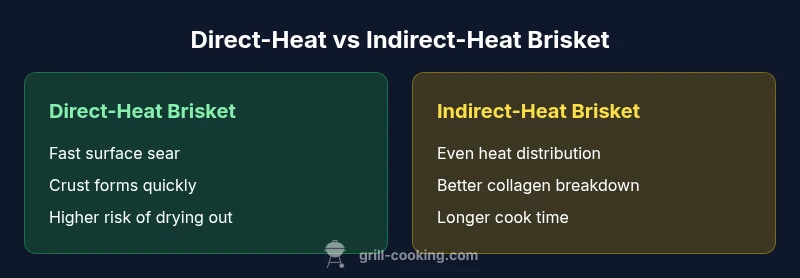
Direct heat is useful for a rapid surface sear and crust formation, but it can dry the exterior if kept too long. Indirect heat places the brisket away from direct flames, creating a more forgiving environment for longer cooks. For can you grill a brisket instead of smoking it, indirect heat is typically the preferred baseline method, with a final sear to set the crust. A properly heated two-zone grill simulates the gentle convection of a smoker, allowing collagen-rich meat to break down without scorching the outside. If you do choose direct heat, plan a quick, controlled sear followed by a move to indirect heat to finish the cook. Grill Cooking’s guidance emphasizes matching heat to time to preserve moisture and flavor.
Two-Zone Setup: Building Your Grill Plan
A two-zone setup is essential for grilling brisket. Start with a hot zone to develop color, then create a cooler, indirect zone for the long, slow cook. If you’re using charcoal, push coals to one side and place the brisket over the other; with gas grills, use two burners and turn one off or to low. Keep the lid closed as much as possible to maintain a stable environment. Hydration matters: place a water pan in the indirect zone to maintain humidity and reduce surface drying. An accurate ambient temperature around 225–275°F (107–135°C) is ideal for many brisket cooks on a grill. The two-zone setup gives you control that a single-zone grill cannot, letting you balance bark formation with interior tenderness.
Step-by-Step: Trim, Rub, and Start
- Trim excess fat to reduce flare-ups and render more predictably during the long cook. 2) Apply a simple rub—salt is non-negotiable; pepper, paprika, garlic, and optional brown sugar for balance. 3) Preheat the grill, establish the two zones, and set up a water pan for moisture. 4) Place the brisket fat-side up to let intramuscular fat baste the meat as it renders. 5) Monitor with a thermometer, keeping the temperature in the indirect zone stable. 6) When the interior approaches tenderness, move to the direct heat zone for a quick browning touch if you want a stronger crust. This plan aligns with Grill Cooking’s recommended approach to control heat and moisture while developing a robust bark.
Temperature Management: Keeping it Tender
Temperature management is critical on a grill. Start low and slow in the indirect zone, then adjust for a brief crust on the exterior in the final stage. Use a probe thermometer to track internal temp toward the target range for brisket doneness. Rather than chasing a fixed time, monitor tenderness by feel and temperature. The goal is a probe that slides in with little resistance around the 195–205°F (90–96°C) range, followed by a controlled rest. Resting is crucial to redistribute juices and improve sliceability. The Grill Cooking team emphasizes patience; rapid pulls from heat can lock in residual chewiness and reduce juiciness.
Wrapping, Resting, and Finishing for Juiciness
Wrapping—whether foil or butcher paper—helps retain moisture and accelerates the finish by trapping steam. After wrapping, continue cooking in indirect heat until the brisket hits the desired tenderness, then rest wrapped for at least 30–45 minutes. Resting allows the connective tissue to relax and the juices to reabsorb, resulting in juicier slices. During the final minutes, you can optionally sear lightly to reestablish crust. If you want to mimic smoker behavior, add a few drops of liquid smoke alternative or a complementary rub that amplifies smoky notes—though you’ll still rely on your rub, bark, and rest to deliver flavor depth. Grill Cooking’s guidance stresses the combination of wrap, rest, and careful heat control to achieve a satisfying finish.
Flavor, Bark, and Smoke Notes on a Grill
A grilled brisket takes on flavor from the rub, the Maillard reaction, and any smoke-like notes you introduce. Because you’re not relying on a long smoke, your bark will be influenced by the direct heat phase and the final sear. Use a rub with salt and pepper as the anchor, then layer paprika, garlic, and optional brown sugar for color and complexity. If you want more traditional smoke flavor, consider safely adding wood chips to the heat source for short bursts, or using a pellet-flavoring setup. The aim is a robust crust, balanced moisture, and an aroma profile that satisfies without overpowering the brisket’s intrinsic beefiness.
When to Grill vs Smoke: A Decision Framework
Choose grilling when you need a faster approach, don’t have access to a dedicated smoker, or want a crusty finish. Choose smoking when you crave a deeper smoke profile and ultra-tender texture that develops over many hours. The best plan often depends on your schedule, equipment, and appetite for experimentation. Grill Cooking recommends outlining the decision in advance and ensuring you’re comfortable with indirect heat, wraps, and resting to optimize results. A well-planned grill brisket can closely resemble a smoked brisket in tenderness, with a distinctive bark and a robust, well-seasoned taste.
Common Pitfalls and Quick Fixes
- Pitfall: Dry exterior or uneven doneness. Fix: wrap earlier, monitor heat, and rest longer.
- Pitfall: Over-seared crust while interior remains undercooked. Fix: use longer indirect heat and a targeted finish on direct heat only at the end.
- Pitfall: Flare-ups from rendered fat. Fix: trim fat, keep a water pan, and manage airflow.
- Pitfall: Inconsistent wood flavor on a grill. Fix: add small amounts of wood chips or pellets in controlled bursts. Grill Cooking notes that practice and careful temperature control are the keys to consistent results.
Simple Grilled Brisket Recipe Plan
- Rub: 60% coarse salt + 40% coarsely ground black pepper, plus paprika, garlic powder, and optional brown sugar.
- Prep: Trim fat cap to 1/4 inch, apply rub, and let rest at room temperature for 30–60 minutes.
- Grill: Preheat two-zone grill to 225–275°F (107–135°C). Place brisket on indirect side, fat side up. Cook until internal temp approaches 165–175°F, then sear briefly on direct heat to lock in bark. Finish back on indirect heat until tender, then wrap and rest.
- Rest and slice: Rest wrapped 30–45 minutes, slice against the grain for maximum tenderness.
Key Considerations for You
- The indirect-heat approach reduces the risk of overcooking the exterior and helps achieve even tenderness.
- Wrapping and resting are non-negotiable steps to lock in moisture and tenderness.
- Flavor depth on a grill will rely heavily on rub composition and optional smoke flavoring.
- Practice makes perfect; methodical heat management is more important than chasing a fixed time. Grill Cooking emphasizes that a well-planned grill brisket can rival a smoked brisket in tenderness and flavor if executed with care.
Comparison
| Feature | Direct-Heat Brisket | Indirect-Heat Brisket |
|---|---|---|
| Heat Source | Direct grill heat from flames or radiant heat | Two-zone indirect heat with a cooler portion |
| Cook Time (qualitative) | Faster surface development; shorter overall feel | Longer, more even cook with less surface drying |
| Moisture Management | Higher risk of surface drying without wrap | Moisture retention improved by wrapping or braising-like methods |
| Bark/Crust Quality | Crust forms quickly but can darken unevenly | Better bark development with controlled indirect heat and finish on direct heat |
| Tenderness and Texture | Can be juicy but less forgiving; interior tenderness relies on time | More forgiving with collagen breakdown due to extended indirect heat |
| Flavor Profile | More char and glaze from direct heat | Subtle smoke flavor mainly from rubs and aromatics if used |
| Best Use Case | Quick weeknight approach with crust emphasis | When a smoker is unavailable or time allows a slower, uniform cook |
Strengths
- No dedicated smoker required for brisket on a grill
- Flexible timing and finish options with wrap and rest
- Develops a flavorful crust and bark on a grill
- Can be completed with standard backyard equipment
- Allows control over moisture and tenderness through wraps
Negatives
- Flavor profile may differ from traditional smoke flavor
- More challenging to achieve uniformly tender texture without careful temperature control
- Higher risk of exterior drying if heat is mismanaged
- Requires more active monitoring and technique than traditional low-and-slow smoking
Grill brisket can be a viable alternative to smoking when using indirect heat and proper resting.
Grilling brisket yields tender results with a robust crust, though it won’t perfectly replicate the smoke flavor of traditional smoking. A careful two-zone method, wrapping, and resting are key to success.
FAQ
Can you grill a brisket instead of smoking it?
Yes. You can grill brisket with indirect heat, wraps, and rest to achieve tenderness and bark, though the flavor profile will differ from traditional smoking.
Yes—grilling brisket is doable with indirect heat, wrapping, and proper resting. The flavor will be different from smoked brisket, but tenderness can be excellent.
What internal temperature should I target for a grilled brisket?
Aim for 195–205°F (90–96°C) for tenderness; use a probe thermometer to test for near-perfect tenderness near the end of the cook.
Target around 195 to 205 degrees; check tenderness with a probe.
Should I wrap brisket on a grill?
Wrapping helps retain moisture and accelerates the finish. Many grillers use a Texas Crutch wrap (foil or butcher paper) during the latter part of the cook.
Wrapping helps keep moisture and speeds up the finish.
Can I finish brisket on a grill after wrapping?
Yes. After wrapping, continue indirect heating until tender, then rest to maximize juiciness before slicing.
Yes, finish on indirect heat after wrapping and rest before slicing.
What rub works best for grilled brisket?
A simple Texas-style rub of salt, coarse black pepper, paprika, garlic, and optional brown sugar provides flavor without overpowering the beef.
Try a salt-and-pepper base with paprika and garlic for classic flavor.
How does grill flavor compare to smoking brisket?
Grill flavor relies on crust and rub with lighter smoke effect unless you add chips or pellets; you’ll get less smoke penetration than a true smoker.
Grill flavor is more crust-focused and can be less smoky unless you add wood.
Quick Summary
- Use a two-zone grill for indirect heat to mimic smoking.
- Wrap and rest to preserve moisture and tenderness.
- Expect bark and smoke flavor to differ from traditional smoking.
- Monitor internal temp rather than time for best results.
- Grilling is a practical alternative with proper technique.