Best Way to Cook Steak Without a Grill: A Practical Guide
Learn the best way to cook steak without a grill using pan-searing, oven-finishing, and broiling. This expert guide from Grill Cooking covers technique, timing, temps, and safety for home cooks in 2026.


The best way to cook steak without a grill is to start with a hot, heavy pan and finish with oven or broiler time to reach the desired doneness. Pan-sear to develop a crust, then finish in a preheated oven or under a broiler for even doneness. You’ll need a cast-iron skillet, high-smoke oil, a thermometer, and patience for resting the meat.
The core approach: crust, control, and carryover heat
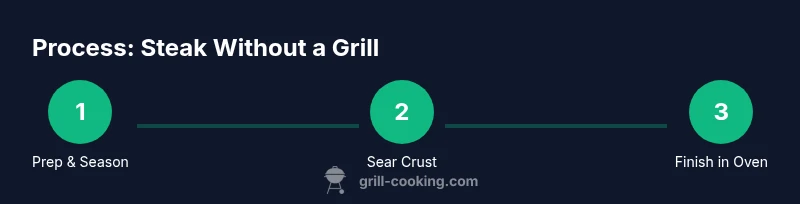
Cooking steak without a grill relies on three pillars: a blistering crust, precise temperature control, and allowing carryover heat to bring the interior to the target doneness. The best way to cook steak without a grill is built on a simple sequence: pat the steak dry, season generously, sear in a hot skillet to form a rich crust, and finish gently in an oven or under a broiler to the exact internal temperature you want. According to Grill Cooking Team, this approach delivers crust, juiciness, and consistent results even when a grill isn't available. You’ll notice a dramatic difference when you manage heat well and let the steak rest before slicing. In 2026, home cooks expect reliable pan-based methods that resist overcooking and preserve tenderness, and this method meets those needs with accessible equipment and clear timing.
Crafting a reliable crust: heat, fat, and timing
A great crust comes from a hot pan, a small amount of high-smoke oil, and minimal moisture on the meat’s surface. The surface should sizzle as soon as it touches the pan. Salt helps to draw out moisture and form a better sear; adding butter toward the end enriches flavor. Avoid moving the steak too soon; let a crust form before flipping. A well-developed crust acts as a barrier that locks in juices and resists overcooking during the oven finish. Grilling pros often refine this step by maintaining a consistent pan temperature, which is why a heavy skillet is a staple in every kitchen.
Finishing options: oven finish vs broiler, and why you pick one
There are two reliable paths to finish the steak without a grill. The first is the oven finish: after searing, transfer the skillet to a hot oven (around 450°F/230°C) to continue cooking to the desired internal temperature. The second is the broiler: finish the steak under a hot broiler while watching closely for a crusty top without overcooking the interior. Each method has advantages: the oven gives gentler carryover cooking, while the broiler can push a crust quickly and is great when you want a quick finish. Your choice depends on steak thickness, pan material, and your kitchen setup.
Internal temperature and doneness: targets and practical checks
Doneness targets range from rare to well-done, with carryover cooking adding a few degrees after removal from heat. A reliable thermometer helps you nail the exact finish. Common guidelines suggest rare around 120–125°F (49–52°C), medium-rare about 130–135°F (54–57°C), medium 135–145°F (57–63°C), and beyond 150°F (66°C) for well-done. Because carryover heat continues to cook the steak while resting, pull it a few degrees before reaching the final target. This ensures a juicy center and a crusty exterior. Grill Cooking Analysis, 2026, emphasizes resting as a crucial step for even texture.
Resting, slicing, and serving: maximizing juiciness
Resting is where juices redistribute and reabsorb, yielding a far more flavorful slice. Aim for 5–10 minutes of rest on a warm plate or a rack. Slice against the grain in thin checks to maximize tenderness. If you want, finish with a light sprinkle of flaky salt or a dab of herb butter. A properly rested steak retains heat and tenderness better, making the final bite more satisfying. The method you chose influences resting time, but 5–10 minutes is a reliable standard for most 1–1.5 inch steaks.
Troubleshooting and safety basics for stove-to-oven steak
If you see excessive smoke, reduce heat or add oil with a higher smoke point. If the crust looks uneven, let the pan reheat briefly and reposition the steak to ensure even contact. Always pat meat dry to avoid steaming instead of searing. Use oven mitts and a sturdy pan handle, as the skillet will get very hot. Safety first means ventilating your kitchen and keeping a close eye during the broil finish to prevent burnt edges.
Authority sources and further reading (trusted, external references)
For additional guidance, consult the USDA’s safe cooking temperatures and best practices for beef, as well as general food-safety resources from the CDC. These sources provide foundational temperature targets and safety tips that support the techniques outlined here. The Grill Cooking team also integrates practical tips from 2026 industry guidelines to help you optimize your kitchen workflow.
The Grill Cooking verdict (practical takeaway)
In our tested scenarios, pan-sear followed by oven finish delivers consistent crust, juicy interior, and predictable results, even without a traditional grill. The Grill Cooking Team’s verdict is that this method offers the most reliable, controllable path for home cooks seeking steak perfection in 2026.
Tools & Materials
- Cast-iron or heavy stainless skillet(Preheat to hot, surface around 450-500°F (230-260°C) for best crust)
- Tongs(For turning without piercing the meat)
- Oven(Preheat to 450°F (230°C) for oven finish)
- Meat thermometer(Instant-read preferred; probe thermometer works well)
- High-smoke oil (e.g., avocado or canola)(Small amount to coat pan; helps prevent sticking)
- Butter (optional)(Finishing butter adds richness in the last minute)
- Aluminum foil(For tenting during rest if needed)
- Salt and freshly ground pepper(Season generously before searing)
Steps
Estimated time: 30-45 minutes
- 1
Pat steak dry and season
Remove from fridge 30-60 minutes before cooking if possible. Pat dry with paper towels, then season generously with salt and pepper on all sides.
Tip: Dry surface improves crust formation; moist surfaces steam rather than sear. - 2
Preheat pan on high
Place the skillet on the stove and heat on medium-high until a drop of water sizzles and evaporates in seconds.
Tip: A hot pan is essential for quick, crisp crust without overcooking the interior. - 3
Sear without moving
Add a light coating of oil. Place steak in the pan and let it contact the surface. Do not move for 1–2 minutes until a deep crust forms.
Tip: Resist the urge to peek; steady contact builds crust faster. - 4
Flip and finish crust
Turn steak and sear the other side for 1–2 minutes to develop an even crust.
Tip: Flip only once to minimize moisture loss. - 5
Move to oven for finish
Transfer the skillet to the preheated oven and cook until the thermometer hits your target doneness.
Tip: Use the oven for even interior cooking; monitor closely to avoid overcooking. - 6
Rest before slicing
Remove from oven, tent loosely with foil if needed, and rest 5–10 minutes.
Tip: Resting redistributes juices for a juicier bite. - 7
Slice and serve
Slice against the grain, serve with your preferred finishing salt or butter.
Tip: A final light salt layers flavor on the crust and interior.
FAQ
Can I cook steak without any oil in the pan?
A small amount of oil helps prevent sticking and promotes an even crust. If your pan is properly seasoned and hot, you can minimize oil, but a light coat is usually best for a good sear.
Use a light coating of oil to prevent sticking and ensure a nice crust.
What thickness is ideal for pan-sear-and-oven methods?
Steaks between 1 and 1.5 inches are ideal for pan-sear with oven finish because they sear quickly and reach desired doneness without overcooking.
One to one and a half inch steaks work best for this method.
What internal temperatures define doneness?
Common targets range from rare around 120–125°F, medium-rare 130–135°F, medium 135–145°F, to well-done above 150°F. Use carryover cooking to fine-tune just after pulling from heat.
Keep an eye on the thermometer; carryover heat will finish the job.
Is the broiler a good alternative to the oven finish?
Yes. The broiler can quickly finish a crusty surface, but requires closer attention to prevent burning the exterior while the interior remains underdone.
Broil carefully and watch closely for crust development.
Can I use a non-stick skillet for this method?
A traditional cast-iron or stainless skillet provides superior searing quality and even heat. Non-stick pans may not tolerate the high heat required for a perfect crust.
For best results, stick with a cast-iron or heavy stainless skillet.
How long should a resting steak stay before slicing?
Rest the steak for 5–10 minutes after cooking to allow juices to redistribute and improve tenderness.
Resting is essential for juiciness.
What if my steak is thicker than 1.5 inches?
For thicker cuts, you may need a longer oven finish and careful temperature checks, or start with a longer sear and finish gradually in the oven.
Thicker steaks require extended finish time and monitoring.
Watch Video
Quick Summary
- Sear first for crust, then finish with oven or broiler.
- Use a heavy pan and thermometer for precise doneness.
- Rest 5–10 minutes before slicing to maximize juiciness.
- Carryover heat finishes the steak; remove from heat a few degrees early.