When to Grill with Lid Open: Master Lid Management for Better Grilling
Learn when to grill with lid open for perfect searing, heat control, and safer cooking. This expert guide from Grill Cooking covers techniques, scenarios, and practical tips for home cooks.


With the lid open, you’ll master direct searing, quick-cooking vegetables, and controlled flare-ups. This guide explains when to grill with the lid up versus closed, how heat moves without the lid, and practical rules of thumb for timing, airflow, and safety. By the end, you’ll grill more confidently with the lid as a precision tool.
Why the lid matters in grilling
The lid on a grill is more than a cover—it's a tool for controlling heat, smoke, and airflow. When you grill with the lid open, convection currents pull heat away from the surface, producing a different browning pattern than lid-down cooking. This affects searing, crust formation, and even how quickly fat renders. According to Grill Cooking, understanding lid behavior is the first step to consistent results. The open lid approach can be ideal for foods that want a crisp exterior quickly, or for managing flare-ups in fatty cuts. It also gives you tactile control: you can move food around, expose more surface area to flame, and monitor color with minimal delay.
However, the decision to keep the lid up or down depends on your grill type (charcoal vs gas), wind, ambient temperature, and the food you’re cooking. In high-wind environments, lid position affects heat retention more dramatically. In this block, we’ll lay a foundation for when lid-open methods shine and when you should opt for a closed-lid approach.
Lid Open vs Lid Closed: When each makes sense
Choosing lid-open versus lid-closed cooking hinges on heat retention, airflow, and the food’s fat content. For quick-sear and thin-cut proteins, keeping the lid up can maximize surface browning without overcooking the interior. For vegetables and delicate items, lid-open can deliver bright char without steam-softening the center.
- Direct sear on a hot zone: lid open.
- Quick-cooking vegetables: lid open for color and crunch.
- Fatty or thick cuts: consider short lid-down intervals to finish through indirect heat.
- Flare-ups: flare-ups can be momentarily managed by opening the lid to reduce oxygen or by moving the meat away from the flame. Grill Cooking analysis highlights that lid behavior matters most in how heat concentrates and how smoke flavors build.
These guidelines help you decide when to keep the lid up or down based on the piece of meat or veggie you’re grilling.
Heat flow with the lid up: what changes
When the lid is open, radiant heat from the grate dominates, and hot air can escape more easily. This reduces the wind-down of heat that a closed lid would provide, so you’ll see faster surface browning but potentially longer cooking times inside for thicker items. Wind and ambient temperature have outsized effects on lid-up cooking: a breezy deck can cool the grate surface rapidly, requiring more frequent attention. Open-lid grilling also favors direct exposure to smoke a couple of inches above the grate, which yields a bolder, more pronounced flavor on quick-cook items. The trade-off is a drier exterior if you don’t manage moisture and heat carefully.
For charcoal grills, lid-open cooking allows flames to lick the surface, producing sear lines quickly. Gas grills may retain heat differently, but open-lid still accelerates browning on outsides while leaving interiors less cooked. Understanding these dynamics helps you time flips and reposition food for even color development.
Searing with the lid open: best practices
Searing with the lid open is a core lid-open technique. Start with the grill on high heat and place the protein directly over the hottest zone. Lay the meat flat and avoid moving it too soon—allow 1–2 minutes for a crust to form before turning for cross-browning. Use long tongs to rotate to different hot spots so you don’t char one side excessively. If you see excessive smoke, slightly open the vents to tune airflow and reduce flare-ups. Always monitor the internal temperature with a reliable probe; open-lid searing can push temps quickly, so plan to end with a brief lid-down finish if needed.
When practicing lid-open searing, target crust formation within the first 2–3 minutes per side for most steaks or chops. The goal is a deeply caramelized crust without overcooking the interior.
Vegetables and delicate proteins: tilt to lid-open precision
Vegetables and delicate proteins (shrimp, thin fish fillets) benefit from lid-open grilling because it preserves texture and bright color without steam-softening. Toss or brush lightly with oil and seasonings, then place on the hottest part of the grill for quick sizzles. Move smaller items frequently to avoid scorching, and use a basket or skewers to manage small items. If you add a delicate protein to the grill, stay close with a thermometer and remove promptly to prevent overcooking. Open-lid cooking can also help when you want noticeable grill marks without the risk of tearing or breaking softer proteins.
Safety and control: managing flare-ups and wind
Open-lid grilling demands vigilant heat management, especially on fatty cuts or in breezy environments. Keep a water spray bottle handy for minor flare-ups, and be ready to move meat to a cooler zone if flames spike. Protective gear is essential—gloves, long-handled tongs, and careful fuel management reduce burns and accidents. Always pre-check vents and ensure your grill is stable on a flat surface. Grilling is a dynamic activity; expect changes as winds shift and charcoal burns down. The Grill Cooking Team emphasizes keeping kids and pets away from the heat and using a clear workspace free of flammable objects.
Practical guidelines by food type: when lid-open shines
Beef: quick sear with lid open to build crust, then brief lid-down finishes if you want more even doneness.
Chicken: use open-lid searing to color skin rapidly, then close the lid to finish through indirect heat and avoid drying the interior.
Fish: lighter, open-lid approach preserves moisture but avoid long direct exposure that dries delicate flesh.
Vegetables: heat and char quickly; lid open ensures crisp edges and vibrant color. These guidelines help you tailor lid use to the specific food you’re cooking.
Common mistakes and fixes: lid-open pitfalls to avoid
- Overcrowding the grill leads to uneven browning; fix by giving each piece space and rotating frequently.
- Leaving the lid open too long may overcook the exterior; counter by timed flips and temperature checks.
- Not adjusting airflow; fix by balancing vents to maintain heat without choking the flames. The lid is a tool, not a crutch—use it to control heat, not to chase a guess.
Remember: practice builds intuition. The more you grill with lid open, the better you’ll judge when to close it for finish and interior doneness.
How to calibrate your grill for lid-open cooking
Start by establishing your target exterior browning and interior doneness. Preheat to the appropriate high heat for searing, then test a small piece to observe color development over 1–2 minutes. Keep vents adjusted to maintain steady heat, and calibrate the distance between food and flames to prevent excessive scorching. A simple thermometer-guided approach helps you strike balance between surface browning and interior warmth. Track your results over several cooks to refine timing and technique.
Putting it all together: a lid-open grilling plan for beginners
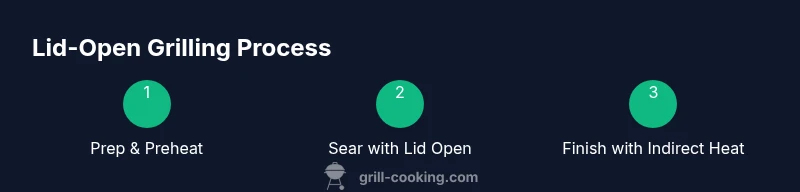
Begin with a clean grill and hot zone. Preheat with the lid open for 5–7 minutes to ensure the grate is hot. Add a light coating of oil to prevent sticking. For thin cuts (steaks, burgers), sear 1–2 minutes per side with the lid open, then flip and move to a cooler spot if needed. For vegetables, place them on the hottest area, turning for even browning without steaming. If the interior needs more heat, a short, controlled close of the lid can finish the cook. End with a rest period to allow juices to reabsorb.
Tools & Materials
- Gas or charcoal grill(Ensure heat source is working and clean)
- Digital meat thermometer(Probe tip stays in the thickest part)
- Long-handled tongs(Grip food safely and avoid flare-ups)
- Grill brush(Clean grate before cooking)
- Heat-resistant gloves(Protect hands during flare-ups)
- Spray bottle with water (optional)(Light flare-up management)
- Oil spray or brush(Prevent sticking and promote browning)
- Thermometer-safe resting rack (optional)(Rest meat without moisture buildup)
Steps
Estimated time: 20-40 minutes depending on food type and thickness
- 1
Prep grill and ingredients
Clean the grate, arrange fuel, and season your foods uniformly. Have a thermometer ready and place all items within easy reach. This minimizes idle time and keeps heat consistent when you start lid-open grilling.
Tip: Preheat the grill with the lid open for 5–7 minutes to establish a hot surface. - 2
Preheat with lid open
Turn the grill to high and allow it to come to temperature with the lid raised. This stage sets up direct heat for a fast sear and reduces cold spots.
Tip: Keep a close eye on flames; have a spray bottle handy for minor flare-ups. - 3
Sear directly on high heat
Place the food on the hottest zone and resist the urge to move it too soon. Allow 1–2 minutes for a crust, then flip and sear the opposite side.
Tip: Use long tongs and avoid overcrowding the grill surface. - 4
Move to a cooler zone
If interior doneness lags, shift pieces to a cooler area of the grate or reduce the heat. This helps finish cooking without burning the exterior.
Tip: Rotate pieces to ensure even browning across all sides. - 5
Monitor internal temps
Check internal temperatures with a probe as you progress. Open-lid methods can heat surfaces quickly, so monitor to prevent overcooking.
Tip: Target interior temps appropriate for the food type (e.g., beef, chicken, fish). - 6
Rest and serve
Remove from heat and allow the meat to rest 5–10 minutes. Resting reabsorbs juices and improves texture.
Tip: Tent loosely with foil to keep warm without steaming the crust.
FAQ
When should I grill with the lid open?
Use lid-open grilling for fast searing, thin cuts, and quick-char vegetables. It’s ideal when you want crispy surfaces and you need quick heat access.
Open lid grilling works best for searing thin cuts and vegetables that need fast color without steaming.
Can I cook a thick steak with the lid open the whole time?
Thick cuts benefit from a quick sear with the lid open, followed by a brief lid-down finish to finish through the center. Do not rely on open ribs for even cooking.
Thick steaks should get a fast sear with the lid open, then finish with the lid closed to reach the right doneness.
Is lid-open grilling safer for flare-ups?
Lid open can help you manage flare-ups since you can quickly see and control the flame. For larger flare-ups, you may use the lid to cut oxygen or move food away from the flame.
Open lid helps you see flare-ups; use quick moves or a momentary lid closure to control flames.
Should vegetables be grilled with the lid open?
Yes, vegetables often do well with the lid open to preserve texture and get crisp edges without steaming.
Vegetables typically benefit from lid-open grilling to keep them crisp and flavorful.
How do I know when to close the lid?
Close the lid when you want to finish cooking with indirect heat, to trap smoke, or to reduce oxygen exposure for thicker cuts.
Close the lid when you need indirect heat or a smoke-rich environment to finish cooking.
What are common mistakes with lid-open grilling?
Overcrowding, leaving the lid open too long, and ignoring heat management are frequent errors. Practice timing and rotate food to prevent scorching.
Common mistakes include overcrowding and not watching heat; rotate and monitor temps closely.
Watch Video
Quick Summary
- Open lid grilling emphasizes direct heat and crust.
- Know when to switch between open and closed lid techniques.
- Monitor heat and flare-ups to prevent drying or charring.
- Practice with different foods to learn timing and temperature cues.
- Rest meat after cooking to maximize juiciness and flavor.