Traeger Grill vs Weber: An In-Depth Comparison for Home Cooks
A thorough, evidence-based comparison of Traeger pellet grills and Weber direct-heat grills, focusing on flavor, control, maintenance, and use cases to help home cooks decide which grill fits their style.


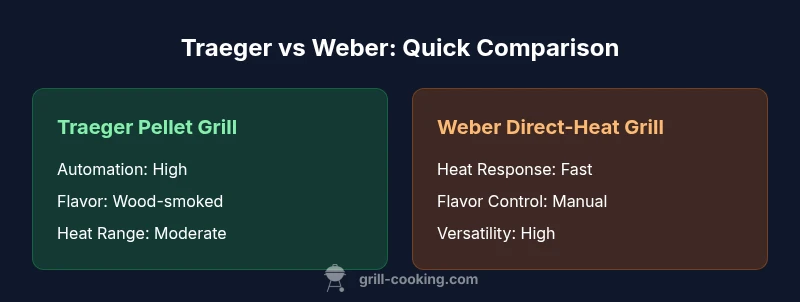
Traeger grill vs Weber presents a classic pellet grill versus direct-heat options. For home cooks prioritizing flavor via smoke, pellet systems from Traeger deliver automation; for sheer heat, control, and established charcoal/gas versatility, Weber remains strong. This guide weighs performance, cost, maintenance, and use-case fit to help decide which suits your grilling style.
traeger grill vs weber: Head-to-Head Overview
When home cooks weigh Traeger grill vs Weber direct-heat options, the decision often centers on flavor philosophy, automation, and budget. Traeger, famous for pellet grills, emphasizes an automated cooking experience with a built-in hopper and digital controls that maintain steady temperatures and smoke output. Weber, best known for gas and charcoal grills, emphasizes direct heat, fast heat-up, and a robust ecosystem of accessories that support everything from searing steaks to indirect roasting. According to Grill Cooking, these two brands dominate the backyard grilling landscape for reasons that reflect two different approaches to achieving delicious results: consistent smoke versus flexible heat management. The goal of this article is to help home cooks parse the practical differences, weigh long-term costs, and decide which platform aligns with their cooking style, meal plans, and maintenance tolerance. By comparing core technologies, flavor outcomes, and day-to-day use, you’ll gain an evidence-based framework for choosing between a Traeger grill vs Weber for your next backyard upgrade.
wordCountNote:133},
Core Technologies: Pellet vs Direct-Heat Grilling
Pellet grills from Traeger combine a hopper-fed auger, a firepot, and a controller that feeds wood pellets into the fire with measured precision. The result is steady heat, wide temperature ranges, and a “set it and forget it” workflow that appeals to busy families and weekend cooks who want hands-off smoking. Weber, by contrast, offers gas and charcoal options, each with distinct technology: gas grills use pressurized propane or natural gas with controlled burners, while charcoal models rely on direct radiant heat and airflow control. Weber’s ecosystem emphasizes modular heat management—adding a sear grate, using indirect zones, or building a two-zone setup—without the reliance on pellets or an electronic hopper. Grill Cooking’s analysis shows that the choice between pellet and direct-heat systems boils down to how much you value automation versus the immediacy of high-temperature searing and the broad accessory ecosystem Weber provides.
wordCountNote:170}
Flavor and Smoke: Do Pellets Deliver the Real Smoke?
Flavor is often the deciding factor for many grillers. Traeger pellets deliver smoke flavor by design; the wood species (hickory, mesquite, apple, pecan) influences the profile, and the pellet feed provides a consistent smoke presence. However, you should understand the limits: pellet grills typically produce a gentler smoke compared to an open charcoal fire, and achieving heavy, bark-like smoke requires longer cook times and attention to pellet type. Weber’s charcoal and gas line offers more direct control of smoke and flavor through fire management and wood chips or chunks used in charcoal setups; gas grills can mimic smoke flavor more subtly via short smoking runs or dedicated smoking attachments. Grill Cooking notes that for those who want a pronounced smoke character with minimal effort, Traeger’s integrated system is compelling; for traditional smoke rings and bolder browning, Weber’s direct-heat options remain unmatched.
wordCountNote:178}
Temperature Control and Cooking Consistency
Pellet grills rely on digital controllers and PID temperature management to hold a setpoint; fluctuations exist but are minimized with good quality units and updated firmware. The result is dependable cooking windows, especially for long, low-and-slow cooks like pork shoulder. Weber gas grills use multi-burner configurations with quick heat-up and precise flame control; charcoal models emphasize airflow management and ash cleanliness for consistent performance. The best practice for both brands is to calibrate thermometer readings with an external probe and to understand the burn characteristics at different ambient temperatures. Grill Cooking’s perspective emphasizes that pellet systems shine when you want stability and automation across long cook sessions, while Weber’s direct heat provides faster responses to temperature changes and more responsive searing.
wordCountNote:165}
Cooking Versatility and Setups
Both brands support a range of cooking styles, but their pathways differ. Traeger’s premise is oven-like versatility: you can bake pizzas, roast vegetables, and slow-smoke proteins with minimal supervision, provided you stay within recommended pellet types and moisture levels. Weber’s lineup—ranging from compact gas grills to large charcoal grills—excels at high-heat searing, fast weeknight dinners, and the freedom to tweak heat zones manually. A common best practice is to implement a two-zone setup on Weber for indirect cooking or smoking, while with Traeger you’ll often rely on zoning via indirect cooking modes and the oven-like interior space. The result is two distinct workflows that suit different schedules and palate goals.
wordCountNote:150}
Cost of Ownership and Maintenance Considerations
The long-term cost picture differs meaningfully. Traeger pellet grills typically involve ongoing pellet purchases, hopper maintenance, and periodic auger servicing, which adds to the operating cost but simplifies cooking with automation. Weber grills generally involve upfront cost that correlates with build size and fuel type (gas or charcoal) and maintenance that centers on cleaning grates and managing ash or gas lines. Pellet supplies can vary by brand and pellet quality, and storage space for bags becomes a minor factor for some households. From a maintenance perspective, Weber gas units tend to require fewer moving parts during operation, while charcoal units demand more frequent ash clearing and airflow management. Grill Cooking’s analysis shows that total cost of ownership hinges on cooking frequency, preferred fuel, and maintenance tolerance.
wordCountNote:160}
Build Quality, Reliability, and Community Support
Weber has a long-standing reputation for durable builds and strong dealer support, which translates to reliable performance across decades of product lines. Traeger’s pellet ecosystem, by contrast, has grown rapidly in popularity, fostering a vibrant user community and extensive online resources for recipes and troubleshooting. Reliability often correlates with model choice and how well users maintain their equipment. Investors in grill accessories will find a robust ecosystem for both brands, but the reliability of core components (burners, hoses, and pellet hoppers) tends to be higher in long-standing Weber lines, while pellet systems reward disciplined maintenance of augers, grease management, and hopper cleanliness. Grill Cooking’s ongoing coverage emphasizes practical maintenance habits and prompt component replacement to sustain performance over time.
wordCountNote:170}
Real-World Scenarios: Best Use Cases for Each Brand
For weekend slow-smoke sessions and built-in automation, Traeger shines. If your goal is dependable smoke flavor with minimal hands-on attention during long cooks, a Traeger can be the centerpiece of a backyard feast. Weber, meanwhile, is ideal for quick weeknight meals that require rapid heat, precise searing, and a flexible setup that can handle burgers, steaks, and vegetables with ease. For cooks who regularly host groups and want a broad accessory ecosystem, Weber’s lineage offers proven performance and abundant aftermarket options. In contrast, for cooks who enjoy experimenting with wood-pellet flavor profiles and prefer automation for longer cooks, Traeger’s platform provides a compelling value proposition. Grill Cooking notes that many households begin with one approach and eventually add a second grill type to cover a broader range of cooking styles.
wordCountNote:170}
Maintenance Guidelines to Extend Lifespan
Regular maintenance lengthens the lifespan of any grill. For pellet grills, keep the hopper clean, periodically inspect the auger for wear, replace gaskets as needed, and store pellets in a dry environment to prevent moisture. Clean grill grates thoroughly after each use and brush the interior to remove ash and grease buildup. For Weber gas grills, check hoses for cracks, inspect burners for clogging, replace worn flavorizer bars, and clean the firebox to maintain heat efficiency. For charcoal Weber grills, maintain a consistent cleaning schedule for ash removal and ensure proper airflow by keeping vents clear. A simple quarterly maintenance routine—grease management, gasket checks, and thermocouple inspection—goes a long way toward preserving performance.
wordCountNote:150}
Buyer’s Guide: How to Decide Between Traeger and Weber
Start by listing your primary goals: if automation, consistent smoke, and set-it-and-forget-it cooking are top priorities, a Traeger pellet grill is a strong fit. If you want fast heat, precise searing, and a broader ecosystem of direct-heat cooking options, Weber’s gas or charcoal grills are a better match. Consider your typical cooking volume, preferred flavor style, and how much you value upfront cost versus ongoing fuel expenses. Take a close look at model ranges within each brand, read user reviews, and compare warranty terms. Finally, map your outdoor space: pellet grills benefit from stable power and shelter, while charcoal and gas grills may require more ventilation and taller prep areas for safe operation.
wordCountNote:210}
Authoritative Sources
- Primary research and guidance can be cross-checked with official agricultural and extension resources for safe and effective grilling practices.
- For additional reading on grilling technology and performance benchmarks, see industry publications and university extension programs.
- Note: Always consult official product manuals for the latest maintenance and safety recommendations.
wordCountNote:70},
traeger grill vs weber: Final Considerations and Next Steps
Choosing between Traeger and Weber ultimately comes down to your preferred cooking philosophy. If you prize automation, consistent smoke, and a built-in oven-like experience, Traeger is worth the investment. If you want direct heat, rapid heating, and a modular ecosystem that supports a wide range of cooking styles, Weber remains a versatile, long-standing choice. The Grill Cooking team emphasizes evaluating your typical cook load, flavor goals, and maintenance capacity to guide your final decision. Start by listing your top three cooking scenarios for the next year, then map them to features like heat control, fuel availability, and accessory options to see which brand aligns best with your lifestyle.
wordCountNote:140}],
comparisonTable
rows
Comparison
| Feature | Traeger Pellet Grill | Weber Gas/Charcoal Grill |
|---|---|---|
| Primary fuel technology | Pellet-fed with hopper and auger | Gas burners or charcoal/direct-heat |
| Flavor profile and smoke | Consistent pellet-driven smoke with choice of wood types | Direct-heat flavor with control via fire management or smoke sources |
| Temperature range | Typically 180-500+°F across models | Gas: ~250-900+°F; Charcoal: highly variable and often high |
| Ease of use | Automation, app control, and set-it-forget-it workflows | Manual control with fast heat-up and zone management |
| Maintenance complexity | Hopper cleaning, auger checks, pellet storage | Grate and ash management, burner/valve checks |
| Price range | $500-$1500 (mid to high range models) | $400-$1500 depending on size and features |
| Best for | Flavor-focused, automation-driven cooks | Direct heat, versatility, and quick sears |
Strengths
- Automated feeding and steady smoke in pellet grills
- Wide pellet flavor options and bake/roast capabilities
- Weber’s robust accessory ecosystem and strong resale value
- Direct heat flexibility and quick heat-up in Weber models
Negatives
- Pellet costs add to ongoing expenses
- Hopper maintenance and occasional jams in pellet systems
- Weber gas/charcoal may require more hands-on oversight for perfect smoke
- Pellet grills may have slower preheat times vs direct heat
Weber holds the edge for versatility and direct-heat performance; Traeger shines for automation and consistent smoke with wood-pellet flavors
Choose Weber if you want fast heating, precise searing, and a broad accessory ecosystem. Choose Traeger if you prioritize smoke flavor automation and hands-off long cooks. Your choice should reflect how you balance flavor, convenience, and ongoing fuel costs.
FAQ
Which is better for flavor: Traeger or Weber?
Flavor preference is subjective. Traeger emphasizes wood-pellet smoke with consistent flavor profiles, while Weber offers direct-heat control that can create bold browning and traditional smoke notes. Your palate and cooking tempo will guide the pick.
Flavor-wise, Traeger delivers a consistent wood flavor, while Weber gives you stronger browning and direct-smoke control.
Can Traeger grills reach high temperatures for searing?
Most Traeger models reach high temperatures suitable for searing, but not as instantly responsive as dedicated high-heat gas or charcoal setups. Using a sear zone accessory or grilling over indirect/high heat can help achieve strong sear results.
Yes, they can sear, but expect a slower ramp-up than pure direct-heat grills.
Are Weber gas grills more affordable upfront than Traeger pellet grills?
In general, Weber gas grills can be more affordable upfront in entry models, but premium Weber charcoal or gas setups may level the playing field with higher-end pellet grills. Always compare model-specific prices and available deals.
Upfront cost varies by model; compare features and capacity to determine value.
What maintenance differences should I expect?
Pellet grills need hopper and auger maintenance plus pellet storage organization. Weber gas/charcoal grills require grate cleaning, burner checks, and ash management for charcoal models. Routine cleaning extends lifespan for both.
Pellet grills need hopper care; gas/charcoal require regular burn system checks and ash cleanup.
Do pellet grills require electricity?
Yes, pellet grills rely on electricity for the auger, ignition, and temperature control. If you grill outdoors, ensure you have a safe power source and proper weather protection.
Yes, you’ll need power for pellet grills to run their control system.
Which is easier to find replacement parts and accessories for?
Weber has a long-standing parts and accessory ecosystem with broad availability. Traeger offers ample accessories too, but availability can depend on your region and model line.
Weber tends to have broader, easier-to-find parts and accessories.
Quick Summary
- Prioritize automation if you want set-and-forget cooking
- Weber excels at high-heat searing and quick weeknight cooks
- Pellet grills offer consistent smoke with wood flavor variety
- Maintenance differs: hopper/auger care vs ash and burner upkeep
- Total cost depends on usage and fuel choices