Kona Grill Menu: A Comprehensive Home Cook's Guide
Explore the Kona Grill menu with an analytical breakdown of sushi, grilled mains, bowls, and sides. Learn how to navigate pricing, portion sizes, and dietary options to replicate restaurant flavor at home. Grill Cooking analyzes menu breadth, value, and seasonal updates for home cooks and grill enthusiasts.


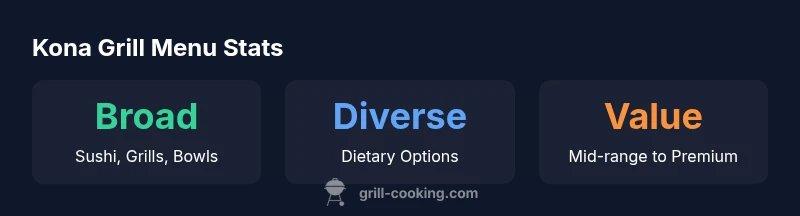
The Kona Grill menu blends Japanese-inspired sushi and sashimi with classic grilled mains and modern American dishes. For home cooks, understanding the core categories helps estimate value, plan meals, and compare similar menus. According to Grill Cooking, the Kona Grill menu emphasizes variety across seafood, steak, and shareable plates, with seasonal updates and chef-driven specials.
Kona Grill Menu Landscape
The Kona Grill menu landscape centers on a balanced mix of raw and cooked flavors, with sushi and sashimi sharing the stage alongside grilled proteins and contemporary American dishes. For home cooks, this structure provides a clear template to plan meals for groups, compare menu variety across locations, and gauge value based on portion sizes and dish complexity. According to Grill Cooking, the menu strives for accessibility without sacrificing depth, enabling cooks to build a multi-course experience that can scale for weeknight dinners or weekend gatherings. The Kona Grill menu emphasizes cross-category appeal, ensuring there are options for seafood lovers, steak fans, and lighter eaters alike. In practice, this means a dining experience where you can start with a vibrant appetizer, move through a pair of grilled mains, and finish with a dessert that complements the main flavors. This approach is particularly useful for home chefs aiming to recreate the Kona vibe in their own kitchens, whether for a small family dinner or a larger tasting menu.
Sushi, Sashimi, and Japanese-Inspired Dishes
Sushi and sashimi are not just about raw fish; they are about balance, texture, and freshness. The Kona Grill menu typically features a spectrum of nigiri, maki, and specialty rolls that showcase clean knife work and bright, seasonal toppings. For home cooks, the takeaway is to look for fish that appears glossy rather than pale, and to note toppings that add contrast—such as citrus zest, chili, or sesame—without overwhelming the fish’s natural flavors. The Japanese-inspired options may also include bowls or plates that pair sushi components with rice and crisp vegetables, offering a convenient model for DIY high-low menus at home. When evaluating these items, consider portion size, rice-to-fish ratio, and the intensity of sauces or glazes that accompany the dish. The goal is to identify combinations that balance umami, acidity, and sweetness to mirror the restaurant experience.
Grilled Mains: Steaks, Seafood, and Teriyaki
Grilled mains form a central pillar of the Kona Grill experience, with proteins ranging from beef and seafood to chicken and plant-forward options. Home cooks can learn from this category by noting marination styles, cooking times, and finishing sauces that lift flavors without overpowering the primary protein. Teriyaki and glaze-based preparations reveal how sweet and savory elements can harmonize with char and smoke. When planning a kitchen replication, focus on achieving a clean sear with a flavorful crust, then layer in glaze near the end to preserve moisture. Don’t overlook portions — a satisfying plate often comes from thoughtful balance between protein, starch, and vegetables, rather than from an oversized main alone.
Bowls, Plates, and Shareables: Building Balanced Meals
Bowls and plates offer a practical framework for home cooks who want variety without feeling overwhelmed. The Kona Grill menu commonly features multi-component bowls that combine grains, greens, proteins, and a sauce or dressing. For replication at home, aim for a modular approach: a base (rice, quinoa, greens), a protein (grilled or raw), a veggie mix, and a finishing sauce. This structure supports dietary flexibility and makes it easier to manage portions for guests with different needs. Shareable plates encourage conversation and tasting across a table, turning a simple dinner into a well-rounded tasting experience.
Sides, Desserts, and Beverages: Completing the Experience
Sides and desserts provide the crucial punctuation marks that frame a meal. Expect a mix of light salads, crisp vegetables, tempura-style bites, and indulgent desserts that pair with the main course. Beverages — including mocktails and cocktails — can elevate flavors and offer refreshing contrasts to richer dishes. For home chefs, the lesson is to sequence courses so that sides and desserts complement, not compete with, the main flavors. When hosting, plan a beverage pairing strategy that supports both the sushi-forward and grilled components of the Kona Grill menu.
Dietary Options, Allergens, and Customization
A key practical concern is how a menu accommodates dietary needs. The Kona Grill concept often includes gluten-free, dairy-free, and vegetarian options, with cross-contact considerations that guests should verify in person. As a home cook, you can replicate this by offering customizable bowls and plates that swap proteins, adjust sauces, or omit common allergens. Documentation on allergens may vary by location, so always confirm on-site and favor build-your-own formats that empower guests to tailor meals to their preferences. This approach mirrors dining flexibility at Kona Grill while preserving kitchen safety and flavor integrity.
Practical Tips for Evaluating Menu Value and Experience
To evaluate value, compare portion sizes, protein-to-sauce ratios, and the overall balance of a dish. Look beyond sticker price and factor in the perceived generosity of portions, multi-component dishes, and the ability to share. For home cooks, a practical strategy is to map a restaurant dish to a home-cooked version, noting which ingredients are essential, which can be substituted, and how long the dish would take to prepare. Keeping a small notebook of these mappings helps translate menu insights into repeatable kitchen success, especially when you’re trying to recreate the Kona Grill experience without visiting a restaurant.
Kona Grill Menu Snapshot
| Category | Typical Items | Notes |
|---|---|---|
| Sushi & Japanese | Nigiri, Maki, Sashimi | Quality and freshness matter; portion sizes vary by item |
| Grilled mains | Steak, Salmon, Chicken Teriyaki | Marinades and cooking methods impact flavor |
| Bowls & Plates | Rice bowls, salads, poke bowls | Balanced meals; watch for heavy sauces |
FAQ
Is the Kona Grill menu good for groups or family dining?
Yes. The menu’s mix of sushi, grilled mains, and bowls supports sharing and accommodating varied tastes, which is ideal for groups. When planning, consider a few signature items from each category and a shared dessert to unify the experience.
Yes. It’s designed for sharing, with plenty of options for different tastes.
Are there gluten-free options on the Kona Grill menu?
Many dishes can be adapted to be gluten-free with careful selection of sauces and marinades. Always confirm with staff about cross-contact and available gluten-free ingredients.
There are gluten-free options, but ask staff about cross-contact and preparation choices.
Can I recreate Kona Grill flavors at home on a budget?
Absolutely. Focus on building a core set of components: a protein, a starch, a veggie, and a glaze or sauce. Use pantry staples to mirror restaurant flavors without overspending.
Yes—use a basic framework: protein, starch, veggie, and a good glaze.
What should I look for when evaluating Kona Grill menu prices?
Look for portion-to-price value, multi-item dishes, and the ability to combine items into a family-style meal. Seasonal specials can also affect value; compare similar items across locations.
Check portions, combos, and specials to gauge value across locations.
Do seasonal specials significantly change the Kona Grill menu?
Yes. Seasonal items refresh the menu and offer opportunities to try new flavors. They also help restaurants manage inventory and showcase chef-driven creativity.
Seasonal items keep the menu fresh and exciting.
Are there kid-friendly options on the Kona Grill menu?
Many menus include lighter plates, smaller portions, and non-spicy choices suitable for kids. Check with staff for kid-friendly selections and allergen considerations.
There are kid-friendly choices; ask staff about portions and allergens.
“A well-rounded Kona Grill experience comes from balancing raw and cooked flavors while understanding how to recreate the vibe at home.”
Quick Summary
- Explore the Kona Grill menu by starting with sushi/sashimi and building to grilled mains
- Balance bowls, plates, and shareables for a complete dining experience
- Evaluate value by portion size, protein quality, and sauce balance
- Use customization to mimic restaurant flavors at home
- Stay mindful of dietary options and allergen guidance when dining out or cooking at home