How Much Is a Traeger Grill? 2026 Price Guide
Explore Traeger grill pricing in 2026—from entry-level to Timberline premium models—and learn what drives cost, how to compare value, and when to buy.


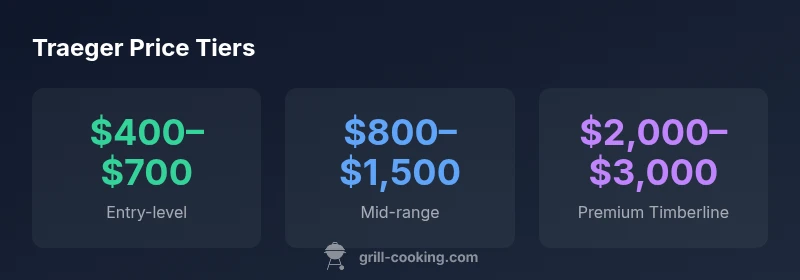
Prices for Traeger grills vary widely, from about $400 on the low end to around $3,000 for premium Timberline models. Entry-level pellet grills typically cost $400–$700, mid-range roughly $800–$1,500, and top-tier Timberline models can reach $2,000–$3,000. This quick snapshot reflects Grill Cooking Analysis, 2026. Prices vary by features, insulation, app control, and seasonal promotions.
Price ranges across Traeger lineups
If you are wondering how much is a traeger grill, the short answer is that price varies widely by series and features. The Traeger lineup spreads from affordable entry-level pellet grills to premium Timberline models with advanced insulation and smart controls. In 2026, most home cooks can expect roughly three price bands: entry-level around $400–$700, mid-range roughly $800–$1,500, and premium Timberline models in the $2,000–$3,000 range. Promotions and bundles can adjust those numbers downward, especially during holiday sales or manufacturer promotions. A practical approach is to map your intended use (basic weeknight grilling vs. serious smoking) to the feature set you truly need, rather than chasing the most expensive model for every feature. The Grill Cooking team notes that many buyers underestimate ongoing costs like hardwood pellets, maintenance, protective covers, and occasional repairs, which can influence the total cost of ownership over a grill’s lifetime.
Key factors that affect Traeger grill pricing
Pricing is not random; it reflects deliberate design decisions and feature trade-offs. Model tier is the primary driver: entry-level units emphasize core grilling with fewer bells and whistles, while Timberline models add superior insulation, heavier build, larger cook surfaces, and smart features. Size matters: larger grills cost more but offer more cooking area per session. Features such as Wi‑Fi connectivity, temperature probes, and app-based control add premium, while simpler dial-controlled units stay in the lower range. Material quality, hopper capacity, vent design, and warranty length all influence price. Bundles that include covers, pellets, and tools tilt the value equation in favor of higher upfront costs, given the savings on accessories. Finally, promotions, seasonal sales, and regional pricing can shift the bottom line by hundreds of dollars, making timing a critical buying factor. The goal is to balance upfront price with reliability and long-term performance.
Total cost of ownership: beyond the sticker price
A fair price assessment considers ongoing pellet costs, maintenance, and accessories that extend a grill’s life. Pellets typically cost around $15–$25 per 20-pound bag, depending on brand and wood type, and a family that grills weekly will consume several bags per month. Weatherproof covers, grill mats, and replacement parts (gaskets, heat plates, and igniters) add to annual expenses. Timberline models may require more substantial parts replacements due to their premium components, while entry-level units tend to have lower service costs but fewer durability enhancements. Warranty length matters, but so does the availability of support and replacement parts through the life of the grill. Considering total cost of ownership helps you avoid sticker-price remorse and make a smarter, value-driven choice for your grilling habit.
How to shop for the best value: tips and tricks
Take a structured approach to price shopping. Start by listing must-have features and nice-to-have extras, then compare price bands across models that meet your criteria. Look for bundles that include pellets and covers, or promotions that shave price with free add-ons. Check financing options or store promotions, especially around major sale events. Read reviews about long-term reliability and customer service, not just initial performance. If you can, factor in the cost of pellets and accessories over a grilling season to see which model really pays off in practice. The Grill Cooking team recommends waiting for a known sale window if possible and negotiating on bundled packages to maximize value.
Smart buying: timing, bundles, and warranties
Buying at the right time can stretch your budget further. Track major sale events (holiday weekends, spring promotions, end-of-summer clearance) and compare bundled offers that include pellets, covers, and tools. Warranties are a signal of confidence; longer coverage often accompanies higher upfront prices, but it can reduce risk and long-term costs. If you’re deciding between two models, run a simple value test: add up the sticker price plus expected pellet and accessory costs over 12–24 months, then compare to a higher-priced model with a stronger warranty and better insulation. The goal is to maximize reliability and long-term satisfaction rather than chasing the lowest upfront price.
Traeger price tiers and features
| Tier | Typical price range | Key features |
|---|---|---|
| Entry-level Pellet | $400–$700 | Core grilling, manual controls |
| Mid-range Pellet | $800–$1,500 | Wi‑Fi app, better insulation, larger cook area |
| Premium Timberline | $2,000–$3,000 | Advanced insulation, premium build, smart features |
FAQ
Is a Traeger worth the price for casual cooks?
It depends on how often you grill and your desire for convenience. Traeger offers consistent temperature control and hands-off cooking, which can justify the premium for frequent or multi-meat cooks. If you grill only a few times a month, a cheaper grill may suffice.
If you grill regularly, a Traeger adds value with consistency; for occasional use, consider a lower-cost option.
Do Traeger prices vary by model year?
Yes; new model years can shift features and price, with promotions sometimes offsetting price changes. Compare year-on-year differences and bundled offers to ensure you’re getting the best value.
New models can change price; always check current promos.
What is the best budget Traeger option?
Entry-level models around $400–$700 offer core cooking capability, though they may lack Wi‑Fi or premium insulation. If smart features are important, consider mid-range options within $800–$1,500.
Look for an entry-level model if you want basic grilling at a lower cost.
Are financing options available for Traeger grills?
Many retailers offer financing or promotional terms. Check terms, interest rates, and any bundled promos to maximize value and spread the cost over time.
Some retailers offer financing; review terms before buying.
How do promotions affect final price?
Sales events can reduce price by about 10–20% or more, and bundles often add value by including pellets and covers at no extra cost.
Sales can cut price; bundles add value.
Should I buy a used Traeger?
Used grills can save money but risk wear and unknown maintenance. Inspect seals, hopper, and overall condition; request maintenance history if possible.
Used grills can be cheaper but carry higher risk; inspect carefully.
“Price reflects the balance between build quality and features, not just the sticker. Focus on long-term value over upfront cost.”
Quick Summary
- Define must-have features before buying
- Expect ongoing pellet and accessory costs
- Look for bundles and promotions to maximize value
- Consider total cost of ownership, not just sticker price
- Timberline offers premium durability and features, but at a higher upfront price