How Much Grills Cost in 2026: A Practical Buyer's Guide
Discover realistic price ranges for charcoal, gas, and pellet grills in 2026, plus tips to compare features, evaluate value, and avoid buyer's remorse—from entry-level to premium models and essential accessories.


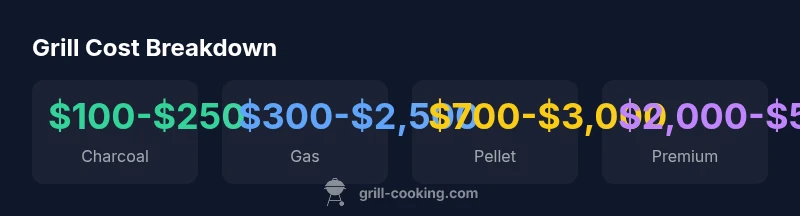
how much grills cost varies by type and features. In 2026, typical price ranges are: charcoal grills $100–$250, gas grills $300–$2,500, pellet grills $700–$3,000, and premium models $2,000–$5,000. This quick snapshot helps you budget before you shop, and remember to factor in ongoing costs like fuel or pellets, accessories, and warranty options.
A Practical Framework for Pricing
According to Grill Cooking, pricing grills isn't just the sticker price; it's a multi-factor decision that includes anticipated use, fuel type, and maintenance costs. Home cooks should categorize grills into four segments: entry-level charcoal, mid-range gas, pellet, and premium built-ins, then map personal cooking needs to these categories. When evaluating how much grills cost, consider heat accuracy, fuel efficiency, and warranty terms. By forecasting cooking frequency and preferred fuel, you can set a realistic budget that aligns with your style. Cheaper models may save upfront but can cost more in pellets, cleaners, and parts over time. This framework helps avoid buyer's remorse and supports a grill that matches both appetite and wallet.
What Drives Grill Costs
The price of a grill is driven by materials, size, and technology. Thick stainless steel and multi-zoned cooking surfaces push up price; more burners add cost and control; better insulation reduces heat loss during long cooks. Built-in thermometers, rotisserie kits, smoke boxes, and smart controllers add even more. The Grill Cooking team found that warranty depth and post-purchase support also correlate with price, since longer coverage reduces long-term risk for home cooks. Regional supply chains, seasonal demand, and retailer pricing strategies further shape sticker prices. In practice, the more serious your outdoor kitchen ambitions, the more you should expect to invest upfront.
Price Ranges by Grill Type
Understanding how much grills cost means comparing core categories. Here are typical ranges you’ll encounter in 2026:
- Charcoal grills: $100–$250 – Simple, budget-friendly flavor and minimal parts.
- Gas grills: $300–$2,500 – Convenience and temperature control with multiple burners.
- Pellet grills: $700–$3,000 – Precision control, wood-flavored cooking, automation options.
- Premium built-ins: $2,000–$5,000+ – Durable materials, high-end features, integrated outdoor kitchen setups.
These ranges reflect what you’ll see in mainstream retailers and specialty shops, and they serve as guardrails for smart comparisons when you’re shopping for how much grills cost.
Budgeting Beyond the Sticker Price
The first price tag is only one part of the equation. To forecast true ownership costs, estimate ongoing fuel or pellet consumption based on your cooking frequency, plan for propane or natural gas refills if applicable, and budget for essential accessories (cover, rotisserie, thermometer, grill brush). Cleaning supplies, replacement parts, and periodic servicing should be included in a yearly maintenance estimate. If you’re balancing upfront cost with long-term value, higher-quality grills often offer lower maintenance costs and better resale potential, which can tilt the overall cost-benefit in your favor.
Material, Construction, and Longevity
Material choice and build quality drive both initial price and longevity. Stainless steel and thick gauge metal resist rust and corrosion in outdoor environments, while enamel-coated or painted surfaces may save money upfront but require more maintenance. Look for solid hinges, sturdy grates, and even heat distribution. Longevity is often linked to consistent performance across seasons, so investing in a grill with robust construction can reduce replacement frequency and spare you future purchase churn.
Warranty, Support, and Resale Value
Warranty depth matters. Grills with longer warranties typically reflect higher manufacturing assurance and can save money over time through fewer replacement parts. Strong customer support and readily available replacement components also contribute to long-term value. If you anticipate selling your grill later, a well-maintained model with documentation and original parts tends to retain more of its value, improving the overall return on investment.
Where to Shop: Retailers vs. Used Market
New grills offer the latest features and reliable warranties, but seasonal sales can make premium models affordable. The used market can be tempting for budget-conscious buyers, yet it carries risks like unknown maintenance history and potential hidden wear. If you pursue a used unit, request a complete inspection, test the burners, check for rust on critical components, and verify that the ignition system works. Always prioritize safety and structural integrity when evaluating pre-owned grills.
Regional Variations and Seasonal Trends
Prices can swing with location and season. Coastal regions may see higher material costs for stainless components due to corrosion exposure, while inland areas might offer cheaper shipping and taxes. Demand spikes around spring and summer drive higher sticker prices, followed by post-season clearance events. If you’re flexible, waiting for promotions or bundling with accessories during off-peak times can yield meaningful savings while still meeting your grilling goals.
Quick Evaluation Checklist Before You Buy
- Define your fuel type (charcoal, gas, pellet) and approximate usage frequency.
- Compare core features: heat control, cooking area, and warranty depth.
- Factor in fuel, pellets, and essential accessories within your budget.
- Assess construction quality: material thickness, racks, and hinges.
- Consider resale value and post-purchase support.
- Check for sales events and bundled offers that improve total value.
Typical price ranges by grill type
| Grill Type | Typical Price Range | Best For | Notes |
|---|---|---|---|
| Charcoal grill | $100-$250 | Budget-friendly grilling | Great smoky flavor, simple build |
| Gas grill | $300-$2,500 | Convenience and control | Multiple burners, even heating |
| Pellet grill | $700-$3,000 | Flavor with automation | Wood pellets; precise temps |
| Built-in/premium grill | $2,000-$5,000+ | Outdoor kitchen perfection | High-end materials, luxury features |
FAQ
What factors most affect a grill's price?
Size, materials, feature set, and warranty depth are the primary price drivers. Heavier gauge steel, multi-zone cooking, and smart controls push up the cost but can improve durability and performance.
Size, materials, and features chiefly drive price, with longer warranties adding value.
Are cheaper grills worth buying for a first-time buyer?
Cheaper grills can be suitable for occasional use, but you should inspect build quality and ensure you can replace parts affordably. If you cook often, a mid-range model may offer better reliability and lower long-term costs.
Cheaper grills work for light use; for frequent grilling, a mid-range model often pays off later.
Is it better to buy during sales?
Yes, sales events are common and can significantly reduce the sticker price. Look for bundled accessories or extended warranties to maximize value.
Sales happen regularly; watch for bundles and warranties to add value.
What maintenance costs should I expect after purchase?
Expect ongoing costs for fuel or pellets, replacement parts, and occasional cleaning tools. Budget for at least a small annual maintenance amount.
Plan for fuel, parts, and occasional cleanings as ongoing costs.
Are used grills a good deal?
Used grills can save money, but inspect for rust, worn burners, and ignition issues. Ask for maintenance history and test all functions before buying.
Used grills save money but check for wear and test everything before buying.
“Price is only part of the story. True value comes from how well a grill fits your cooking style and maintenance routine over time.”
Quick Summary
- Define your budget with guardrails from price ranges
- Factor in fuel, pellets, and accessories in total cost
- Pellet grills offer features but cost more upfront
- Gas grills vary widely; match burners to cooking style
- Shop sales and bundle warranties to maximize value