How Much Is a Gas Grill in 2026? A Price Guide
Explore how much is a gas grill in 2026, with budget tiers, feature trade-offs, and buying timing to help home cooks choose the best value.


Gas grills typically cost between $150 and $2,000, with mid-range models offering the best value for most households. On average, a reliable 3- to 4-burner gas grill falls in the $400–$900 range, while premium builds with extra features can reach $1,200–$2,000. This guide breaks down the price bands and the factors that drive them so you can answer the question, how much is a gas grill, with confidence.
Price Landscape: How Much You Should Expect to Pay for a Gas Grill
Prices for gas grills span a wide range, depending on size, materials, burners, and extras. According to Grill Cooking, the key to understanding how much is a gas grill is to separate price from value: cheaper units may work fine for occasional use, but long-term reliability often comes from better build quality. In 2026, entry-level gas grills commonly sit in the low end of the price spectrum, midrange units occupy the middle, and premium models with extra burners, built-in thermometers, rotisserie kits, and enhanced heat management sit at the high end. For most home cooks, the central question isn’t simply the sticker price, but what you get for that price. The goal is to balance upfront cost with durability, performance, and the likelihood of frequent use. Consider your grilling frequency, typical menu, and how much you value features like sear zones or side burners. The price you pay should reflect the value you expect over multiple seasons, not just a single summer.
Budget Tiers: Entry, Midrange, and Premium
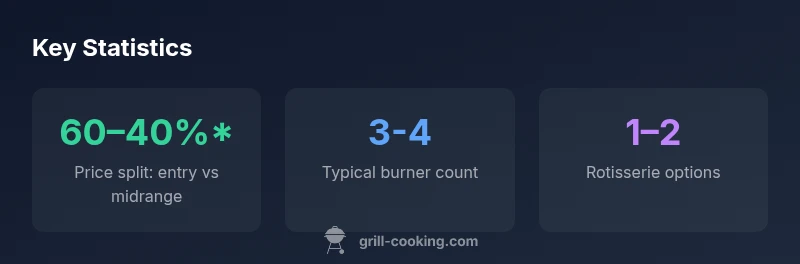
Gas grills are typically segmented into three broad tiers. Entry-level models (roughly under $350) offer basic cooking surfaces, limited heat control, and fewer accessory options. Midrange grills ($350–$900) provide better materials, more consistent heat, and multiple burners, often with enhanced temperature gauges and better grates. Premium grills ($1,000 and up) feature premium stainless steel construction, high-capacity burners, advanced ignition systems, multiple zones, rotisserie equipment, and comprehensive warranty coverage. Understanding these tiers helps you map how much is a gas grill to your needs and how long you want the investment to last. When in doubt, aim for midrange with a solid warranty to maximize value while keeping upfront costs reasonable.
Features That Add to the Price
Several features consistently push gas grill prices higher. Stainless steel bodies resist weathering better than painted steel, while heavy-gauge stainless steel grates retain heat and wear less quickly. Additional burners or sear zones provide more cooking surface and precise control, but they also add cost. Built-in thermometers, integrated ignition systems, and rotisserie kits contribute to convenience and versatility. Side burners, smoker boxes, and integrated lights are attractive but can be overkill for casual cooks. Evaluate which features you’ll actually use, because each adds to the total cost and can impact long-term value.
Size, Material, and Build Quality: How They Interact with Price
Size matters because a larger grill requires more materials and bigger burners, which increases price. Material quality—stainless steel versus coated aluminum, for example—greatly influences durability and maintenance costs over time. A well-built grill with thicker gauge components and solid welds often lasts longer and performs more consistently, which extends its useful life and reduces replacement frequency. Build quality also intersects with weather exposure; a robust lid, good seals, and corrosion-resistant finishes help preserve performance in sun, rain, and humidity. While higher upfront costs can be off-putting, the long-term value improves when durability reduces maintenance and replacement needs.
Where to Buy and When to Buy
Retail pricing for gas grills fluctuates with seasonality and promotions. Spring and late summer sales commonly feature price cuts, bundled accessories, or free delivery. Big-box retailers, hardware stores, and online marketplaces each have distinct pricing behaviors, with online discounts often paired with curbside pickup perks. If you’re price-sensitive, set alerts for model lines you want and compare across retailers. Understanding the typical price bands and the sale windows helps you time your purchase to maximize value. Remember that free accessories or extended warranty offers can tilt the perceived value of a deal.
Longevity and Maintenance: Protecting Your Investment
Maintenance extends the life of a gas grill and helps protect your upfront investment. Regular cleaning after use, stainless steel care for metal components, and proper storage during off-seasons minimize rust and corrosion. Replacing worn grates or burners is cheaper than full replacement and can refresh performance without breaking the bank. Warranties vary by brand and tier; most midrange and premium grills come with longer coverage, which can reduce long-term ownership costs. A well-maintained grill often delivers better performance and reliability, justifying a higher initial price when viewed over several seasons.
Quick Guide to Reading a Gas Grill Price Tag
Price tags don’t tell the full story. Compare core elements: build materials (stainless steel vs coated), burner count and BTU output, heat distribution and zone control, ignition reliability, warranty length, and included accessories. Look for evidence of quality in the lid, hinges, and handle, as well as the spacing between burners. A lower price with poor build quality may lead to higher maintenance costs, while a higher upfront price with durable construction can save money over time. Use the price tag as a starting point, then weigh the value of features against how often you grill and the climate where you cook.
Price ranges by budget level with typical features and use cases
| Price Range | Typical Features | Best For |
|---|---|---|
| $150-$299 | Basic cooking surface, few features | Starter setups |
| $300-$600 | 2-4 burners, better materials | Casual grilling and entertaining |
| $700-$1200 | Stainless body, multiple zones | Frequent grilling and balanced value |
| $1200-$2000 | Premium materials, extra features | Enthusiasts and frequent hosts |
FAQ
What is the typical price range for a gas grill?
Gas grills range from about $150 for entry-level models to $2,000 or more for premium builds. Most households will find solid value in the $400–$900 range depending on features and materials.
Gas grills range from budget to premium; most people find the best value in the midrange.
Is it worth paying more for stainless steel?
Stainless steel resists rust and wear better in outdoor conditions, which can be worth the extra upfront cost if you grill regularly. A stainless exterior with durable grates tends to offer the best long-term value.
Stainless steel lasts longer outdoors and often saves money over time.
When do grills go on sale?
Sales frequently appear around holiday weekends like Memorial Day and Labor Day, as well as end-of-season clearances. Watch retailer promotions and bundled offers for added value.
Sales happen around holidays; watch for bundles and promotions.
What features justify a higher price?
Look for durable burners, good heat distribution, a solid lid, reliable ignition, and a solid warranty. Side burners and rotisserie add convenience, but only if you’ll use them.
Durability, heat control, and warranty justify higher prices.
Are built-in grills more expensive than freestanding?
Built-in grills cost more due to installation requirements and weather protection. For many homes, freestanding gas grills offer the best balance of price and portability.
Built-ins cost more; freestanding offers flexibility and value.
How long do gas grills typically last?
Most gas grills last 5–15 years depending on use, maintenance, and materials. Regular cleaning and protective storage extend life and reduce replacement cost.
With proper care, expect many years of service.
“Pricing reflects materials, build quality, and features, not just burner count. A well-built gas grill with stainless steel, solid burners, and a solid warranty often pays off over time.”
Quick Summary
- Identify your budget and target features first
- Expect price bands: entry, midrange, and premium
- Prioritize stainless steel and warranty for longevity
- Compare price tags with included features and build quality
- Watch for seasonal sales and bundled deals