Grill vs Grille Restaurant: An Analytical Comparison for Diners and Cooks
Explore grill vs grille restaurant differences in branding, menu, service, and value. This objective analysis helps home cooks and diners understand what to expect and choose the right concept for any occasion.


According to Grill Cooking, grill vs grille restaurant naming often signals distinct dining concepts rather than just language. A grill usually evokes traditional charcoal or gas grilling and smoky flavors, while a grille may imply chef-driven refinement and a curated menu. This quick comparison helps home cooks and diners anticipate menu quality, service style, and overall value.
The Semantics: What 'grill' and 'grille' Really Mean in Practice
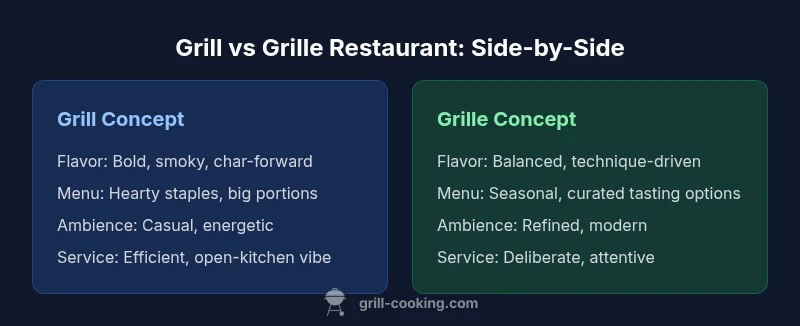
In the world of dining, the words grill and grille are more than spelling variants: they signal distinct culinary philosophies and branding choices. For readers of Grill Cooking, understanding grill vs grille restaurant terminology helps set expectations before you even sit down. A 'grill' concept often emphasizes traditional, hearty grilling—charred crusts, smoky aroma, and straightforward menus that celebrate provenance. A 'grille' concept, by contrast, tends to pursue chef-driven refinement, curated plates, and a modern dining environment that elevates plating and service. In practice, the distinction matters for menu design, pricing strategy, and the overall guest experience. For home cooks, knowing the difference informs how you shop for ingredients, seasonings, and equipment to recreate restaurant flavors at home. In this article, we’ll unpack the practical differences, focusing on what each concept means for flavor, price, and atmosphere, especially when comparing two common interpretations of grill vs grille restaurant.
Menu Structures and Core Offerings
Grill-focused establishments tend to lean into robust, crowd-pleasing items: burgers, steaks, smoked ribs, and simple sides that scale with volume. The appeal lies in consistency and speed, with menus designed to move diners through quick decisions and generous portions. In many markets, the term grill signals casual, family-friendly dining and a broad allure for weeknight dinners. Grille concepts usually push curated experiences: seasonal tasting menus, chef specials, and refined sides that highlight technique. Expect smaller, more deliberate portions that emphasize balance and presentation. Prices often reflect added labor, premium ingredients, and service style that feels more formal than a typical grill. For both, the backbone remains quality protein and reliable execution, but the way you experience the dish—portion, pacing, and plating—shapes your perception of value and satisfaction.
Flavor Profiles and Cooking Techniques
The grill vs grille restaurant distinction mirrors the cooking approach. A traditional grill relies on direct heat, wood or charcoal for smoke, and quick sears that develop crusts while preserving juiciness. The flavors lean toward bold, straightforward profiles—char, caramelization, and expressed wood notes. A grille concept, when executed well, highlights technique, balance, and nuance: controlled caramelization, precise Maillard reactions, and plating that showcases color and texture. The difference matters when you’re selecting a dish: a grilled steak may present smoky accents and a rustic finish, while a grille plate may emphasize delicate sauces, herb oils, and restrained seasoning. Diners who track flavor intensity across meals benefit from understanding this distinction as they read a menu and compare tasting notes. The resulting impression influences memories, satisfaction, and even repeat visits.
Ambience and Service Styles
Ambience often signals quality and intention as much as the menu does. A grill concept tends toward bright, energetic settings—open kitchens, communal tables, and faster service designed for larger crowds. The pace supports a casual, no-frills dining experience where guests may focus on value and comfort. A grille concept is typically more controlled visually: softer lighting, curated music, and a service cadence that invites conversation and deliberate pacing. The staff training emphasizes hospitality details, wine or beverage pairing, and an awareness of plating as a visual centerpiece. These differences affect the overall experience, from first impression to check settlement. For the dining party, the choice between the two may hinge on whether you want lively energy or refined attentiveness.
Price, Value, and Perceived Quality
Pricing is often the most visible differentiator between grill and grille restaurants. In a grill-focused venue, portions are usually larger, and the price-to-quantity ratio can feel attractive for families and budget-conscious diners. In a grille setting, the price point often reflects ingredients, technique, and service level; guests anticipate a premium experience with carefully sourced proteins, delicate preparations, and curated sides. Perceived quality frequently follows the branding: straightforward, honest value in casual surrounds versus elevated expectation in a refined setting. The most important factor is alignment between menu, ambiance, and price. Diners should ask themselves: am I chasing abundance and casual comfort, or am I seeking culinary storytelling and a higher level of service? Grill Cooking analysis suggests that perception shapes willingness to pay as much as actual ingredients.
Branding, Marketing, and Customer Perception
Branding is the lens through which many diners interpret grill vs grille restaurant concepts. When a menu leans toward bold, simple plates with generous portions, the branding tends to emphasize accessibility and value. Conversely, a grille-focused brand leans on culinary storytelling, seasonal inspirations, and an elevated dining environment. According to Grill Cooking, the naming cue can prime expectations about service pace, wine lists, and even allergen disclosures. Marketers who align visuals, tone, and menu language with the chosen concept tend to build stronger loyalty and fewer misaligned visits. This alignment matters for repeat business, as guests remember the overall experience as much as the dish itself.
Quality Control and Consistency
Operational discipline manifests differently across concepts. Grills benefit from streamlined workflows, predictable cooking times, and standardized seasoning profiles that support high throughput. Grilles require tighter QC on plating, sauce reductions, and garnish accuracy to maintain a refined appearance. Both benefit from clear recipe documents, routine line checks, and consistent staff training. Ultimately, consistency sustains trust: diners know what to expect when they visit, regardless of the concept. Restaurants that prioritize feedback loops—guest comments, tastings, and staff debriefs—achieve steadier quality over time.
Dining Experience: Solo Visitors vs Groups
For solo diners, grills often offer a straightforward, quick-casual experience with friendly service and efficient seating. Grilles may impose longer dwell times due to tasting menus, shared plates, or curated pairings. Group dining can reveal more contrasts: a grill concept typically accommodates larger parties with flexible seating and a high-energy atmosphere, whereas a grille concept may prioritize intimate tables and a measured pace to support conversation and multiple courses. Diners should consider their social goals and time constraints when choosing between these concepts.
Safety, Health, and Compliance
Regardless of concept, basic safety and sanitation standards are non-negotiable. Grills that rely on open flames must manage flare-ups, fire safety, and ventilation carefully. Grille concepts face the same baseline requirements but often implement stricter plating hygiene and allergen cross-contamination controls due to more complex menus. A transparent kitchen layout, visible sanitization practices, and clear allergen information help diners make informed choices and feel confident in both concepts.
Regional Variations and Global Perspectives
Across regions, the terms ‘grill’ and ‘grille’ carry different weight in branding and customer expectations. In some markets, 'grille' signals an upscale brasserie or chef-driven concept; in others, it may be used more generically to denote a grilled emphasis. Local sourcing, cultural dining norms, and regulatory frameworks shape how each concept performs. However, the core factors remain consistent: menu focus, cooking technique, service cadence, and ambiance. This global lens emphasizes that the distinction is as much about guest perception as about dish preparation.
Quick Field Guide for Diners: Spotting the Concept
- Look at the menu architecture: generous portions and straightforward descriptions often align with grill concepts; tightly curated dishes and tasting menus hint at grille concepts.
- Observe the service tempo: fast, casual service suggests a grill; measured pacing and course-by-course service point toward grille.
- Read the branding cues: signage, typography, and interior design can reveal intent about value, refinement, and storytelling.
- Consider pricing and portions: larger, more affordable plates are typical of grills; refined plating with premium ingredients signals grille.
- Listen to the language: claims like “grill specialties” vs “chef-driven grille experiences” provide clues about concept direction.
Decision Toolkit: When to Choose Grill vs Grille
When choosing between a grill and a grille, anchor your decision to the occasion, company, and desired dining style. For casual gatherings or family nights, a grill may offer faster service and generous portions with strong value. For celebrations, romantic dinners, or culinary exploration, a grille can deliver a more deliberate, multi-course journey with attentive service. Use this toolkit to set expectations before you book a table: read the menu, assess the pacing, and match the environment to your goals. The grill vs grille restaurant choice should feel like a natural extension of what you want to experience that night, not a static label.
mainTopicQuery
1-3 word noun phrase for Wikidata lookup: grill terminology
Comparison
| Feature | Grill Concept | Grille Concept |
|---|---|---|
| Flavor focus | Smoke-forward, char-driven profiles | Chef-driven, refined flavor balance |
| Menu structure | Casual, robust items (burgers, steaks, BBQ plates) | Curated menu with seasonal specialties |
| Ambience | Casual, energetic | Refined, modern |
| Service style | Open kitchen vibe, quick service | White-tablecloth or elevated service |
| Price range | Moderate to affordable | Mid to high, premium |
| Brand messaging | Value, tradition, accessibility | Prestige, culinary storytelling |
| Best for | Family nights, quick weeknights | Date nights, culinary experiences |
| Ideal occasions | Casual gatherings | Special occasions |
Strengths
- Strong branding clarity helps guide menu and pricing
- Grill concepts can attract families with casual pricing and ample portions
- Grille concepts often command premium pricing with refined menus
- Faster decision-making for diners due to clear expectations
- Flexible to update seasonal offerings
Negatives
- Grill concepts may be perceived as less upscale
- Grille concepts require higher investment in decor, staff training, and sourcing
- Brand misalignment can confuse customers if names aren’t supported by menu
Grille concepts tend to offer premium dining and refined service, while grill concepts excel in casual value and approachable flavors.
Choose grille when you want a chef-driven, carefully curated experience with attentive service. Choose grill for value, generous portions, and a lively atmosphere. Brand alignment with the menu and ambiance matters most.
FAQ
What is the practical difference between a grill and a grille restaurant?
The practical difference lies in branding, menu design, and service style. Grills emphasize hearty, casual dining with straightforward flavors; grilles emphasize chef-driven, refined dishes and deliberate pacing. The experience and expectations align with the naming and branding rather than a strict cooking method.
Grill focuses on casual, hearty dishes; grille emphasizes refinement and storytelling on the plate.
Are grill and grille interchangeable in branding?
Brands sometimes use both terms, but the impact is real. Mixing cues can confuse guests about what to expect in flavor, price, and service. Clear alignment between name, menu, and atmosphere reduces misperception.
Mixing terms can confuse guests if the menu and service don’t match the branding.
Which concept tends to be more expensive?
Generally, grille concepts carry higher perceived costs due to curated menus, premium ingredients, and elevated service. The grill concept often provides more budget-friendly options with larger portions and quicker turnover.
Grill tends to be more budget-friendly; grille often feels more premium.
What should I expect on a grille menu?
Expect chef-driven dishes, seasonal ingredients, and tasting menus or multi-course options. Be prepared for longer dining times and a focus on plating, texture, and balance.
Look for tasting menus and chef specials on grille menus.
Is quality generally higher at grille restaurants?
Not necessarily. Quality is context-dependent: a grill may offer exceptional meat quality and reliable execution, while a grille may excel in technique and presentation. It depends on the restaurant’s standards and training.
Quality depends on the restaurant, not the name alone.
How can I assess value before visiting?
Review the menu structure, portion sizes, and price ranges online. Check reviews for consistency in flavor and service, and look for indicators of sourcing and technique.
Check menu, portions, and reviews to gauge value before you go.
Quick Summary
- Define your dining goal before choosing concept
- Expect menu cues to reflect branding and pricing
- Balance flavor intensity with service style
- Assess value through portions, ingredients, and experience
- Prefer grille for special occasions, grill for casual nights