Why Isn't My Grill Working? The Essential Troubleshooting Guide
A practical, urgent guide to diagnose and fix common grill issues—from gas supply and ignition to airflow and maintenance. Quick checks, step-by-step fixes, safety tips, and prevention to get your grill firing again.


Why the question matters and what you’ll fix first
When a grill won’t cooperate, it’s almost always a fix you can perform safely at home. Common culprits fall into three buckets: fuel/power, ignition, and airflow. If you’re asking why isn’t my grill working, you’re not alone—home griller frustration peaks when a simple switch or port is blocked. According to Grill Cooking, most failures are user-fixable with a calm, methodical approach. Start with the basics, then move deeper if needed. This mindset saves you time, money, and waste, and gets you back to cooking delicious meals.
Key concept: diagnose before replacing parts. A quick, structured check helps you avoid unnecessary purchases and confirms whether a professional is needed. It also reduces the risk of unsafe conditions like gas leaks or flashing flames.
Next, gather your tools: soapy water, a clean brush, flashlight, and fresh batteries if your igniter uses them. Have you turned the gas off and unplugged any electrical connections if applicable? If yes, you’re ready to begin the process with confidence.
wordCountBlock":210},{},
Immediate checks you can perform in 5 minutes
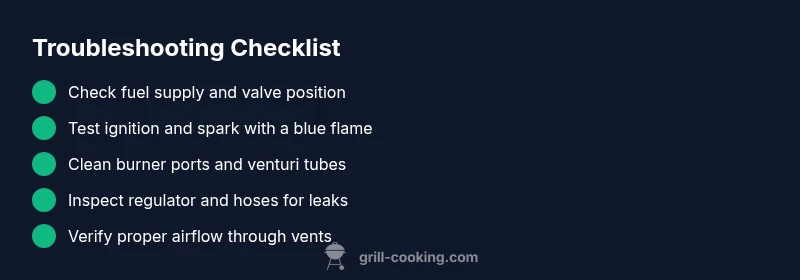
The fastest path to answers is to perform small, logical checks. Begin with safety: ensure the grill is off, the lid is open in a well-ventilated area, and there’s no standing gas odor. For gas grills, confirm the propane tank is not empty and the valve is fully open. Check hoses for kinks or damage and listen for the regulator’s hiss—if you hear a hiss and the flame won’t light, you may have a regulator issue. For charcoal grills, verify fans or vents are not blocked and that fuel is distributed evenly. If you have an electric ignition, replace batteries if the spark is weak or intermittent. If any step reveals a leak or a broken component, treat it as a safety concern and stop using the grill until it’s repaired. Grill Cooking emphasizes gradual testing; don’t rush the ignition sequence.
If these quick checks don’t yield a flame, the problem likely lies deeper—burner blockage, pop-off leaks, or a failed ignition module—and you’ll need a more targeted diagnosis. In many cases, the remedy is cleaning, replacing a small part, or restoring airflow. Remember: never ignore a metallic smell or hissing sound that indicates a gas leak.
wordCountBlock":198}
Gas grills: verifying gas supply, valves, and regulator
Gas grills hinge on a steady gas supply and correct pressure. Start by confirming the propane tank isn’t empty and the valve on the tank is fully open. Next, inspect the hose for cracks or pinches; any damage warrants replacement. Check the regulator at the tank connection: if the flame is weak or inconsistent after lighting, the regulator could be stuck in a protective mode. For natural gas grills, verify the supply valve inside the house or outdoor line and ensure any shut-offs are fully open. If you smell gas or hear a hissing leak, evacuate and call emergency services. A leak is not a DIY fix. Grill Cooking notes that many ignition issues arise from a loose hose connection or a partially closed gas valve that misleads you into thinking the grill is broken.
wordCountBlock":199}
Ignition and spark system: igniters, batteries, and sparking ability
A robust spark is essential to lighting efficiently. Inspect the ignition electrode for carbon buildup and clean it gently with a dry brush. If your igniter runs on batteries, replace them with fresh ones and test the spark between the electrode and the burners. If there’s no visible spark, the spark module or wire harness could be faulty, or the ignition switch may be worn out. In some cases, a dirty or misaligned igniter tip prevents ignition even with a bright spark. For electric grills, ensure the control board isn’t reset or stuck in a safety lock. Grill Cooking recommends testing the ignition with the hood open to verify flame ignition without risk of flare-ups. If ignition fails after these steps, you may need a replacement part or professional service.
wordCountBlock":199}
Burners, ports, and flame quality: airflow and cleanliness
Clogged burner ports and clogged air shutters restrict air mixing, leading to weak flames or no flame at all. Remove and inspect the burner tubes for clogged ports or spider webs; use a soft-bristle brush and a pin to clear obstructions. Clean the burners with the gas valve closed, ensuring you don’t bend or damage delicate flame ports. Reattach and test without food to confirm even flame distribution. If flames appear irregular, adjust the air intake shutters to optimize combustion. A clean venturi and burner assembly improves efficiency and heat consistency, preventing hot spots that ruin cooking results. Grill Cooking notes that many flame-out issues are caused by grease or food debris blocking gas flow.
wordCountBlock":205}
Charcoal grills: ignition, airflow, and fuel distribution
Charcoal grills require careful ventilation and even fuel distribution to produce steady heat. Ensure the vents are fully open for maximum airflow, then arrange coals for steady, even burn; avoid piling all coals to one side. If you’re using starter fluid, use it sparingly—overuse can cause a dangerous flare. For lump charcoal, ensure the fuel is dry and free of moisture that suppresses ignition. Lighting should be steady, not sudden; keep the lid closed to trap heat as coals begin to glow. If heat remains uneven, check the grate height and the distance from the coals to ensure consistent radiant heat. Grill Cooking emphasizes that charcoal performance depends on airflow discipline and fuel consistency—two areas beginners often overlook.
wordCountBlock":190}
Cleaning and maintenance: the cadence that prevents issues
Prevention is the best fix. Create a simple maintenance routine: wipe grates after each cook, clean flame tamers and burners monthly, and inspect gas hoses for damage every season. Use a grill brush to scrub away baked-on residue, then re-oil the grates to protect against rust. Periodically check ignition components, replace batteries as needed, and inspect the regulator and connections for leaks. Keep a labeled maintenance log to track replacements and service intervals. Regular cleaning reduces the likelihood of clogs and ensures more predictable heat. Grill Cooking reiterates that a neglected grill is the most common source of sudden issues—staying on top of cleaning dramatically lowers the odds of a mid-cook failure.
wordCountBlock":204}
Safety, professional help, and when to replace components
If you’re unsure about a gas leak, hear a continuous hissing, or smell rotten gas, evacuate and call emergency services. Do not attempt repairs that involve gas lines if you’re not trained. Some issues, like a failed regulator, cracked hoses, or a compromised burner, may require a licensed technician or the grill manufacturer’s service center. If you’ve exhausted standard checks and the grill still fails to perform as expected, consider replacement parts or upgrading to a newer model with a more reliable ignition system. The Grill Cooking team emphasizes that safety is non-negotiable—when in doubt, call a pro rather than risking a hazardous situation.
wordCountBlock":199}
Quick recovery plan and a simple maintenance schedule
There is no one-size-fits-all solution, but you can create a dependable recovery process. Start with immediate checks, then progress to targeted cleaning and part inspection. Build a monthly 5- to 10-minute maintenance routine and a quarterly deeper cleaning. Keep a spare igniter battery and replacement parts on hand for common failure points. Document your steps and outcomes so you can recognize patterns over time. This proactive approach reduces downtime and increases your confidence under pressure.
wordCountBlock":189}],
diagnosticFlow