Why Is Grill Not Igniting: Urgent Troubleshooting Guide
This urgent guide helps home cooks diagnose why is grill not igniting and walk through safe, practical fixes. Learn quick tests, step by step repairs, and prevention tips to keep your grill reliable and ready for family cookouts.


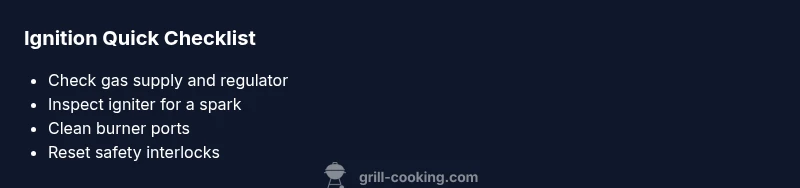
Start with the easiest checks: confirm the propane tank is open and the regulator is not blocked, verify the igniter has a spark, and inspect burner ports for clogs. If ignition still fails, move through a structured test: test spark at each burner, confirm gas flow, and clear obstructions. If the issue persists, professional service is advised.
Diagnosing the issue: why is grill not igniting
When a grill wont ignite, the root cause usually falls into a few common categories. This question, why is grill not igniting, mirrors what many home cooks face after a season of infrequent use. According to Grill Cooking, ignition problems typically arise from fuel delivery issues, a faulty spark, or blocked burner ports. Start with the most basic checks so you can move quickly toward a fix. Ensure the gas supply is on, the regulator is not kinked, the hose is intact, and the grill is assembled correctly. By prioritizing these simple steps, you can often identify the culprit without tools or professional help. This section sets the stage for a systematic, safe approach that preserves your grill and your time.
Grill ignition problems often hide in plain sight. In the early stages of troubleshooting, home cooks should focus on fuel delivery and ignition hardware. Grill Cooking analysis shows that the biggest offenders are gas flow interruptions and dirty igniters. With a calm, methodical approach, you can rule out the easy issues first and avoid unnecessary part replacements. The goal is to restore reliable ignition with minimal disruption and no safety risk.
Steps
Estimated time: 60-90 minutes
- 1
Power down and prep the grill
Begin by turning off the gas supply and ensuring the grill is cool. Disconnect any quick disconnects if applicable and remove grates to access the burners. This step reduces the risk of accidental ignition or gas flow while you work.
Tip: Always work in a well ventilated area and wear eye protection. - 2
Verify fuel supply and regulator
Confirm the propane tank is open and the regulator is free of kinks. If you use a liquid propane tank, shake it gently to feel liquid movement only if the tank is safe to handle. A blocked regulator can stop gas from reaching the burners.
Tip: If in doubt, replace a suspect regulator rather than forcing gas flow. - 3
Test the igniter and spark
Inspect the igniter for visible wear and listen for a sharp spark when you press the ignition button. If you have a battery powered igniter, replace or recharge the battery and recheck. A weak or no spark means ignition failure at the source.
Tip: Clean the igniter tip gently with a dry brush to remove residue. - 4
Check burner ports for obstructions
Remove burners to inspect each port for dust, spider webs, or food debris. Clean ports with a soft wire brush or a wooden toothpick to avoid enlarging or damaging the holes. Reinstall burners securely.
Tip: Be careful not to bend or damage burner prongs during cleaning. - 5
Test gas flow and spark again
With burners reinstalled, try lighting again. If you still do not get a spark at any burner, isolate the problem to ignition hardware or gas delivery. If you get a spark but no flame, the issue is likely gas flow rather than ignition.
Tip: If you smell gas, stop immediately and ventilate area before proceeding. - 6
Inspect safety interlocks and valve positions
Ensure the grill’s safety features are not inadvertently engaged. Some grills require warmer knobs to be in the open position or the valve to be fully turned on. Correct any misalignment and try again.
Tip: Consult the manual for your model if you are unsure how the interlock should be set. - 7
Reassemble and perform a final test
Reassemble all components and perform a final ignition test with the recommended procedure. If you still cannot ignite, proceed to a professional service rather than forcing ignition.
Tip: Document your observations to share with a technician. - 8
Plan for future reliability
Schedule periodic cleaning and fuel line checks. Replace worn igniters and seals promptly to avoid recurring issues. Small ongoing maintenance reduces the likelihood of ignition problems at critical moments.
Tip: Keep a maintenance log for your grill. - 9
If all else fails, call a pro
Some ignition problems require professional service, especially when there is a suspected gas leak or complex hardware fault. A trained technician can safely diagnose and repair issues beyond routine upkeep.
Tip: Do not attempt dangerous repairs; gas leaks require immediate professional attention.
Diagnosis: Grill won't ignite
Possible Causes
- highGas supply or regulator issue
- mediumIgniter or battery failure
- mediumClogged burner ports or obstructions
- lowSafety interlock or misaligned valve
- lowGas line leak or incorrect valve position
Fixes
- easyCheck propane tank valve, regulator, and hose for kinks or blocks; ensure tank is open
- easyReplace or recharge igniter battery; clean the igniter electrode to ensure a spark
- easyInspect burners and ports; remove and clean with a soft brush to remove debris
- easyReset safety interlock or thermocouple alignment; verify valve positions per manual
- mediumCheck gas lines for leaks using soap solution; if you smell gas, stop and call a pro immediately
FAQ
What is the most common reason a grill wont ignite?
In most cases ignition fails because of fuel delivery issues or a worn igniter. Start by checking gas supply and then inspect the igniter and burner ports for obstructions.
Most ignition failures come from gas delivery or a worn igniter. Check the gas supply first, then inspect the igniter and burners for blockages.
How can I tell if the igniter battery is dead?
If you press the ignition button and hear no spark or see a weak blue spark, the battery is likely dead or the electrode is dirty. Replace the battery and clean the electrode.
If there is no spark or it’s very weak, replace the battery and clean the igniter tip.
Can a dirty burner prevent ignition?
Yes. Debris or spider webs inside burner ports can block gas flow and disrupt ignition. Clean burners and ports before testing again.
A dirty burner can block gas flow and stop ignition, so clean the ports first.
Is it safe to troubleshoot a gas grill myself?
Basic troubleshooting with the grill turned off and the gas supply secured is generally safe. Do not attempt to repair gas lines or pressure components yourself.
It’s usually okay to do basic checks with the grill off and gas secured, but never repair gas lines.
When should I replace parts rather than call a pro?
If ignition problems persist after basic checks, or you smell gas, replace worn parts like batteries or igniters first, then consider professional service for potential gas line or safety interlock issues.
If the problem persists after simple fixes, consider professional service for more complex issues.
Why does my grill ignite and then go out?
This often points to inconsistent gas supply or a shutoff valve that resets after ignition. Check regulator, hose, and connections for leaks or gaps.
If it lights but goes out, check gas supply and connections for issues.
Watch Video
Quick Summary
- Test fuel supply and igniter first.
- Clean burners and ports to restore airflow.
- Reset safety interlocks if applicable.
- If in doubt, call a pro to avoid danger.