What Happens When Gas Grill Regulator Fails — Troubleshooting Guide
Urgent guide on what happens when a gas grill regulator fails, with symptoms, likely causes, safety checks, and step-by-step fixes to restore stable flame.


Most gas grill regulator failures stem from worn diaphragms, blocked vents, or poor connections that choke gas flow. The quick fix is to shut the grill off, close the propane tank, disconnect the regulator, and visually inspect for damage or cracks. Replace with an approved regulator, reconnect, and perform a soapy-water leak test. If the flame remains inconsistent or you smell gas, stop grilling and call a professional.
What happens when a gas grill regulator fails
Gas grills rely on a regulator to convert high-pressure propane from the tank into a steady, controllable flow for the burners. When the regulator fails, the system cannot maintain the proper pressure, which leads to flame irregularities, sputtering, or an inability to reach full heat. In this guide we answer what happens when gas grill regulator fails, so you can recognize the signs and act quickly and safely. Common symptoms include a weak or inconsistent flame, burners that go out unexpectedly, hissing sounds near connections, and a propane tank that empties faster than normal. The regulator is a mechanical device with a diaphragm that responds to the demand from the burners; when it wears out or its vents become blocked, the gas pressure either surges or drops, resulting in performance problems and potential safety risks. Understanding the role of the regulator helps you distinguish regulator-related issues from other grill problems like ignition problems or fuel supply problems.
Symptoms indicating regulator problems
- Flame that flickers or dies even on high setting, or flames that rise and dip unexpectedly.
- Burner ignition works but flame dies after a few seconds or minutes.
- Hissing or wheezing sounds around hoses or the regulator itself.
- Gas smell near fittings or tank, especially after opening valves.
- Propane tank empties faster than expected, or pressure seems inconsistent.
- Temperature readings on the grill don’t match the burner settings.
Common causes of regulator failure
- Worn diaphragm or internal seal inside the regulator, especially with older grills or frequent use.
- Blocked vent or clogged gas line from debris, insects, or residue buildup that prevents proper pressure regulation.
- Incorrect tank connection, worn O-rings, or damaged hose causing leaks or loose seals.
- Exposure to sun, heat, or freezing temperatures that compromise regulator integrity or plastic components.
- Mixed or incompatible parts after market replacements that don’t match the grill’s design.
Immediate safety steps if you suspect a failure
- Move away from the grill and ensure the area is well ventilated.
- Turn off burners and close the propane tank valve before touching any connections.
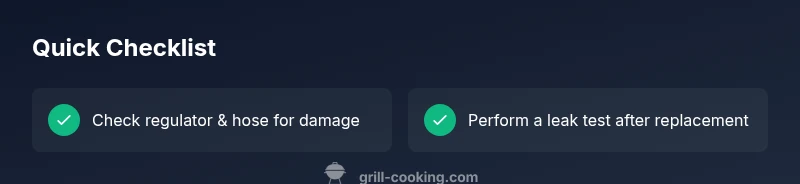
- Inspect the regulator hose for visible cracks, brittleness, or heat damage; do not use a damaged hose.
- If you smell gas, do not light the grill. Move the tank to a safe outdoor location and call your local gas supplier or fire department if the odor persists.
- Use soapy water to check connections for leaks; bubbles indicate a leak that must be repaired before use.
How to diagnose regulator problems without tools
- Start with the basics: ensure the tank is full, valve is fully open, and connections are snug but not overtightened.
- Swap in a known-good, compatible regulator if you have access to one; if flame stabilizes, the original regulator is likely failing.
- Check for vent blockage by removing the regulator and inspecting the vent ports for dust, spiders, or debris.
- Inspect hoses for visible wear or cracking; replace immediately if damaged.
- Always re-test for leaks after any adjustment or replacement.
Replacement vs repair: what to choose
- In most cases, regulators are inexpensive and should be replaced if there is any sign of failure, especially if leaks or inconsistent pressure are observed.
- Repairs are rarely cost-effective or reliable because regulator components are sealed and worn parts can lead to recurring issues.
- Always use an approved regulator model compatible with your grill and tank; mismatched parts can create dangerous pressure scenarios.
- If your grill is under warranty, contact the manufacturer for a sanctioned replacement to avoid voiding the coverage.
Reinstallation and leak testing after replacement
- Reconnect the gas hose to the grill’s input port, ensuring a clean, dry surface with no fraying or cracks on the hose.
- Tighten all connections by hand first, then snug with a wrench—avoid overtightening that could crack fittings.
- Open the tank valve slowly and check for leaks with a soapy solution; look for rising bubbles at every joint.
- Light the burners a few moments after the leak test; if the flame is stable on all burners, you’re clear to cook.
- If any leak reappears or any burner behaves erratically, stop, disconnect the tank, and seek professional service.
Maintenance habits to prevent regulator failures
- Inspect hoses and regulators at the start of grilling season and after any transport or storage changes.
- Keep grills covered when not in use to avoid weather-related damage.
- Store propane tanks upright in a well-ventilated area away from heat sources.
- Use only manufacturer-approved replacement parts and follow the grill’s manual for maintenance intervals.
- Document any issues and replacements to track regulator lifespan and replacements over time.
Steps
Estimated time: 45-60 minutes
- 1
Power down and secure gas supply
Shut off all burners, close the propane tank valve fully, and remove any heat source nearby. Keep the area well ventilated. This minimizes risk during inspection.
Tip: Always assume a leak until proven safe with a soapy-water test. - 2
Disconnect regulator and inspect
Carefully disconnect the regulator from the tank and grill. Look for cracks, burns, or deformation in the regulator body or the hose, and check O-rings for wear.
Tip: Do not use tools that could pinch or damage the hose. - 3
Replace with approved regulator
Install a regulator that is compatible with your grill model and tank type. Hand-tighten connectors and avoid over-tightening.
Tip: Keep the replacement part in its original packaging until ready to install. - 4
Reconnect hose and tighten fittings
Reconnect the hose to the grill inlet and the regulator to the tank. Ensure all joints are clean and dry before reassembly.
Tip: Use a new O-ring if the old one shows wear. - 5
Leak test before lighting
Apply a soapy solution to all connections and look for bubbles; if bubbles appear, tighten or replace components as needed and retest.
Tip: Never use an open flame for leak testing. - 6
Test burners and flame stability
Open the tank valve slowly and ignite the burners to verify stable flame across all zones. Observe for uniform heat and no irregular surges.
Tip: If flame still surges, stop and contact support.
Diagnosis: Flame is irregular or won't stay lit; regulator hisses near joints; gas smell around connections
Possible Causes
- highWorn or damaged regulator diaphragm
- mediumBlocked vent or clogged gas line
- lowIncorrect tank connection or damaged hose
Fixes
- easyTighten connections and replace any damaged hoses; perform a leak test
- easyReplace the regulator with an approved, compatible model
- easyInspect tank and valve for proper flow; ensure tank is not empty or defective
- mediumIf symptoms persist, consult the grill manufacturer or a licensed technician
FAQ
What are the first signs of regulator failure?
Early signs include an uneven flame, flame going out, or hissing sounds near fittings. These indicate possible regulator issues and should be checked promptly.
Look for uneven flame or hissing near connections—the regulator may be failing.
Can I fix a regulator myself?
You can perform basic checks and replace with an approved regulator if you are comfortable with gas hardware. If you smell gas or the problem persists, seek professional help.
You can replace with an approved regulator, but don’t risk it if you smell gas.
Is it safe to grill if the flame is weak?
A weak or unstable flame is a warning sign. Stop, inspect connections, check for leaks, and replace faulty parts before resuming.
A weak flame means you should stop and fix the regulator before cooking again.
Will replacing the regulator fix all issues?
Replacing the regulator fixes pressure-related failures most times. If other components are worn or damaged, additional parts may be needed.
Replacing the regulator fixes most regulator-related problems, but inspect other parts too.
Do regulators fit every grill?
Regulators are model-specific. Use an approved regulator compatible with your grill and tank to ensure proper operation.
Not all regulators fit every grill—check compatibility.
What should I do if I smell gas during inspection?
Leave the area, turn off the gas, and call your propane supplier or local authorities. Do not operate any electrical switches or open flames.
If you smell gas, leave the area and contact professionals—safety first.
How often should I replace regulators?
There’s no fixed interval; replace if you observe wear, leaks, or performance issues. Regular inspections help prevent failures.
Replace when you notice wear or leaks; inspect regularly.
Watch Video
Quick Summary
- Identify regulator-related symptoms early to prevent unsafe grilling.
- Use manufacturer-approved replacement parts for safety and reliability.
- Always test for leaks after any regulator work.
- Call a pro if you smell gas or cannot resolve pressure issues.