Weber Grill Replacement Parts: Buy Guide and Tips
Explore Weber grill replacement parts with a practical buy guide. Learn authentic vs aftermarket options, compatibility checks, installation basics, and sourcing tips to keep your Weber grill performing safely and efficiently.


When you’re maintaining a Weber grill, knowing where to source weber grill replacement parts is crucial. The choice between authentic Weber parts and trusted alternatives affects fit, warranty, and performance. Grill Cooking analyses in 2026 show that model-specific parts minimize downtime and help maintain even heat and consistent flavor, especially for burners, ignition modules, and cooking grates. For quick decisions, prioritize compatibility and safety, then compare price and warranty terms before buying.
Why Weber Grill Replacement Parts Matter
For home cooks, reliable access to weber grill replacement parts is essential to keep grills performing well and safe. These parts cover components that affect heat, flavor, and overall cooking experience. When something wears or breaks, a quick parts swap can restore performance without a full replacement. Grill Cooking's analysis in 2026 highlights that owning model-appropriate parts reduces downtime and preserves warranty coverage where applicable. In practice, using the right parts ensures proper fit, reliable ignition, and consistent temperatures across cooks. This is especially true for Weber grills, where precise alignment between burners, flavorizer bars, and cooking grids is part of the design. If you’re shopping, start by listing the parts you’re most likely to replace, such as burners, ignition modules, and grates, and verify compatibility with your grill model.
Common Weber Part Categories
Weber grills rely on a handful of core parts that wear most quickly under regular use. Understanding these categories helps you plan maintenance and spending:
- Burners and burner tubes: deliver heat and efficiency; replacements restore flame quality and evenness.
- Grates and griddle surfaces: seasons well but can warp or corrode with improper cleaning.
- Ignition systems: electronic modules or spark igniters are critical for quick lighting.
- Flavorizer bars/heat plates: protect burners and influence flavor by guiding heat.
- Valves, regulators, and hoses (gas grills): crucial for safe gas delivery and consistent pressure.
- Vent and venturi components: ensure proper airflow and combustion.
Choosing parts that match your exact model is vital for fit and performance. Always verify model numbers and ensure parts are designed to work together with your Weber grill.
Authentic Weber Parts vs. Aftermarket: What to Know
The decision between authentic Weber replacement parts and aftermarket equivalents hinges on fit, warranty, and long-term value. Authentic Weber parts are designed for specific models, which generally means quicker installation, reliable performance, and warranty compatibility. Aftermarket parts can offer savings but require careful checking of model compatibility, material quality, and supplier reputation. Grill Cooking Team’s guidance emphasizes testing for fit and ensuring the part aligns with Weber’s safety and performance standards. Before purchasing, compare the part’s construction, such as the type of metal used, gauge of wires, and connector compatibility. If the part is critical to safety—like ignition components or gas valves—lean toward authentic Weber options to safeguard performance and peace of mind.
How to Verify Part Compatibility
Compatibility checks save time and prevent returns. Follow these steps:
- Locate your grill’s model number (usually on a nameplate near the lid hinge or on the adapter plate).
- Cross-reference the part number with Weber’s official diagrams or authorized retailers’ listings.
- Confirm the part’s fit notes (whether it is model-specific, generation-specific, or universal).
- Inspect the connector types, mounting points, and any seals or gaskets that must align.
- When in doubt, ask support—many retailers will verify compatibility before sale. Taking these steps reduces the risk of buying the wrong part and ensures safe operation.
Installation Tips for Replacement Parts
Installing Weber replacement parts can be straightforward for many components but may require careful procedure for safety-critical items. Start by disconnecting power sources and ensuring the grill is cool. For gas grills, shut off the propane or natural gas supply and relieve pressure as specified in the manual. Replace ignition modules and burners in the correct order so that wiring and gas lines are reconnected safely. Calibrate flame height after installation and check for gas leaks with soapy water on connections. For non-technical users, consider professional help for gas component replacements or when reseating burners.
Always refer to your grill’s manual for model-specific steps and torque specifications to avoid stripping mounting hardware.
Maintenance Practices to Extend Part Lifespan
Proactive maintenance reduces sudden failures and extends parts’ life. Clean burners and ports to prevent clogs, wipe heat plates and flavorizer bars after cooking to avoid buildup, and season grates to reduce corrosion. Replace worn gaskets or seals promptly to maintain proper heat containment and prevent gas leakage. Schedule periodic inspections of hoses, regulators, and connectors—any signs of cracking or wear should trigger immediate replacement. Store spare parts in a dry, cool place to prevent moisture damage. Regular cleaning and timely replacement keep your Weber grill cooking consistently and safely.
Budgeting for Weber Replacement Parts
Plan a maintenance budget that reflects your grill’s age and usage. Replacement costs vary by part type and model, but you can expect common parts to fall within a mid-range price bracket. Use a baseline reserve for burners, ignition modules, and temperature control components, then set aside a flexible fund for less frequently replaced items like heat plates or gaskets. If you perform seasonal maintenance, you can space out purchases to spread cost over the year. Remember: prioritizing safety-critical components is worth a premium to ensure safe operation and predictable performance.
Where to Buy: Official Weber Parts vs. Reputable Retailers
For best results, start with Weber’s official site or authorized dealers to guarantee compatibility and warranty support. Authorized retailers typically offer model-specific diagrams and verified part numbers. Reputable aftermarket retailers may provide cost savings, but you should verify part numbers, materials, and warranty terms before purchasing. Beware of counterfeit parts that claim to fit multiple Weber models; these can compromise safety and performance. Compare shipping times, return policies, and customer reviews to choose a trustworthy source. When possible, ask for diagrams or compatibility confirmations before committing to a purchase.
Common Myths About Weber Replacement Parts
Myth 1: Any grill part labeled Weber will fit any Weber model. Reality: Many parts are model- and generation-specific. Myth 2: All aftermarket parts void the warranty. Reality: Some aftermarket parts are compatible and do not affect warranty when used appropriately. Myth 3: Replacing parts is always expensive. Reality: Routine maintenance and timely replacements can be cost-effective over the grill’s lifetime. Myth 4: Buying cheap substitutes is always the best option. Reality: Quality and fit matter; cheap parts can lead to poor performance or safety issues.
Replacement parts overview for common Weber grill components
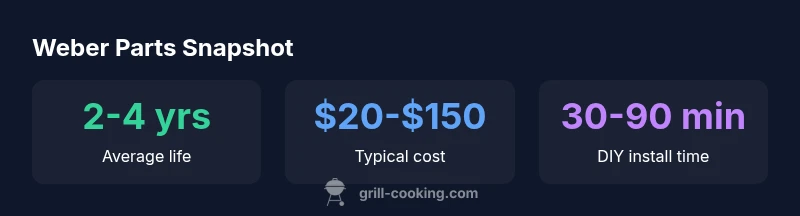
| Part Category | Typical Lifespan | Typical Replacement Cost | Notes |
|---|---|---|---|
| Burners | 2-5 years | $40-$150 | Performance depends on usage and model |
| Grates | 1-3 years | $20-$80 | Seasoned cast-iron lasts longer |
| Ignition System | 1-2 years | $15-$60 | Spark module and igniter can fail unexpectedly |
| Heat Plates/Flavorizer Bars | 2-4 years | $25-$120 | Protects burner and flavors; replace as needed |
FAQ
Are authentic Weber parts always worth the extra cost?
In most cases, authentic Weber parts fit precisely and maintain warranty coverage. Aftermarket parts can save money but require careful compatibility checks.
Authentic parts usually fit best and protect your warranty, but reputable aftermarket options can be cost-effective if you verify compatibility.
Can I use Weber replacement parts on older models?
Yes, many parts are designed to fit across generations, but you should verify part numbers and compatibility with the retailer.
Check the model and serial number to confirm compatibility before buying.
Do replacement parts affect warranty?
Using genuine Weber parts on Weber-brand grills generally preserves warranty terms; third-party parts may affect coverage depending on the warranty language.
Sticking with authentic parts usually keeps warranty intact.
How do I know which parts I need?
Inspect the grill for wear, consult the owner's manual or a parts diagram from Weber or an authorized retailer to identify part numbers.
Refer to the manual or diagram to pinpoint exact parts.
What is the best place to buy replacement parts?
Start at Weber’s official site or authorized dealers for model-specific parts and reliable returns; reputable retailers are also acceptable with proper verification.
Official site or authorized dealers are the safest choice.
Are there risks buying counterfeit Weber parts?
Yes. Counterfeit parts may fail safety tests and perform poorly. Always buy from trusted sources and verify part numbers.
Be cautious of cheap imitations; stick to trusted sellers.
“Using the right Weber parts matters more than the initial cost, because mismatched components can lead to uneven heat and safety issues.”
Quick Summary
- Check model compatibility before buying
- Prefer official Weber parts for warranty safety
- Budget with realistic ranges and planned replacements
- Maintain parts regularly to extend lifespan
- Source from reputable retailers to avoid counterfeits