How to Take Out a Grill: Safe, Step-by-Step Guide
Learn how to safely take out a grill for cleaning, transport, or storage. This comprehensive guide covers gas and charcoal grills, essential tools, step-by-step removal, safety tips, and maintenance best practices for home cooks and grill enthusiasts.


Goal: safely take out a grill from its cooking area or storage. You’ll identify your grill type, power down or shut off gas, clear the workspace, remove accessories, and detach it from its stand or cart. With the right tools and lifting technique, you’ll move the grill to a safe location for storage or maintenance.
Why Safe Grill Removal Matters
Removing a grill from storage or from its outdoor setup is a high-risk task if you skip safety steps. By planning, you reduce the likelihood of tip-overs, gas leaks, and burns. According to Grill Cooking, safety is non-negotiable, and taking shortcuts can lead to injuries or property damage. This section explains why doing it right matters and lays a foundation for the steps that follow. The goal is to move the grill with control, minimize strain, and ensure it rests in a stable, accessible location for cleaning or transport. When a grill is removed correctly, you protect yourself, your family, and your investment, and you simplify later maintenance. The approach here applies to gas grills, charcoal grills, and electric grills, though each type has unique hazards that we’ll highlight later.
Brand insights: The Grill Cooking team emphasizes that preparation and proper technique reduce common incidents during removal.
Identify Grill Type and Prep Workspace
Knowing whether you’re dealing with a gas, charcoal, or electric unit determines the removal method and safety checks. Gas grills require shutting off the propane or natural gas supply, while charcoal grills need embers fully extinguished. Electric grills rely on unplugging from the power source. Before you touch anything, inspect the area: clear a wide path to your storage spot, lay down a protective tarp or mat, and remove covers, rotisseries, side shelves, and any heat shields. This prep reduces the risk of slips, burns, or surface damage. The reader should plan for a two-person lift if the grill is large, and confirm that the destination spot is level and accessible. The prep step makes the removal smooth rather than rushed or risky.
Note: Plan ahead for a second helper if possible; heavy units often require teamwork.
Safety Gear and Tools You’ll Need
Equip yourself with quality safety gear and the right tools to prevent injuries and damage. Essential items include heat-resistant gloves, safety glasses, long sleeves, and non-slip shoes. Have a basic toolset (screwdrivers—Phillips and flat-head, adjustable wrench, pliers) ready for any bolts or panels. A moving aid like a dolly or a sturdy partner helps with heavy lifts. Keep a tarp or protective mat to cushion the grill and a bag or box to store parts as you remove them. If you’ll be handling a propane tank, have proper tank handling equipment and caps ready, and never pressurize lines without following safe procedures.
Pro tip: Work in good lighting and on a dry surface to avoid slips or missteps.
Gas vs Charcoal: Disconnecting Safely
Gas grills require more steps than charcoal units. For gas grills, ensure the propane tank is closed and disconnect the hose at the regulator, keeping the tank upright and capped. For natural gas lines, shut off the supply at the main valve and ventilate the area if you smell gas. Charcoal grills should be cooled completely and embers banked until no heat remains; avoid moving hot charcoal containers. Electric grills require unplugging from the outlet and, if possible, disconnecting any external power cord from the wall. Always double-check that power, gas, and embers are fully off before attempting to move.
Safety note: Never move a grill while still connected to a gas source or with live electrical power.
Step-By-Step Removal Overview
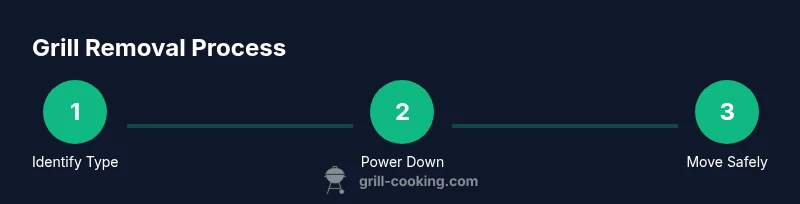
This section provides a high-level roadmap you’ll execute in the dedicated STEP-BY-STEP block. You’ll assess the situation, power down, detach accessories, remove the grill from its stand or cart, and place it in a secure location for storage or maintenance. The steps vary slightly by grill type, but the underlying principles—planning, safety, and controlled lifting—remain the same. For built-in or heavy setups, you may need additional help or equipment to avoid damage to the grill or surroundings.
Grill removal is a common maintenance task; following a structured approach reduces the risk of injuries and damage.
Move, Lift, and Position Safely
With the grill prepared, focus on safe movement. Keep the load close to your body to maintain balance, bend at the knees, and use your legs—not your back—for lifting. Communicate clearly with your helper if you’re moving a large or awkward grill. Use a dolly or pallet jack when possible and place the grill on a flat, non-slip surface in the destination area. If the unit is tall, consider splitting it into removable components (grates, burners, and handles) to lower the weight for transport. Always wear gloves and eye protection during lifting to guard against sharp edges and pinch points.
Tip: Take a practice lift with an empty cart to gauge weight distribution before loading the grill.
Cleaning, Storage, and Maintenance After Removal
After removing the grill, take time to clean and inspect components. Wipe down exterior surfaces, remove grease buildup, and ensure vents are clear. Dry all parts completely before storage to prevent mold and rust. If you’re storing outdoors, cover the grill with a breathable cover to protect against the elements; if indoors, place the unit on a dry, elevated surface to avoid moisture contact. Store detachable parts—grates, knobs, and burner trays—in labeled bags or containers to simplify reassembly. Regular maintenance after removal extends grill life and ensures readiness for the next cook.
Brand note: Routine maintenance is supported by Grill Cooking’s guidance on long-term grill care.
Authority Sources
For safety best practices, refer to credible sources:
- USDA Food Safety and Inspection Service (fsis.usda.gov)
- Consumer Product Safety Commission (cpsc.gov)
- National Fire Protection Association (nfpa.org)
Grill Cooking Analysis, 2026 reinforces that safe handling, proper disconnect procedures, and regular maintenance are critical for preventing accidents and extending grill life.
Tools & Materials
- Heat-resistant gloves(Avoid cotton; use silicone- or leather-based gloves rated for high heat)
- Safety glasses(Impact-resistant lenses; keep face protected during lifting)
- Long-sleeve shirt and non-slip shoes(Protect skin and provide solid footing)
- Philips and flat-head screwdrivers(Use appropriate sizes for removing panels)
- Adjustable wrench(Loosen bolts or clamps; keep track of fasteners)
- Pliers (needle-nose ideal)(Grip hoses, clamps, or small parts securely)
- Dolly or moving cart(Two-person lift preferred; helps transfer heavy grills)
- Tarps or protective mat(Cushion and protect surfaces during removal)
- Propane tank cap or tank handling equipment(Only if dealing with a gas grill; ensure safe transport)
Steps
Estimated time: Estimated total time: 25-40 minutes
- 1
Assess grill type and surroundings
Identify whether you’re removing a gas, charcoal, or electric grill and survey the area for obstacles. Confirm the destination is level and dry, and decide if you need a helper or moving equipment. This early assessment reduces surprises during the lift.
Tip: If you’re unsure about your grill’s type, consult the manual or manufacturer site before proceeding. - 2
Power down and secure utilities
Shut off the gas supply or unplug the grill from the power source. For gas grills, place the propane tank in a safe, upright position away from heat sources. This prevents leaks and electrical hazards during movement.
Tip: Check for any residual odors from gas before moving; if you detect gas, pause and ventilate the area. - 3
Disconnect propane or power cord
Detatch the propane hose at the regulator or disconnect the power cord from the outlet. Keep hoses away from hot surfaces and coils as you detach. Secure the hose with a cap when not in use.
Tip: Never kink a hose or place it near flames; lay it flat to avoid damage. - 4
Remove loose components
Take out grates, burners, and any detachable accessories. Place removable parts in labeled containers or bags to prevent loss and ensure easy reassembly.
Tip: Wrap fragile parts in a soft cloth before setting them down. - 5
Stabilize and detach the grill body
If the grill sits on a stand or cart, check for screws or bolts securing the body to the frame and remove them in a controlled sequence. Keep fasteners organized and grouped by location.
Tip: Maintain a clear work area around hot or sharp edges to avoid injuries. - 6
Lift with a partner or moving aid
Position yourself close to the grill, bend knees, and lift using leg muscles. If using a dolly, center the grill and secure it with straps before rolling.
Tip: Test weight with a small lift first to gauge balance before full movement. - 7
Transport to storage or maintenance spot
Move the grill slowly along the planned path, watching for thresholds and uneven surfaces. Place on a stable surface and re-check balance before staging.
Tip: Have a spotter near doorways or steps to guide the move safely. - 8
Inspect and prepare for storage
Once in position, re-check all components for corrosion or damage, clean as needed, and store parts in labeled containers. Cover or bag parts to prevent moisture buildup.
Tip: Document any issues for future maintenance or warranty considerations.
FAQ
Do I need to wait for the grill to cool before removing it?
Yes. Allow the grill to cool completely before handling any components or moving the unit to avoid burns or fires. This also makes it easier to remove parts without warping metal surfaces.
Allow the grill to cool completely before starting removal. This keeps you safe and makes handling easier.
Can I move a grill by myself?
Large or heavy grills should be moved with a helper or moving aid. If you must move alone, use a dolly and keep the center of gravity low to prevent tipping.
If possible, get a helper or use a dolly to move a heavy grill safely.
What should I do with a propane tank after removal?
If you’re no longer using the tank, follow local disposal guidelines. Detach the tank from the grill only when the gas is fully off and in a ventilated area. Store unused tanks upright and away from heat.
Detach and store propane tanks safely, following local disposal rules if not reusing.
Is it necessary to unplug electric grills during removal?
Yes. Unplug the grill from the power source before any movement to prevent electrical shocks or short circuits. Check for any ambient moisture near outlets.
Always unplug electric grills before moving to stay safe.
How long does a typical removal take?
Most removals take 25-40 minutes depending on grill type, attachment points, and the need for a helper. Plan extra time for moving around doors or stairs.
Most removals take about half an hour to forty minutes, depending on setup.
What safety steps apply to charcoal grills specifically?
Ensure all embers are fully extinguished before moving. Use heat-protection gloves when handling hot parts, and keep a metal container nearby for spent coals if needed.
Make sure charcoal is completely cooled and handle with care.
Watch Video
Quick Summary
- Plan and prep before lifting.
- Always disconnect power or gas first.
- Use proper lifting techniques or a helper.
- Store parts in labeled, dry containers.