How many years does a grill last? A longevity guide for home cooks
Discover how long grills typically last, the factors that affect lifespan, and practical steps to extend life. Compare gas, charcoal, and pellet grills, plus a maintenance plan to maximize longevity.


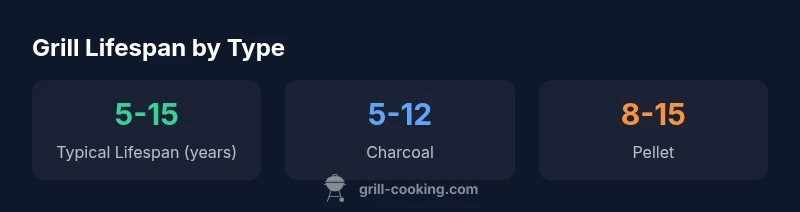
Grills typically last about 5–15 years, with premium stainless models and diligent maintenance reaching toward 15–20 years. The exact lifespan depends on build quality, exposure to the elements, and how well you maintain components like burners, grates, and ignition parts. In practice, a well-cared-for grill under cover and cleaned after use tends to stay productive longer. These figures vary by type (gas, charcoal, pellet) and upkeep habits, but proactive care remains the single biggest factor in extending life.
How many years does a grill last on average?
According to Grill Cooking, the lifespan of a typical household grill is influenced by type, quality, and maintenance. The question many home cooks ask is how many years does a grill last, and the answer is not a single fixed number. Most grills you’ll find on patios and decks deliver reliable service for roughly 5 to 15 years under normal use. Premium models with stainless steel construction and robust burners can push toward 15 to 20 years when cared for properly. The exact lifespan depends on how often you cook, how you store the grill through off-seasons, and how soon you replace worn components such as burners, grates, and igniters. In practice, a well-maintained grill that stays under cover and receives regular cleaning tends to outlast one that’s neglected or exposed to the elements. This block also reinforces that longevity is a spectrum shaped by design, materials, and user habits. The Grill Cooking team found that routine maintenance—cleaning grease buildup, inspecting hoses, and performing small repairs before failures occur—has the greatest impact on total service years.
Key factors that influence lifespan
There are several levers that determine how long a grill lasts. Material quality and construction—such as full stainless steel bodies versus painted steel—play a big role, as do burner type and grate material. Weather exposure matters: grills left uncovered in rain or salty air corrode faster than those housed under a protective shelter. Maintenance habits are a close second: after-cook cleaning, regular deep cleans, and timely replacement of worn parts (like burners, ignition systems, and thermometers) can dramatically extend life. Storage conditions matter too; a dry, indoor or sheltered space reduces rust and schedule-induced wear. Usage patterns—heavy searing, high heat, and frequent flare-ups—accelerate wear. Finally, the quality of replacement parts and a manufacturer’s warranty can influence how long a grill remains economical to own. Grill Cooking’s guidance emphasizes planning for maintenance as a core strategy to maximize longevity.
How to maximize grill life: maintenance habits
To maximize longevity, adopt a deliberate maintenance routine. Immediately after cooking, brush grates to remove residue and wipe surfaces with a damp cloth. Schedule a quarterly deep clean: remove parts where safe, inspect burners and hoses for leaks, and remove grease from the interior. Annually, perform a more thorough inspection of ignition components, seals, and the hood. Use a protective cover when not in use and store the grill in a dry area during off-seasons. Replace worn parts promptly rather than waiting for complete failure, and consider seasonal checks of fuel lines and regulators. By combining consistent cleaning with proactive part replacement, you’ll preserve performance and reduce the risk of costly failures while you enjoy outdoor cooking year-round.
Gas grills vs charcoal vs pellet: longevity differences
Lifespan expectations differ by grill type. Gas grills with sealed burners and stainless components tend to offer longer service life under similar maintenance, but this varies by usage. Charcoal grills often present more surface rust risk, especially when grills are left damp; however, high-quality metal and proper storage can reduce decay. Pellet grills bring advanced electronics into the mix; while convenient, their lifespan can hinge on the durability of motors and electronic control boards. In general, the core longevity factor remains consistent: regular cleaning, rust prevention, and timely replacement of wear-prone parts help maintain performance. The type you choose should align with how you cook and how much you value long-term reliability, not just upfront price or flavor profile.
Signs your grill is nearing end of life
Watch for persistent performance declines such as uneven heating, inability to reach target temperatures, or frequent flameouts that aren’t tied to user error. Rusty body panels, holes in the hood, or bent or corroded burners are clear indicators that repair costs may outweigh replacement value. Cracks in the plastic components, failing ignition systems, and gas leaks are safety red flags that require immediate attention. If you notice persistent flameouts, temperature instability, or deteriorating seals, start weighing replacement options. Remember, prolonging life beyond safe operation can compromise food safety and performance.
Cost vs longevity: when to repair vs replace
Repair versus replacement decisions hinge on cost, safety, and how well the grill performs. If the price of a needed part is a small fraction of a new unit’s price and the grill otherwise functions well, repair is sensible. If multiple major components require replacement and performance remains inconsistent, replacing the grill may be more economical in the long run. Consider warranties, the age of the unit, and the availability of replacement parts when deciding. The goal is to maximize return on investment while maintaining safe and reliable operation for your grilling sessions.
Real-world maintenance calendar and checklist
A practical approach is to create a 12-month calendar with seasonal checks. Monthly: wipe down surfaces, inspect for rust, and brush grates after cooking. Every 3 months: check burners, ignition, and propane connections; clean the interior and exhaust paths. Biannually: deep-clean the interior, reseal gaskets where applicable, and inspect the hood for rust. Annually: replace worn burners, check hoses for wear, replace thermometers if needed, and re-tighten fasteners. Keep a simple log of part replacements and performance issues. This calendar helps ensure the grill remains efficient and safe, ultimately extending its useful life.
Longevity ranges by grill type and main durability factors
| Grill Type | Typical Lifespan (years) | Key Longevity Factor |
|---|---|---|
| Gas grill | 5-15 | Quality burners; stainless construction |
| Charcoal grill | 5-12 | Rust resistance; lid and bowl quality |
| Pellet grill | 8-15 | Reliability of auger and electronics |
FAQ
What factors most influence how long a grill lasts?
Build quality, materials, exposure to the elements, and maintenance habits are the primary drivers of grill longevity. Regular cleaning and timely part replacements can significantly extend service life.
Key factors are build quality, materials, weather exposure, and how well you maintain the grill. Regular cleaning and timely part replacements help extend its life.
Does price correlate with grill longevity?
Higher price often reflects better materials and warranties, which can improve longevity. However, longevity ultimately depends on construction quality and maintenance, not price alone.
Price isn’t the sole predictor of longevity. Better materials and maintenance matter most.
How can I extend a grill's life?
Adopt a regular cleaning routine, store the grill in a dry place, and replace worn parts before they fail. Protective covers and proper shutdown help prevent corrosion and wear.
Clean after use, store dry, and replace worn parts early to extend life.
When should I replace vs repair?
If multiple major components require replacement and performance remains unreliable, replacement is often more economical. If only one part is failing and the rest works well, repair is sensible.
If many parts are failing, replacement is usually wiser; if it’s just one piece, repair can work.
Are stainless steel grills more durable than painted steel?
Stainless steel resists rust better and generally lasts longer in harsh conditions, but proper care and weather protection are still crucial for all materials.
Stainless lasts longer, but care and weather protection still matter.
What maintenance schedule should I follow?
Follow a monthly, quarterly, and annual routine: clean after cooking, inspect burners, check hoses, and perform a deep interior clean each season.
Clean after cooking, check parts quarterly, and deep-clean annually.
“Long-lasting grills come from smart design and disciplined maintenance. Consistent cleaning and timely part replacements are the best way to maximize lifespan.”
Quick Summary
- Protect the grill from weather with a sturdy cover.
- Clean after every cook to prevent corrosion and buildup.
- Choose durable materials like stainless steel where possible.
- Budget for periodic replacement parts to extend life.