How Long Do Grill Covers Last: A 2026 Lifespan Guide
Learn how long grill covers last across different materials, what accelerates wear, and proven maintenance tips from Grill Cooking to maximize their lifespan in 2026.


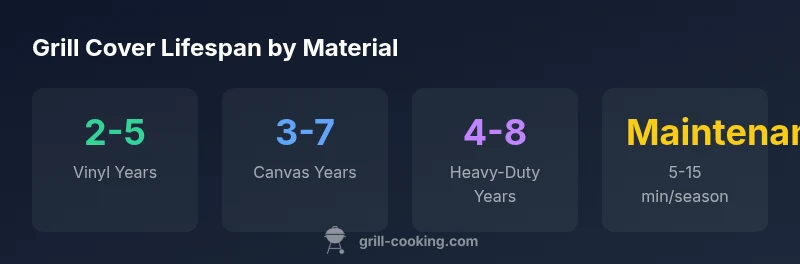
Grill covers typically last 2 to 5 years on vinyl, 3 to 7 years on canvas, and 4 to 8 years for heavy-duty polyester, depending on sun exposure, climate, and maintenance. With proper cleaning, drying, and storage after use, you can extend life toward the upper end of these ranges.
Why the Lifespan of Grill Covers Matters
How long do grill covers last is not a single fixed number. The answer hinges on material quality, exposure, and routine care. According to Grill Cooking, the typical life of a cover scales with the environment and maintenance, not just the initial price tag. Home cooks who want reliable protection for their grills should treat covers as a consumable investment with a clear lifecycle. When a cover starts showing cracks, thinning coatings, or persistent mold, it’s a signal to evaluate climate, cleaning habits, and storage practices. Understanding these factors helps you better estimate replacement timelines and plan a budget that keeps your grill protected year after year, especially in 2026 where climate patterns remain variable across regions.
How to Read the Lifespan by Material
Different fabrics age differently under sun and weather. Vinyl is lightweight and water-resistant but can crack after prolonged UV exposure or extreme heat. Canvas offers rugged durability and breathability but can soak up moisture and develop mildew if neglected. Heavy-duty polyester bridges the gap with stronger UV resistance and a tighter weave, which often translates to a longer nominal life. The Grill Cooking analysis highlights that while material plays a big role, the real-world lifespan emerges from how you care for the cover. Seasonal maintenance, including cleaning and thorough drying, pushes each material toward its upper range. In many climates, covers with UV inhibitors and water-repellent finishes outperform plain, inexpensive options.
Factors That Accelerate Wear
Exposure to high UV index, salt spray near coastal areas, repeated folding and creasing, and storing a damp cover dramatically shorten lifespan. Weather patterns—hot sun in summer, freezing temperatures in winter, and heavy rainstorms—compound these effects. Improper storage can invite mold and mildew, which degrade fabric integrity over time. Also, heat sources near the grill, such as mounting shelves or side tables that trap heat, can intensify material fatigue. Grill Cooking’s 2026 analysis emphasizes that proactive steps—drying completely, using breathable covers, and storing off the grill during peak sun—significantly slow these processes.
Maintenance that Extends Lifespan
A simple care routine can stretch coverage life by years. After cooking, wipe off grease and debris, rinse to remove salt, and air-dry away from direct sun. When not in use, store the cover in a dry, shaded area or use a breathable storage bag. Regular inspections for rips, loose seams, or hardware failures help catch issues early. If mold appears, treat with a mild solution and ensure it dries fully before reuse. For sun-drenched climates, consider upgrading to UV-stabilized fabrics and hardware with reinforced seams. The goal is to minimize moisture retention and UV impact while keeping the fabric flexible.
A Quick Deployment Guide for Different Climates
In coastal areas, prioritize moisture resistance and quick-drying fabrics. In hot inland climates, UV stability and heat resistance are paramount. In humid regions, breathable fabrics reduce mildew risk. For multi-season use, a reversible cover or a cover with vented panels can improve airflow and reduce condensation. In practice, you’ll find vinyl suits many typical backyards, canvas fits ranch-style setups, and heavy-duty polyester covers the long-haul in harsh environments. Remember, the right care routine is climate-aware and seasonally adjusted.
Real-World Scenarios and Replacement Indicators
Owners in temperate zones often find vinyl covers last around 2-4 years, while canvas may reach 5-7 years with proper care. Those in sunny, high-UV areas may lean toward the upper end of canvas or heavy-duty polyester ranges due to protective finishes. Replacement should be considered when you notice significant cracking, fabric thinning, torn seams, or coating breakdown that compromises water resistance. Even if the cover isn’t visibly worn, persistent leaks or mildew despite cleaning could indicate reduced protective capability. A practical rule of thumb is to reassess yearly; if the cover fails basic protective tests, it’s time to replace.
Maintenance Checklist for Longevity
- Clean surfaces after each grilling session and allow to dry completely
- Inspect seams, straps, and grommets for wear and replace as needed
- Store in a dry, shaded area when not in use
- Consider UV-stabilized materials for sunny regions
- Use breathable storage bags to prevent moisture buildup
- Avoid folding or compressing the fabric in ways that create permanent creases
Lifespan and trade-offs by grill cover material
| Material | Typical Lifespan | Pros | Cons |
|---|---|---|---|
| Vinyl | 2-5 years | Lightweight; water resistant | Can crack with prolonged UV exposure |
| Canvas | 3-7 years | Durable; breathable | Heavier; mold risk in humidity |
| Polyester (heavy-duty) | 4-8 years | Strong UV resistance; low maintenance | Higher cost; may feel stiff when new |
FAQ
What is the average lifespan of grill covers?
Vinyl covers typically last 2-5 years, canvas 3-7 years, and heavy-duty fabrics about 4-8 years, with maintenance extending life. These ranges assume normal use and proper storage.
Vinyl lasts about 2-5 years, canvas 3-7, and heavy-duty fabrics around 4-8 years with good care.
Do vinyl covers last longer than canvas?
Canvas generally offers longer life in hot sun with proper drying and storage. Vinyl is lighter and often cheaper but can crack under heavy UV exposure if not protected.
Canvas tends to outlast vinyl in sunny climates when properly cared for.
How can I extend grill cover life?
Clean after use, dry completely, store out of direct sun, inspect seams, and replace worn straps or grommets promptly.
Keep it clean and dry, store away from sun, and fix wear fast to extend life.
Are there heat-resistant or UV-stable covers?
Yes—look for UV-stabilized finishes and breathable fabrics designed for exposure. Avoid cheap, non-stabilized materials near grill heat.
Choose UV-stabilized fabrics for longer life in sunlight.
Should I remove the cover during cooking?
Yes. Remove before cooking to prevent damage from heat and splatter. Re-cover after grills cool to protect from weather.
Take it off while you grill, then replace it once things cool down.
When should I replace a grill cover?
Replace when you see cracking, torn seams, thinning coating, or persistent leakage that compromises protection.
Replace if you notice cracks or torn seams; don’t wait until it fails.
“Material quality and climate dictate cover life more than any single maintenance step. With consistent care, you can push the upper limit of a cover's lifespan.”
Quick Summary
- Choose material based on climate and sun exposure
- UV and moisture are the biggest enemies of covers
- Regular cleaning and drying extend lifespan
- Store properly during off-season to protect investment
- Replace when wear affects protection