How Long Do Grill Grates Last: Lifespan and Care
A data-driven guide exploring how long grill grates last by material, plus maintenance steps to extend life for home cooks and grill enthusiasts. Learn signs of wear, replacement considerations, and practical tips from Grill Cooking.


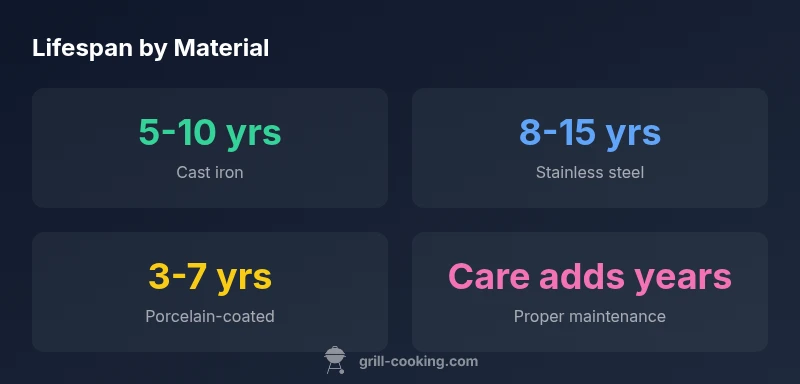
Grill grates typically last several seasons, with lifespan heavily depending on material and maintenance. Cast iron, when properly seasoned, often lasts about 5-10 years; stainless steel grates can reach 8-15 years; porcelain-coated steel ranges from 3-7 years. Regular cleaning, drying, and proper heat management extend life and preserve performance for home cooks.
What factors influence grate longevity and the answer to 'how long do grill grates last'\n\nWhen you ask how long do grill grates last, the answer depends on material, usage, and care. The most significant variables are corrosion resistance, heat tolerance, and coating integrity. Regular cooking practices—such as high-heat searing, acidic marinades, and frequent exposure to moisture—accelerate wear if grates are not dried and oiled after use. In practice, Grill Cooking Analysis, 2026 shows that maintenance routines move the needle more than any single purchase decision. Home cooks who wipe grates clean, dry them thoroughly, and apply a light oil film after every cookout typically extend their usable life by years compared with neglect. By contrast, neglect can expose bare metal to rust or coating failure within a couple of seasons, even on premium materials. The overarching lesson: longevity is a function of both material choice and disciplined care.
Material matters: Cast iron, stainless steel, and porcelain-coated\n\nCast iron grates, when seasoned, deliver superior heat retention and a flaky patina that flavors searing. They are forgiving if dried and oiled regularly but are more prone to rust if moisture is left on the surface. Stainless steel grates resist rust and are easier to clean but can lose some seasoning benefits and may warp if overheated. Porcelain-coated steel offers rust resistance and easier cleaning, yet the porcelain coating can chip with aggressive scraping, exposing metal to corrosion. For the question of longevity, stainless steel often hits the high end of the lifespan, while porcelain-coated options tend to fall in the mid-range. Cast iron remains a robust option when cared for, with a longer-term payoff if you enjoy the ritual of seasoning and maintenance. Choose based on your climate, grill type, and willingness to perform routine maintenance.
Heat exposure and usage patterns\n\nLifespan is strongly affected by how you grill. Continuous high-heat sessions can accelerate coating wear and warp metal if grates are not rated for such temperatures. Light-to-moderate use with occasional high-heat sears tends to preserve grates longer, especially when paired with good heat management. Humidity and exposure to marinades or acidic foods can speed up corrosion if grates aren’t dried promptly. Understanding these patterns helps you estimate how long do grill grates last in your setup and informs decisions about when to upgrade or replace sections rather than full grates.
Cleaning, drying, and seasoning: the maintenance trifecta\n\nA simple routine can dramatically affect lifespan. After cooking, brush off food debris while the grates are hot enough to loosen residue, then wipe with a damp cloth. Rinse with warm water and avoid harsh abrasive pads that can scratch coatings. Dry thoroughly with a towel or warm air, then apply a thin layer of high-smoke-point oil to protect against moisture. For cast iron, periodic seasoning (oil baked onto the surface at high temp) is essential to prevent rust and maintain non-stick properties. For stainless and porcelain-coated grates, routine cleaning and drying are usually sufficient, but avoid exposing porcelain-coated surfaces to metal brushes that can chip the coating. A minimal maintenance ritual can extend life by years and keep performance consistent.
Signs it's time to replace grates\n\nNot all wear is dramatic; some degradation is gradual. Watch for persistent rust spots that cannot be scrubbed off, flaking porcelain, warping or loose fitting grates, and uneven heat transfer with hot spots. If the coating shows multiple chips or the surface feels rough rather than slick, replacement is advisable to maintain flavor and safety. If you notice rust on cast iron despite seasoning, or pitting that worsens after cleaning, plan for replacement. Keeping a close eye on these indicators helps you avoid sudden failures during grilling season.
Replacement considerations: cost, availability, and compatibility\n\nReplacement grate costs vary by material, size, and grill model. Cast iron and stainless steel options generally offer longer lifespans, but initial costs may be higher. Porcelain-coated steel tends to be more affordable upfront but may require earlier replacement due to coating wear. When shopping, confirm that the grate dimensions and mounting hardware match your grill model; some grills use unique fasteners or mounting systems. If you grill year-round in a humid climate, consider investing in rust-resistant options and replacements that are rated for high-heat use. Budget for yearly maintenance and occasional tune-ups to maximize value over the life of your grill.
Real-world planning: lifecycle management for grills\n\nA practical approach to knowing how long do grill grates last is to build a lifecycle plan. Record the grate material, purchase date, and replacement interval you expect based on climate and usage. Create a maintenance calendar for cleaning, oiling, and seasoning, and set reminders for inspection. If you own multiple grills, track each one's life cycle separately to avoid premature replacements. The key is to adopt a proactive mindset: replace before failure, and choose materials that align with your cooking style and maintenance willingness. In this way, you optimize performance and cost over many grilling seasons.
Quick-start plan for new grates\n\nIf you're starting fresh, begin by selecting a material that matches your climate and cooking style. Then implement a simple maintenance routine: clean after every cook, dry thoroughly, oil lightly, and season cast iron every few months or as needed. Schedule a formal inspection after the first season to assess wear and plan replacements accordingly. This practical plan helps answer the question of how long do grill grates last for your setup and keeps your grill performing at its best.
Lifespan by grate material and maintenance
| Grate Type | Typical Lifespan (years) | Maintenance Notes |
|---|---|---|
| Cast iron, seasoned | 5-10 | Requires regular oiling; rust prevention |
| Stainless steel | 8-15 | Resists rust; avoid overheating; regular cleaning |
| Porcelain-coated steel | 3-7 | Coating can chip; avoid metal brushes; moderate heat |
| Cast iron non-stick coated | 4-8 | Seasoning required; watch coating integrity |
FAQ
Do stainless steel grates last longer than cast iron?
In general, stainless steel resists rust longer and can outlive cast iron in humid environments. Cast iron offers superior heat retention and seasoning benefits but requires regular oiling.
Stainless steel tends to last longer and resist rust, while cast iron saves heat but needs regular oiling.
Can I extend grate life by soaking grates overnight?
Soaking is not recommended for most grates; it can promote rust and coating damage. Use warm soapy water and a stiff brush, then dry thoroughly.
Avoid soaking; clean with warm water and a brush, then dry completely.
Is seasoning needed for stainless steel grates?
Seasoning is primarily for cast iron. Stainless steel typically does not require seasoning, though a light oil wipe can help prevent surface staining.
Seasoning isn’t usually needed for stainless steel.
How should I clean grates after grilling fatty meats?
Degrease with a grill brush or scraper, wash with warm soapy water, then dry and apply a light oil coat to prevent rust.
Brush off fat, wash, dry, and oil lightly to protect the surface.
What factors influence replacement costs?
Costs vary by material, size, and brand. Expect higher upfront costs for premium materials, with lower annualized cost if life lasts longer.
Costs depend on material and size; premium grates last longer but cost more upfront.
Do porcelain-coated grates rust if the coating chips?
If the coating chips, exposed metal can rust; inspect coatings regularly and replace grates if chips appear.
Chips expose metal to rust; replace when coating is damaged.
“Grill grates are an investment in even heat and flavor; with consistent maintenance, the difference in lifespan can be substantial.”
Quick Summary
- Material choice drives lifespan
- Regular cleaning and drying extend life
- Avoid harsh brushes that wear coatings
- Season cast iron to prevent rust
- Consider cost-per-year when choosing material